The tyranny of metrics

When I read a review of Jerry Muller’s book, The Tyranny of Metrics, I immediately ordered a copy from my library.   I went to collect it the other day.

Risking the charge of confirmation bias, I nodded approvingly to myself when I read on page 3, ‘And gaming is only one class of problems that inevitably arise when using performance metrics as the basis of reward or sanction.’  As Muller points out ‘The things that get measured may draw effort away from the things that we really care about.’

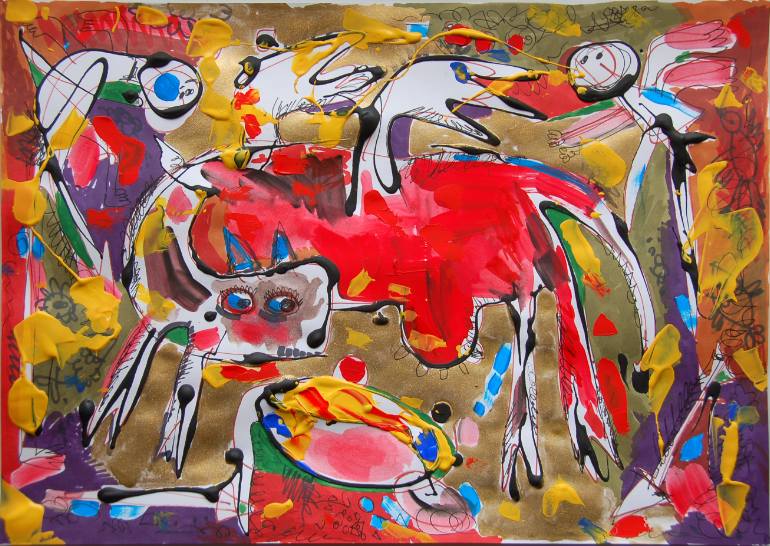
Jonathan Harris, in his wonderful artpiece, Data Can Help Us, (image for this blog) also points this out in a series of provocative sentences, for example:  Data ‘will help educators make excellent standardised tests, but will it help us embrace different standards of excellence?’ (Here I had a brief pause to check if data is/are singular or plural) Harris warns us of the dangers of abandoning timeless decision-making tools like wisdom, morality, and personal experience in favour of data converted into numbers.

Similarly, Muller notes that ‘The most characteristic feature of metric fixation is the aspiration to replace judgement based on experience with standardized measurement’.

It’s not that numbers are ‘wrong’, it’s that converting data into meaningful numbers that are useful and could produce good outcomes is not easily done, as a good example in an HBR article Know the Difference Between Your Data and Your Metrics illustrates.  The authors say ‘As we learned, there is a difference between numbers and numbers that matter.’

I was drawn to Muller’s book because I work in a field, organisation design and development, where it is almost impossible to identify what numbers might matter – assuming that it is sensible to even try to reduce organisation development or organisation design to a metric, or set of metrics.   If I am asked to suggest meaningful metrics that might show that what OD & D practitioners do produces value (and for whom) I find it hard to offer anything with confidence.

One reason for this is that the metric required is often a monetary return-on-investment one (dollars or pounds).   However, a monetary unit is a different unit of measurement from what are sought as outcomes of the piece of work which could be, for example, increased collaboration, aligned leadership, a ‘one-team’ culture, etc). We expect that if the input is in money – cost of time to design and deliver the work, that the outcome will also be in money.

In any instance where the input unit is not the same as the output unit we are not comparing like units.  Sticking with money as an input unit, we could try and convert the outcome to units of money, but these would be proxy measures.  They distort how we see the outcomes.  There are several factors contributing to the distortion, among them:

  • we don’t know that there is a direct cause/effect relationship between the OD & D work what we are looking for in results
  • the conversion to like units is not easy to do – what are the proxy metrics of ‘aligned leadership’, for example, that would give us a monetary value?
  • interventions don’t create outcomes – they may create a different context that enable something to change – but it may not be what is expected.

Toby Lowe, a researcher on managing performance at the UK’s Newcastle University is clear that, ‘The simplification required to measure and attribute ‘outcomes’ turns the organisation and delivery of social interventions into a game, the rules of which promote gamesmanship, distorting the behaviour of organisations, managers and practitioners who undertake it.’

I collected Muller’s book a day or two after coming back from the ODNE conference where I spoke on the sacred cows of organisation development:  a sacred cow being an organisational or societal norm that is accepted without question.  (Until it is questioned – for example votes for women came about after challenging the sacred cow that only men could vote).

One of the ‘sacred cows’ I offered for discussion was ‘Organisation development activity can deliver tangible business results’, asking participants to consider what would happen if we did not give up this sacred cow, and what would happen if we did give it up.  There was some debate on what ‘tangible’ results are, and a lot of debate on the issues around ‘proving’ the ROI of the OD & D work.

Too late to share in the conference, I find that Gerry Muller offers a thoughtful 10-point checklist on how to approach the use of performance metrics.  He notes, before presenting the list, that ‘measurement demands judgement: judgement about whether to measure, what to measure, how to evaluate the significance of what’s been measured, whether rewards and penalties will be attached to the results, and to whom to make the measurements available.’  (Judgement is not measurable.)  Here are the checklist items with a summary quote from the fuller explanation that Muller gives:

  • What kind of information are you thinking of measuring – ‘measurements attached to human activity are not reliable unless the humans agree with the goals of the measurement’.
  • How useful is the information? ‘the ease of measuring may be inversely proportional to the significance of what is measured’.
  • How useful are more metrics? ‘the fact that metrics is helpful doesn’t mean that more metrics is more helpful’.
  • What are the costs of not relying on upon standardized measurement? ‘Are there sources of information about performance, based on the judgement and experience of clients?’
  • To what purposes will the measurement be put? ‘Here a key distinction is between data to be used for purposes of internal monitoring by the practitioners themselves versus data to be used by external parties for reward and punishment’.
  • What are the costs of acquiring the metrics? ‘Information is never free, and often it is expensive in ways that rarely occur to those who demand more of it’.
  • Ask why people at the top of the organisation are demanding performance metrics. ‘Sometimes [this] flows from the ignorance of executives about the institutions they’ve been hired to manage.’
  • How and by whom are the measures of performance developed? ‘Measurements are more likely to be meaningful when they are developed from the bottom up … from direct experience’.
  • Remember that even the best measures are subject to corruption or goal diversion. ‘There are inevitable drawbacks to all schemes of measured reward’.
  • Recognising the limits of the possible is the beginning of wisdom. ‘Not all problems are solvable, and even fewer are solvable by metrics.’

Do you think that the outcomes of OD & D work can be identified and then converted into useful proxy measures to show ROI?  Let me know.
 

Sacred cows make the best burgers

‘The relevance of organisational development has never been more critical, given the complex issues facing communities, organisations and wider society. This raises the question of how we as OD practitioners can play a role beyond that which we do currently.’  This statement introduces this year’s European Organisation Development Network conference which takes place 25, 26 April 2018.

Without thinking too much about it, several months ago I agreed to speak at the conference.  I can’t quite remember how we got to the topic of my presentation ‘Sacred Cows Make the Best Burgers’ but it’s a title of a business book on change readiness by Robert Kriegel and David Brandt that I read years ago.  It opens by telling readers to round up sacred cows –  the well-worn or outmoded beliefs, assumptions, and practices that inhibit organisational change and prevent responsiveness to new opportunities.

Here is my starter list of five sacred cows of organisation development that, in my view, merit discussion on whether they should be rounded up or whether they have continuing value.

  1. Organisation development is a distinct discipline requiring specialist skills, attributes, practitioner training. There is little to suggest that OD is a ‘distinct discipline’.  In Revisioning Organization Development: Diagnostic and Dialogic Premises and Patterns of Practice, for example, the authors ‘are trying to open up the possibility that there are different enough forms of OD in terms of theoretical and philosophical premises, and not just practice technologies or underlying values, to warrant closer inquiry and recognition in the official literature(s) of this field. Right now, in most academic and practitioner publications there is only one, monolithic OD, presumed to be practiced using variations of the same foundational premises. In our experience, this leads to confusion and misunderstandings especially when people without much theoretical background try to combine, for example, objective diagnosis with self-organizing ’ Backing this up, Linda Holbeche, a writer in the OD field,  suggests that OD is a ‘scavenger discipline …  an eclectic field that borrows from many other disciplines and theories’. (Impact, Issue 26, February 2009).
  2. Organisation development activity is for the betterment of organisations and organisational members. There are several who argue that OD is coercive – think of the language of ‘getting’ people to do things, or ‘changing mindsets’.  An article by Marie McKendall, The Tyranny of Change: OD revisited, exemplifies this point of view.  The abstract reads:  ‘The premise of this paper is that planned organizational change, commonly known as organizational development, induces compliance and conformity in organizational members and thereby increases the power of management. These consequences occur because organizational development efforts create uncertainty, interfere with the informal organization, reinforce the position of management, and further entrench management purposes. These consequences occur regardless of the intentions of management and regardless of whether the goals of the organizational development intervention were achieved. Instead of examining these consequences, practitioners and theorists have engaged in self-deception and depoliticized the practice of induced organizational change by creating a field known as Organizational Development.’
  3. Organisations can be ‘developed’. The implied question in this sacred cow is whether there is a single organisational entity that can be developed or whether it only that individual members of the organisation can be developed (assuming you think they can). Their collective development contributing to whole organisational development.  Derek Pugh devised an OD matrix – a conceptual framework for understanding and diagnosing what change is necessary in an organisation, what methods to consider, and which directions to go in initiating the change process, which seems to suggest that whole organisations can be ‘developed’.
  4. Organisation development activity can deliver tangible business results. There’s a commonly heard statement – a sacred cow in itself, perhaps –  that 70% of change intervention fails.  Attributing an ROI to OD work is not easy to do.  (Does anyone do it?).   Yet in his article ‘Do 70 per cent of all organisational change initiatives really fail?’ Mark Hughes ‘highlights the absence of valid and reliable empirical evidence in support of the espoused 70 per cent failure rate.’  However, in rounding up that sacred cow, Hughes fails to provide any valid and reliable empirical evidence that change initiatives actually do deliver tangible business results.   A report by Liz Finney and Carol Jefkins, Roffey Park, Best Practice in OD Evaluation, says ‘We approached our research aware that there are many practitioners in the field of OD who believe that its systemic nature makes it hard to measure; some hold a world view that says it’s inappropriate even to try. Some talk about the evaluation of OD interventions as a ‘holy grail,’ perhaps implying that to seek it would be a hopeless quest. Evaluation is something which is often overlooked, avoided, or included only as an after-thought when an OD intervention has already taken place.’ In the absence of no evidence of OD success can we provide evidence that it delivers business results?
  5. Organisation development practitioners share humanist, democratic and ethical values. A special issue of the journal Organization ‘reveal[s] the shifting, ambiguous and inherently political arena lying beneath and beyond the bland cliches, pious nostrums and simplistic recipes that are the stock in trade of organizational change management.’  The author points out that the financial demands inherent in much organisation development work (headcount reduction, mergers, efficiency gains, technology implementation, etc), often with the requirement to make these financial gains speedily, conflict with the humanistic, democratic and ethical ‘practice values’ that, in Cheung-Judge’s/Holbeche’s words give organisations and OD work ‘a rudder and bearing’.

I have a reserve list of five more sacred cows but I’m hoping that the above will spark a  conversation.  To facilitate this I’m asking four questions adapted from a Cartesian quadrant –  What happens if we accept the sacred cow?  What happens if we don’t accept the sacred cow? What won’t happen if we accept the sacred cow? What won’t happen if we don’t accept the sacred cow?

What are your OD sacred cows?  Let me know.

Image: Attack on the sacred cow,  Andriy Zholudyev

Business and digital transformation

There’s something in the power of three that is a call for action.  In this case to do something about three questions I got more or less together on ‘transformation’ Well, not quite together.  The first one I got almost a month ago and did nothing about, but yesterday two more arrived thus invoking the power of three.

The first one was: ‘Do you have any good links to Business Transformation Programmes reading or anything you’re doing that would serve as an intro.  I think it will be recommended that we buy in some consultancy but my instinct is we can probably do it ourselves with selected support?’

Yesterday, I got: ‘What’s the difference between digital transformation and business transformation?’

Also, yesterday (from a completely different source) came: ‘We are currently doing a strategy/org design project for the IT function of a pharma company. We are not finding relevant/compelling org design/operating models to help them move to the next level as the company takes baby steps towards digital transformation. Any suggestions or sources for such information?’

Before launching into a response, I looked to see if I’ve written about transformation before.  Yes, five times – the first time was in 2010:

I scanned what I’d written to see if I still agreed with my past self or not, and what links and info I could glean from those blogs on the three questions.  In re-reading these I felt as if between 2010 and now the ‘transformation’ field has risen to bandwagon status but may almost be at its peak. I’ve just seen the first article (probably of many) explaining ‘Why so many digital high-profile digital transformations fail‘.

In one way it seemed redundant to write another blog on the topic but I’ve found that there’s always a learning or development of ideas in the thinking/writing process and in a way, I can hardly avoid transformation.

I’m writing this in Dubai.  It’s an immersive transformation experience.  Every time I come I see the city transforming.  The latest new thing is the Dubai Frame – an edifice/experience showing a glossy version of the past, present and future of this transformation  from desert village to global player in 50 years.  A quick look at the Smart Dubai website or skim of the World Economic Forum article, ‘How digital technology is transforming Dubai’ gives a feel for the scale of the transformation ambition.

In this city of transformation, I’m wondering whether there’s any agreed organizational definition of ‘transformation’.  What do people mean by the term – what is the common ground on its usage?  Scott Anthony, in an HBR article, has a good stab at answering this.  He describes transformation as:

  • operational – doing what you are currently doing, better, faster, or cheaper
  • core – doing what you are currently doing in a fundamentally different way
  • strategic – ‘This is transformation with a capital “T” because it involves changing the very essence of a company. Liquid to gas, lead to gold’

As he points out ‘Defining what leaders mean when they drop the word transformation matters, because these different classes of efforts need to be measured and managed in vastly different ways.’

For my first questioner – the one who asked for an intro to business transformation a good intro step would be to have the discussion on what leaders mean by the word.  Once they’ve agreed, then some choices can be made on whether to proceed with support from external consultants or on a DIY basis (or mix of both).

The second question was ‘what’s the difference between digital transformation and business transformation?’  Jaret Chiles comes up with a suggestion that met with approval from the group I’m working with this week. He suggests that:

  • Business transformation encompasses the cultural shift and business processes driven by changing market demands; i.e., the company’s culture of change and business drivers.
  • Digital transformation encompasses the tools and processes implemented to support business transformation; i.e., applications.

Confusingly though, some organisation’s use put ‘digital’ and ‘business’ together to form the phrase ‘Digital Business Transformation’.  IMD a management school, for example, has a Global Center for Digital Business Transformation and a report from Deloitte that caught my eye ‘Strategy, not Technology, Drives Digital Transformation’ – partly because I believe this should be the case, but often isn’t –  has a section in it titled The Culture of Digital Business Transformation.   Maybe putting Digital+ Business together is right in the cases where businesses are transforming through the application of digital technology.

The third question was about operating models for digital transformation.  Operating models are another much discussed topic but a series of 6 articles on Digital Transformation from Insead Knowledge helps by starting with discussing a 10-point framework (operating model?) for digital transformation.   Alongside the framework comes a recommendation for describing it the process as a digital ‘journey’ and not a digital ‘transformation’, again a hint that the word ‘transformation’ has had its management-speak day.  (Other articles in the series include resistance to digital change, culture and supporting structures).

What’s your view of business v digital transformation – where would you point people wanting an intro to business transformation or a digital operating model?  Let me know.

Image: Palm Jumeirah, and the World, Dubai

Hands across the divide

Weeks ago, Jim sent me three questions that he’s posing to various organization design/development practitioners and some leaders he knows.

  • What is the involvement – ideal and actual – of your most senior leaders in the organisation design work you carry out?
  • What conceptual and practical understanding of organisation should they really have in order to make the right contribution?
  • How would you typify the level and content of the understanding they do have – and how do you try to equip/help them to make the contribution they should?

I haven’t yet got around to answering them, but they suddenly leapt back into mind when I was on a recent call with some members of the Organization Design Community (ODC) where we were discussing three topics.

  • The challenge of the bridge between academics and practitioners
  • The new world of organization design
  • The practical aspects of bridging the gaps between academics and practitioners

I then got a suggestion from someone else that an organization design programme I’m involved with go through the ODC Accreditation process.  Looking at the requirements for this, I learned that:

‘To receive ODC accreditation, a provider’s design course or workshop must meet a set of requirements. These requirements have been jointly developed by leading academics and professionals in the field of organization design. Twenty-two minimum core requirements are contained in three categories:

  • Design Concepts and Principles
  • Design Types
  • Redesign and Change

My first thought was that twenty-two is a lot of ‘minimum core requirements’ but I let that pass as I’m practicing with a meditation tape that tells me ‘it may be a thought, but you don’t have to think it’.

I moved onto other thoughts which I did begin to think – they revolve around Jim’s questions, the ODC conversation, and the accreditation requirements.  What the three have in common are some reflections and questions around the relationship between theoretical concepts and practical application of organization design, and who needs to know what in order to make an effective, informed and value-add contribution to organization design work.

My experience of working with leaders is that, for the most part, they are very impatient with, not to say dismissive of, anything that smacks of theory or academia.  When leaders do organization design work it is still largely based on fiddling around with an organization chart, moving people and reporting lines with little to no reference to design concepts/theories.  (I got a terrific sketch the other day of the ‘make it like this’ variety.  I’m tempted to put it as the image for this blog but won’t).

Happily, I’ve met a few exceptions to this type of leader – usually they’re people who’ve taken courses in organization behaviour or similar, and equally happily I’ve met other leaders who start off with a ‘make it like this’ mindset but are willing to be curious to learn why lines and boxes are not ‘design’ and taking the lines and boxes approach is very unlikely to result in the outcomes they are looking for.

Done thoughtfully, with a knowledge of systems, complexity and behavioural theory, organization design is ‘the ultimate edge … is so critical that it should be on the agenda (along with a professional designer) of every meeting in every single department’ says Tom Peters, (co-author of In Search of Excellence) He goes on to say that ‘Design, like lifestyle, is one of the few differentiating factors, and companies that ignore the power of elegant and functional design will lose.’

Elegant design is not the result of adjusting an organization chart or looking purely in terms of ‘structures’.  It is the result of line-managers and OD consultants – who might be internal or external to the organization:

  • understanding what people on the ODC phone discussion called ‘the framing theories and related skills’ for organization design. (These framing theories and related skills come from academic research).
  • interpreting and converting the framing theories and related skills from a theoretical, research perspective and language to practical and pragmatic design tools and frameworks
  • applying these skilfully and thoughtfully into on the ground organization design work
  • working with academics to refine the theories and develop new theory from careful evaluation of the outcomes of the original thinking.

Making this happen in practice is the challenge.  Here are four ways of joining hands across the divide between academics and business people to the mutual benefit of both.

1.  University research departments partner with an organisation or organisations to conduct research on a specific topic. This could be initiated either way through a ‘call for participation’.  I have done this successfully on three occasions. For example, I commissioned one of the pieces of work described in When the Bases of Social Hierarchy Collide: Power Without Status Drives Interpersonal Conflict 

2.  Someone in each business organization could be the named co-ordinator of relevant research, its dissemination, and its practical application.  I haven’t yet worked in any large organization where there is a comprehensive database of employees taking academic programmes or a method of capturing the dissertations they do and assessing their value in terms of extending or applying their research.  Doing this could result in  cadre high value-add scholar-practitioners developing in the  organization.  See To wear many different hats: how do scholar-practitioners span boundaries between academia and practice?

3. Academics and line managers could work together to discuss how the theoretical research can be converted into practical application and what organizational issues would benefit from research and theory development. This could happen on executive programmes, for example, as one of the activities or learning sessions.  This was a suggestion made on the ODC phone call.

4.  Academics could take their own work and develop it into to a practical tool for application. For example Andrew Sturdy, and Nick Wylie wrote an academic paper Transformers, enforcers, specialists and independents which aimed to ‘identify, describe and evaluate the different ways in which formal collective change agency is structured in specialist units inside 25 diverse organisations.’

The theoretical framing of the paper is based on and developed from Sturdy et al’s earlier research work, see for example Management as Consultancy and Beneath and Beyond Organizational Change Management: Exploring Alternatives

From their paper (Transformers … ) Sturdy and Wylie developed a very short, practical, ‘how to’ guide – Managing Change without the use of external consultants: how to organize consultant managers.  It’s easy to grasp but grounded in theory.  I’m using it as a discussion tool with line managers and executive teams as we consider establishing a change function.

How would you, or are you, bridging the academic/practitioner organization design gap to help ensure elegant organization design?   Let me know.

Image  Hands Across the Divid© Copyright zoocreative and licensed for reuse under this Creative Commons Licence

Organization design: the hot topic

I am speaking at a conference in Shanghai and Beijing, in May and have just been developing my presentation ‘Organisation Design: the hot topic’.

The conference is about the research, science and technologies that are changing organisations and the organisers have asked that my piece focus on the new technologies including AI, robotics and data tools and their impact on organization designs.

Most obvious is the view, typified in an article that ‘Every aspect of human life—our food, our work, our intimate interactions, our DNA itself—is, or will soon be, mediated by the technology we embrace. Machines can now recognize speech and written text; images will be next. Algorithms know your face, and the faces of millions of your fellow citizens. They can infer, with increasing accuracy, a person’s income, mental health, gender, creditworthiness, personality, feelings, and more from public data.’  This means what for organisation design?  Three questions stand out:

  • What is the  effect on jobs?
  • How do we protect employee/individual privacy as AI spreads?
  • What is the effect of AI on our competitiveness/competitive position?

It is not good enough to provide the answers to all three as: ‘it depends’ or ‘we don’t know’.  But this is, in fact, the case – look at the optimism v pessimism view of technology in the Zuckerberg (optimist)  v Musk (pessimist) discussion.

As one writer notes, ‘Leading a company in the years ahead is sure to be more challenging than at any time in living memory. AI will require bosses to rethink how they structure departments, whether they should build strategic technologies internally or trust outside firms to deliver them, whether they can attract the technical talent they need, what they owe their employees and how they should balance their strategic interests with workers’ privacy. Just as the internet felled some bosses, those who do not invest in AI early to ensure they will keep their firm’s competitive edge will flounder.’

Putting you on the spot.  What is your view of this description?

‘This is the local office of [US company] Humanyze … Its employees mill around an office full of sunlight and computers, as well as beacons that track their location and interactions. Everyone is wearing an ID badge the size of a credit card and the depth of a book of matches. It contains a microphone that picks up whether they are talking to one another; Bluetooth and infrared sensors to monitor where they are; and an accelerometer to record when they move. … The technology will allow the company to gauge their employees’ productivity and accuracy. JD.com, the Chinese e-commerce firm, is starting to experiment with tracking which teams and managers are the most efficient, and using algorithms to predict attrition among workers.’

Whether you are optimistic or pessimistic you can instantly see that there is an effect on jobs, privacy, and competitive position

Take the jobs angle first.  There are three organisation design aspects of this:

  1. Monitoring how employees are doing their jobs to increase productivity and control performance could mean designing jobs that focus on these two aspects at the expense of innovation, job autonomy, engagement, and social interaction.
  2. Replacing employees with automation that does the job instead of humans could result in fewer jobs being available to working age people, However, as the McKinsey Global Institute finds, ‘the extent to which these technologies displace workers will depend on the pace of their development and adoption, economic growth, and growth in demand for work. Even as it causes declines in some occupations, automation will change many more—60 percent of occupations have at least 30 percent of constituent work activities that could be automated. It will also create new occupations that do not exist today, much as technologies of the past have done.’ Either way – more, fewer, different jobs will result in different organisation designs.  (See also MIT’s Every study we could find on what automation will do to jobs, in one chart)
  3. Helping humans develop the new skills needed to work in a technology mediated society.  Here McKinsey says ‘Our scenarios suggest that by 2030, 75 million to 375 million workers (3 to 14 percent of the global workforce) will need to switch occupational categories. Moreover, all workers will need to adapt, as their occupations evolve alongside increasingly capable machines. Some of that adaptation will require higher educational attainment, or spending more time on activities that require social and emotional skills, creativity, high-level cognitive capabilities and other skills relatively hard to automate’.  Again, it is easy to see the job and organisation design implications of this statement as ‘right people, right place, right time’ take on new dimensions and urgency.  It also raises a question about who finances new skills development.  (See also the March 2018 OECD Report Automation, Skills Use and Training)

Additionally, the short Humanyze scenario above shows that we should all be concerned about indiviual/employee privacy and the ethics of surveillance in the workplace (and elsewhere).   This aspect of organisation design is moving up the agenda.  Many European organisations are redesigning business units and work functions to enable compliance with the GDPR (data privacy) requirements that come into force in May 2018.

On the AI competitiveness question, one writer suggests that ‘in the years ahead AI might contribute to the rise of monopolies in industries outside the tech sector where there used to be dynamic markets, eventually stifling innovation and consumer choice. Big firms that adopt AI early on will get ever bigger, attracting more customers, saving costs and offering lower prices. Such firms may also reinvest any extra profits from this source, ensuring that they stay ahead of rivals. Smaller companies could find themselves left behind.’  For organisation designers this could mean redesigning organisations to stay competitive – perhaps through forming consortiums, co-operatives or alliances that transform insular hierarchies into collaborative networks that collectively compete with any impending monopolies.

How do you think advancing technologies will impact organisation design? What are you doing about it?  Let me know.

Image: The technological citizen