Job shadowing

Last week I got an email from someone who’d attended a couple of info sessions I facilitated.  She said ‘Thanks for presenting the sessions on culture and change management.  I found them interesting as they leaned towards my aim to develop my OD and Change skills.  I wondered if I could shadow you in relation to your work on change and design to develop my knowledge and experience in the area and my career.’

On first glance it’s a lovely invitation and we’ve set up a meeting to discuss it.  On second glance the invitation has prompted me to look more closely at job shadowing – what, why, how and also about what I do in the day-to-day that illustrates what a career in OD and Change is like.   I’d like the shadowing to be helpful, and a learning experience, for both of us.

What is it?  Martin, on Cleverism says it’s ‘following, or shadowing, a professional at an organization throughout the workday or workweek to get a better idea of what that particular role entails.’ Another writer says, ‘The overarching purpose of a job shadow is to give someone a sense of what a career [in that discipline] is really like. A test drive so to speak!’

Martin talks about two main types of job shadowing: observation and hands-on.  He says, in observation, ‘you will be observing an incumbent employee, taking notes on how they conduct their business and understanding their activities. You are nothing more than a fly on a wall, listening and seeing everything an employee says and does, respectively.’

In hands-on ‘After observing for a short time and understanding the things an employee in that position needs to do, you will take on those same responsibilities and undertake some of those tasks.’

Another writer talks about “Burst Interactions”  ‘Here a visitor/guest will shadow the host for specific activities over a period of time which are all preceded by a mini brief and follow up debrief. This type of shadowing provides short periods of focused activity, rather than passive ongoing observation.’

I took a look back at what I did last week and whether my job shadower could be hands-on, would be more of an observer, or would be better doing ‘burst interactions’.   In calendar entries my week comprised:

Monday: six meetings (three group and three individual) all broadly on ‘what/how we are doing on building change management capability.’  Plus, a chunk of time I diarised as ‘uninterrupted desk time’, so people looking at my calendar don’t plop in a meeting.  It’s an experiment, triggered by reading David Stiernholm’s book, and reading his blog on the seagull free hour.  I’m seeing if it helps me focus on getting a decent length of time to reflect on and write some papers that are now approaching deadlines.

Tuesday: morning a discussion with colleagues on a culture audit we’ve being doing. Then a meeting on accreditation of change managers (yes/no?), and in the afternoon I participated in an external workshop on talent and a learning culture .

Wednesday:   A train trip to facilitate a session on brave leadership + some phone discussion on smart working.

Thursday: Two different sessions on building change management capability, and a workshop on direction setting and prioritising/planning activity in the next quarter.  (Note to self:  beware the dangers of ‘roadmapping’)

Friday: Following up on the change management workstream in a big project and attempting to get to grips with my email in-box, and finally write the papers.

In non-calendar activity, I also had multiple casual and unplanned conversations and answered over 200 emails (latter probably not something to shadow).

If I’d been shadowed last week as an observation (rather than hands-on) then what would the person have observed?  I don’t know how skilled she is at observation i.e. ‘the systematic description of the events, behaviors, and artifacts of a social setting and I all I currently know about why she wants to observe is from the email she sent.

Why she wants to do it, is to ‘know more about the area of OD and change’.  I think she’d see from the various meetings, that I’m working as an internal consultant in much the way that Andrew Sturdy/Nick Wylie discuss in their ESRC report Internal Consultants as Agents of Change. The work I do falls into their 4 buckets:

Operational efficiency – this category is one that I call organisation design, in their terms ‘practices which are focused around improving systems or processes so that information and/or material can be moved through the organisation more efficiently.’

Organisational development ‘including the use of psychology-based analytical tools and, broadly speaking, more of an interest or focus on people rather than work processes.

Strategic analysis and development here, I’m working with colleagues in the strategy group to develop alignment across strategies and keep an eye on the changing external context in order to ‘sense and respond’ effectively.

Project management.  A significant part of what I do is with Programme and Project colleagues looking not only at change management aspects but also at the efficiencies, development and strategies of the various projects.

Seeing this she might well ask herself whether which of the four areas she is more interested in, or does she want to develop all four?  Each has their own specialist route which she could go down and/or find out more about.

I wonder if she’ll also be observing me deploying (hopefully) my role and skills as an internal consultant.  An old but still relevant report on this, The Role of the Internal Consultant, from Roffey Park is worth reading.  It gives a laundry list of internal consulting competences:  relationship building, maintaining a long-term perspective, disengaging (i.e. not having a vested interest), active listening, self-knowledge/self-awareness, contracting, diagnosis, design, tolerance of ambiguity, facilitating and understanding change, data gathering, influencing, challenging the status quo, conflict handling.  I’d add to the list business/commercial knowledge and understanding internal political dynamics.

There’s quite a lot of info for the person doing the shadowing, but less for the person being shadowed although I thought that the instructions Cleverism gives for the person shadowing could equally apply to me:

  • dress for success (hmm – do I do this?)
  • be punctual and show eagerness (both sometimes a challenge)
  • be open-minded (I’m constantly learning on this one)
  • learn how to communicate (ditto)
  • read all formal documents (a particular point as I rush to a meeting and skim them as it proceeds)
  • ask for feedback (good advice to take)
  • report everything you learned (sometimes I’m just reporting to myself but I find the reflection useful).

Manchester Metropolitan University’s Guidelines for Job Shadowing is a very good resource for both host and shadower covering benefits to both.  Armed with this info  – which I’ve also sent to the person who’ll be shadowing, we should both enjoy the experience.

What’s your experience of job shadowing? Let me know.
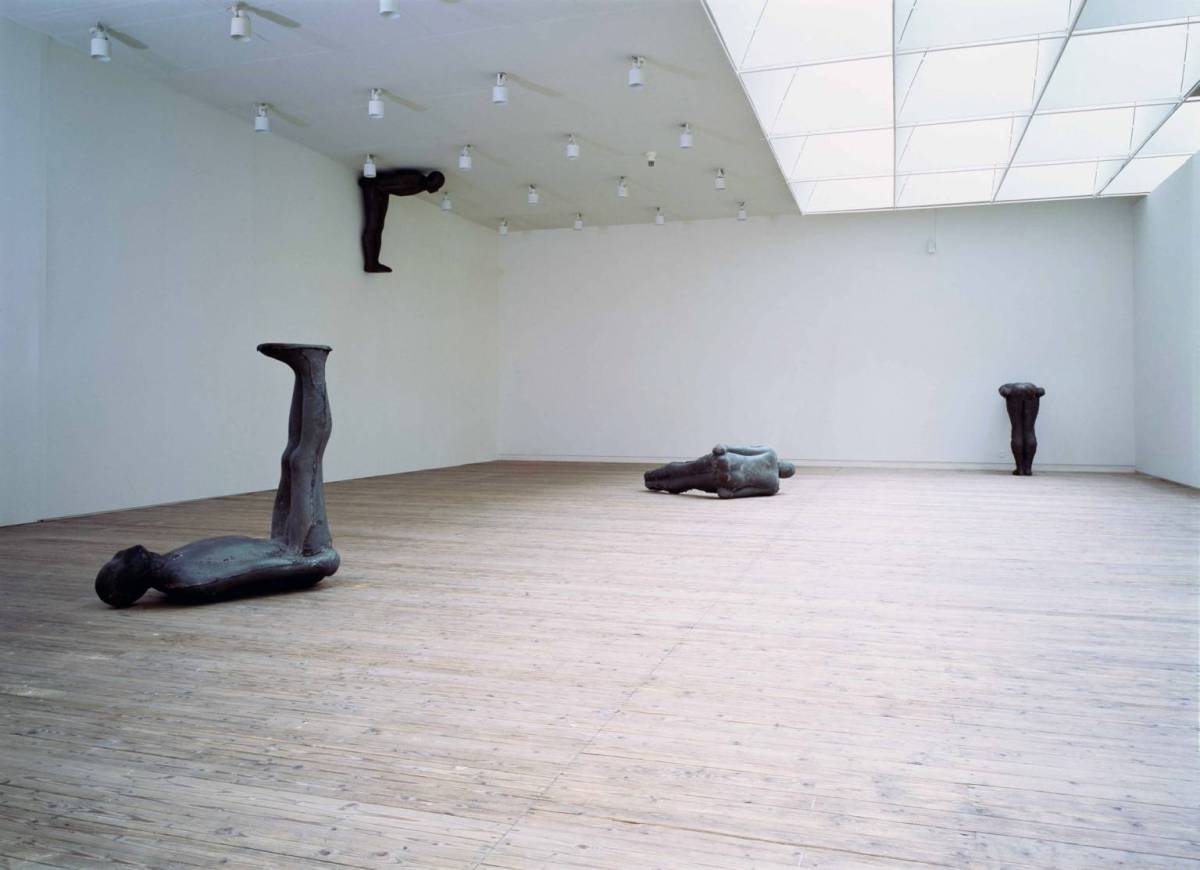
Image: Four benefits of job shadowing

Worldview and language

The Organisation Design Forum (ODF) had an Advisory Board conversation last week (14 August), discussing the questions:

  • How have you seen different worldviews (a comprehensive conception or apprehension of the world especially from a specific standpoint) shape the organization design work that you do? What did you do to help manage where there were differing world views between the client and consultant, or among the people directly involved in the design work?
  • How has language impacted the organization design work that you do? What have you done to help ensure alignment when language has had an impact on the direction or development of the design work?

The broadcast + chat box text are available here .

They’re questions that provoke more questions, rather than any answers and in the last couple of days since the conversation I’ve been noticing instances of different world views and language.   Four I came across stand out:

My pronouns are:  One that caught my attention was someone putting in his signature block ‘My pronouns are he, his, him’, which I hadn’t seen before. I found out that there’s a whole movement to do this and I wonder what impact it will have on organisation culture (and design).

I see, indicating my prounouns  shows ‘an important move towards inclusivity’.  The question then is – if someone doesn’t conform in putting their pronouns in their signature block, how is that judged by others and could not putting your pronouns in your signature block result in being ostracised for not conforming – which says what about inclusivity?

The global gag on free speech is tightening: The Economist this week in its leader ‘Speak up’,  and a longer, related article, ‘The new censors’ tackles the question of free speech and how it is being eroded.   The article mentions Freedom House, ‘an independent watchdog organisation’, which reports:

‘The fundamental right to seek and disseminate information through an independent press is under attack … The erosion of press freedom is both a symptom of and a contributor to the breakdown of other democratic institutions and principles, a fact that makes it especially alarming.’

I interpret these issues of free speech as being part and parcel of worldview and language use and it’s not a leap from here to see how worldview and language use help shape and design societies.

At a more local level language use and worldview undoubtedly does impact organisation design work too, but they are not aspects that I’ve seen discussed much in organisation design work.  But they are material.

There are many discussions considering ‘silent stakeholders’ e.g. the environment, future generations, sustainability, etc in organisation design work.  Our worldviews of the silent stakeholders and the language we use with/about them have an impact on the way we design.  See an article Stakeholders’ impact on the environmental responsibility: Model design and testing, and another,  thorough,  research article, The Stakeholder Model Refined, that proposes a different language (and worldview?)  of stakeholders.

Suppose when we were doing stakeholder mapping and analysis we added concepts like ‘gradism’ or ‘HQ/Operations’ or ‘agile methodology language’ and really examined them for their power and influence on the design work – would it result in useful conversations and closer examination of (perhaps assumed) worldviews and language that (maybe) favours one type of organisation design over another?

The new language of the future of work: In the ODF discussion I mentioned a book I’d read a review of on internet language ‘Because Internet’.  The book appears to speak to an emerging worldview both of internet communities and the internet language that shapes their design and culture. The reviewer notes, ‘The “in-group vocabulary” of internet language and memes isn’t just inclusive; its ability to induce a “rush of fellow-feeling” often relies on excluding an out-group, too.’

Richard Baldwin, in an article talks about his new lexicon of work – globotics, telemigrants, white-collar robots.  He says that ‘this wave of globalization doesn’t have an immigration debate attached to it.  It’s about moving people’s capabilities without moving people. These telemigrants are coming for service jobs and a wall won’t stop them! It’s good news if you want to keep out migrants because you can have the work without the workers’.

Does language shape the flow of time? This article notes that ‘when we talk about time, we frame it in terms of space. English speakers look “forward” to good times ahead and leave the past “behind”. A day flies by just as a ball does, while a deadline approaches the same way a tiger might. But the spatial metaphors we use vary from language to language, and some people think those differences affect our perception of time.’

The article pointed me towards Lera Boroditsky’s TED video ‘How language shapes the way we think’.   The point she makes is that ‘people who speak different languages will pay attention to different things, depending on what their language usually requires them to do.’

Seeing this, I remembered that the same point is also made by Robert Kagan and Lisa Lahey in their book How the way we talk can change the way we work: seven languages for transformation .   They say ‘The words we use do more than represent feelings and attitudes. The very choice itself of one word or expression over another can determine feelings and attitudes and – most importantly – actions’

This matters in organisation design work.  If we believe that language choices shape actions, and we believe that designing is taking action, then we need to pay attention to the words we use and the words others use, because how we use the words will shape our designs.

Where these four aspects of worldview and language led me, is to thinking that we (designers), and our clients,’would benefit from taking the time to reflect on our worldview and language before we start to design or redesign – this is even more critical in international organisations.

Let’s really think about the language we use.  What, worldview, for example does the language of agile, lean, or TQ represent?  Do we really want to exercise power by ‘getting people to buy-in’, (see Marie McKendall’s article The tyranny of change: Organizational Development revisited) or be in a ‘chain of command’?   I wonder what a considered, curious and critical discussion on the ethics and implications of worldview and language would yield in terms of doing our organisation design work.

Boroditsky concludes her TED talk saying: ‘It’s about how you think. It’s how the language that you speak shapes the way that you think. And that gives you the opportunity to ask, “Why do I think the way that I do?” “How could I think differently?” And also, “What thoughts do I wish to create?”  ‘

What thoughts do you wish to create in doing your organisation design work?  What worldview and language inform the way you do it?  Let me know.

Image: Testing a worldview, Anthony Gormley 1993

Change management FAQs

I’ve been working, with colleagues, on change management – introducing a structured methodology, developing ‘change agents’, facilitating training, designing a related website, and so on.

In the course of all this I’ve noticed repeated questions coming up from various quarters and I’ve been wondering whether we need a Frequently Asked Questions (FAQ) page.   It seems a straightforward thing to do.  But, as I investigated, I discovered that getting an FAQ page right is not as easy as I first thought and it may be that it’s not needed anyway.  (One website on writing FAQs advises ‘use them as a last resort’, and another says ‘Avoid FAQs’.)

Info on designing FAQ pages is fairly consistent (good to see), offering both advice on the FAQ page layout e.g. think and share visually, plan for scanning, and the part FAQs play in a user support journey e.g. ‘By providing thoughtful answers to commonly asked questions you are making a user comfortable with your firm and starting to build a relationship with a person who may eventually become your client’.

E-consultancy’s advice on FAQ page layout is typical.  Their five tips, each with a good example for each,  are:

  1. Make it visible,
  2. Categorise correctly
  3. Point the user forward
  4. Keep it customer focused
  5. Use personality

Kayako point out the relationship between searching, via a search bar, and FAQs.  They focus the 5 tips on the user support journey (again with a good example to illustrate each). Kayako’s final word is ‘Design for the utter lack of patience that customers have these days. … Doing the hard work to build a more intuitive and readable FAQ starts to pay off immediately.’

Now I’m on the fence about whether or not we need an FAQ page.  I have some real change management questions that I’ve collected that people frequently ask me.  (I’m not going to fall into the trap of presenting a ‘common question’ that isn’t that common but rather something we think is common).  Here are ten of the questions. I’ve aimed to follow the advice – categorising them, keeping the answers brief, and pointing the user forward.

People and change

Are people really resistant to change?  Not in my view. People enjoy change if they choose it for themselves.  Think of your personal life and the things you’ve chosen to change in it.   Even change you didn’t choose you’ve probably come to grips with.   For some ideas on how to encourage change confidence read ‘Why people resist change’.

Is change overload a real thing?  Yes, there can be too much change going on at one time, resulting in stress and burnout.  HBR has a good article ‘Too Many Projects’, with a quiz assessing whether there are too many going on.  People in an organisation I’m working with now, who have taken the quiz, are in complete agreement that there are too many projects.  The challenge remains on how to prioritise them in order to reduce the number.

How can you become an accredited change manager?  There are various certifications and routes available.  For example, the Change Management Institute (CMI) offers 3-levels, and the APMG Certification was developed in partnership with the CMI, the British Computer Society (BCS) offers a course.  Out of curiosity I looked at Business Change Manager and Change Manager jobs on Indeed.co.uk.  None that I looked at required the applicant to be accredited in change management.  I wondered why that is.

Processes of change management

Is managing planned change the same as managing unplanned change?  Yes and no.  Typically, planned change is implemented via a programmatic approach – see an excellent workbook with tools and templates on this approach from the Government of Queensland –  and unplanned change is emergent.  But both require people to be adaptive to the losses and gains that either type of change brings. As two researchers note ‘Being able to live with emergent change is particularly important since this type of change offers both the flexibility and the agility needed to cope with unpredictable environmental developments related to increasing [individual, organisational, societal] connectivity.’  These same researchers suggested that we need a new way of thinking and talking about change in organisations:  one that combines planned and emergent change and encompasses people’s needs for some stability within a changing context.

Is change management only about behaviours and emotions?  Again, yes and no.  It depends on the change.  In planned change there is a project plan that ‘outlines the specific activities for defining and prescribing how to move from point A to point B (by changing processes, systems, organization structures or job roles).’ And a simultaneous change plan outlining ‘the steps needed to help the individuals impacted by the change do their jobs in the new way (for example, people transitioning from fulfilling Function A to Function B). See Prosci’s blog on this.  Emergent change – with no project plan – requires cultivation of individual and organisational attributes, including resilience, curiosity, adaptability and energy. (See Organisational Change Management: a critical review) It also requires an understanding of the different role of leadership in emergent compared with planned  processes of change.  (See Leading Emergent Change, Gervase Bushe & Robert Marshak)

Do you need a change management strategy? Yes, for planned change, if you want organisational leaders to work with change using similar concepts, language, and approaches.  Read a  white paper on establishing an organisational change management function and strategy.  For emergent change it is hard to develop a strategy, it is better to develop ‘sense and respond’ capabilities.

Does change management involve organisation design and development?  Yes, if you believe (as I do) that change and change management always involve a degree of design and development.

Outcome of change management

Do change efforts fail?  No, this is a popular myth that has been debunked many times but still sticks.  Mark Hughes has a useful article on the topic.

What makes change efforts work?   There is no easy answer to this one.  In my experience enabling people to manage the stability/change tension and have meaningful say in what is going on makes both planned and emergent change easier to handle. McKinsey’s 2017 article offers some views on planned change efforts, citing ownership and commitment as the most important factors.  At first glance it seems that the factors that lead to planned change success could also be instrumental in effectively handling emergent change. But that is a topic for a longer discussion.

How do you measure the benefits of planned change management activity?  I do not know the answer to this question.  It’s one that I am working on as there is an imperative to show an ROI on the investment in it, and I don’t know of much of value on the topic.  If you do, please advise.

Those are my ten FAQs.  Do they merit an FAQ page?  Or are there are ways of giving the info that doesn’t involve one?  What’s your view of FAQ pages?  Let me know.

Image 

Team Topologies: book review

A while ago I received a proof copy of the book Team Topologies, by Matthew Skelton and Manuel Pais, to comment on.  It’s due out at the beginning of September 2019.  The Amazon info on it says:

‘Effective software teams are essential for any organization to deliver value continuously and sustainably. But how do you build the best team organization for your specific goals, culture, and needs? Team Topologies is a practical, step-by-step, adaptive model for organizational design and team interaction based on four fundamental team types and three team interaction patterns. It is a model that treats teams as the fundamental means of delivery, where team structures and communication pathways are able to evolve with technological and organizational maturity.’

I got hooked into reviewing it for a few reasons a) it appealed to my vanity – the preface opens with a quote from me! And there are others of mine are dotted through the book  b)  Just looking at the contents page brought me new learning:  I had to look up what ‘topology’ meant, and a few minutes later find out more about Conway’s law, covered in detail in the main body of the book)  c)  I was curious about the authors’ offer of  ‘a dynamic and evolving approach to organizational design based on real scenarios from across different geographies and industries.’ And about their hope: ‘As you travel through this book, we hope you get inspired to chal­lenge how to think about teams, their structures, and how they function’ d) I enjoy books that combine theory, practice, and pragmatism which on first skim this book seemed to do.  And the authors say it’s ‘meant to be a functional book. … [with] content that is interactive and delivers as much learning as we are able to fit within these pages’ (236 pages in 8 chapters + Preface and Conclusion).   I’ll cover these four aspects now.

Appeal of the book: Ignoring the appeal to me (via my vanity), would the book appeal to others?  The authors say it is for ‘anyone who cares about the effectiveness of the deliv­ery and operations of software systems.   I take the view that everyone should care about how software systems are designed and operated.  There’s far too much ‘black box’ stuff around technology. (See the article, I mentioned in a previous blog, Inside the black box: Is technology becoming too complicated?)

But how many people in organisations actually do care about effective software systems apart from in the absence of them?  People notice when a system goes down, or when there’s a security breach, or when something goes wrong from their user perspective, and I’m not convinced that their interest goes beyond that.  This seems to imply that the book is for a predominantly digital/tech professional population which is a pity because much of it is applicable to a more general organisation design/leader/manager audience.

One of the aspects I noticed (which may or may not affect the appeal) is maleness of it – all of the (very good) cases studies are presented by men, and there are only a handful of women referenced.  This could reflect the stats around (UK) women in technology,  ‘Only one in six tech specialists in the UK are women, only one in ten are IT leaders and, worse still, despite significant growth in the number of women working in technology and IT roles, female representation in the technology sector has stalled over the last 10 years.’

New learning:  Skelton and Pais say, ‘Experts in organizational behaviour have known for decades that modern com­plex systems require effective team performance.’ In this book, ‘team has a very specific meaning. By team, we mean a stable grouping of between five and nine people who work toward a shared goal as a unit. We consider the team to be the smallest entity of delivery within the organization. Therefore, an organization should never assign work to individu­als, only to teams.’

This is a refreshing take on organisation design – it’s rare, in my experience, that design focuses at the team level and is considered in relation to the team members’ shared goal and appropriate communication structures.  Yet it makes good sense to ‘consider and nurture’ the multiple aspects of team, including ‘team size, team lifespan, team relationships, and team cognition.’

Another aspect the authors discuss in some depth is the cognitive load of teams.  Again, that’s not a focus traditionally born in mind in organisation design – but its one that is of high significance in terms of individual and group resilience.  (See Steven Forth’s blog) They say that ‘ With a team-first approach, we match the team’s responsibilities to the cognitive load that the team can handle. The positive ripple effect of this can change how teams are designed and how they interact with each other across an organization.’

Dynamic and evolving approach:  Part III of the book discusses why ‘organizations must anticipate the need for evolution of team patterns to meet business, orga­nizational, market, technological, and personnel needs’ offering  a variety of approaches for both anticipating and evolving team patterns, including making decisions on when/whether to collaborate with other teams or interact with them as a service provider, using domain driven design (explained in Chapter 6), and sensing.  On this last, the authors say ‘with well-defined and stable communication pathways between teams, organiza­tions can detect signals from across the organization and outside it, becoming something like an organism.’

I absolutely agree that this dynamic and evolving approach is critical, but there are tensions involved – in highly traditional and bureaucratic organisations e.g. many public sector ones, the traditional systems and processes inhibit the possibilities of being dynamic and involving. A point that the authors make – in relation to Conway’s law “Orga­nizations which design systems . . . are constrained to produce designs which are copies of the communication structures of these organizations.”  The ideas around team design are interdependent with the design of the existing organisation.  (There are no case studies of large, bureaucratic, traditional organisations in the book, though I see the Matthew Skelton has worked in some).

Theory, practice, pragmatism:   The book scores well on the linkages of theory, practice and pragmatism.  There’s a helpful section in the Preface, ‘Key Influences that Informed this Book’

‘First, we assume that an organization is a sociotechnical system or ecosystem that is shaped by the interaction of individuals and teams within it; the authors are firm that they take a humanistic approach

Second, we assume that “the team” is something that behaves differently from a mere collection of individuals – several notable academics and writers are mentioned as sources here.

Third, we assume that Conway’s law (or a variant of it) is a strong driver of software product shape and that organizations would benefit from explicitly addressing the implications of this law.

Finally, we draw on numerous sources that describe practical successes developing and running software systems at scale.’

Overall, I fully recommend the book.  It is clearly written, easy to navigate (with suggestions on how do to so), well-illustrated with figures and graphics, call out and note boxes, and clearly based in author experiences.

What’s your view on designing around teams and a shared team goal? Let me know.

Image: The adaptable form of pleated and folded textiles provides a real world view of the mathematical field of topology. Kate Scardifield