Cathedral thinking – are we capable and willing?

In March’s Gardener’s World magazine Monty Don tells of the friends who introduced him to the concept of ‘cathedral thinking’.  He says, ‘You may be aware of this, but just in case you haven’t come across it before, the argument for cathedral thinking is that just as medieval cathedrals took hundreds of years to build  – involving generations of craftsmen devoting their entire lives to the task, despite having no chance of seeing the finished work – so we should plan and participate in work that benefits future generations and the world at large, rather than ourselves and our own narrow interests and lifespans.’

Monty Don has just planted a three-acre wood.  He explains, ‘We’ve called it George’s Wood because it is intended for him, my grandson – and his grandchildren – rather than my son and his wife, let alone Sarah or myself.’

Rightly, he asks the question how do you translate this benefit for future generations, if you don’t have 3 acres available to plant but simply a ‘normal (smallish) back garden attached to a normal (smallish) house’?

He proposes that we do this by ‘thinking and acting bigger than our lives, beyond the restrictions and constraints of our garden, our street and the limited world that inevitably we all inhabit.  … An awareness that we’re all connected and part of the bigger world is a huge liberation and means that sometimes we can think big – cathedral big – in our own backyards’.

The coronavirus pandemic offers us a unique opportunity to really think through how we want to approach the future – whether we want to take a short term, quarterly results perspective or the longer, cathedral, view, thinking big – armed with a moral compass pointing at what is good for society and what is the right thing to do.

My hope is that we aim for cathedral thinking,  going for the longer view and bigger thinking and this week I listened to four webinars with speakers expertly putting the case for just that.

The first was The upside of pestilence: how the virus will humanise our organisations, one in the excellent London Business School series ‘Leading through a pandemic’, the speakers were Dominic Houlder and Jules Goddard, co-authors of What Philosophy Can Teach You About Being a Better Leader.

They make the case for teaching leaders philosophy – ably debunking any suggestion that this is a ‘dispensable luxury’.  They remind us that Peter Drucker said, ‘Management is doing things right, leadership is doing the right thing’. In their view deciding what is right is a question of philosophy.

Their hope is that  effective leaders will use this crisis to develop resourceful humans – beyond human resources, building on three sources of capital:  physical capital – the sources of production, social capital – including trust, collective intelligence, reciprocity, genuine dialogue, and moral capital – meaningfulness, the conditions conducive to leading a fulfilled life, a sense of our own agency, a sense of purpose, a sense of identity and belonging.  They ask us to reflect, for our organisations, on the question, ‘how might the moral capital of the enterprise be measured and enhanced?’

The second was Radical Uncertainty: Decision-making for an unknowable future an LSE discussion with Mervyn King and John Kay, authors of a book with the same title.

They argue that contemporary approaches to dealing with uncertainty rely on a false understanding of our power to make predictions, leading to many of the problems we experience today. Nevertheless, we have to make decisions in conditions of radical uncertainty, where we can neither imagine all possible outcomes nor assign probabilities to future events. So, we crave certainties which cannot exist and invent knowledge we cannot have.  (Chapter 1 of their book opens with the Leo Tolstoy quote ‘All we can know is that we know nothing.  And that is the sum total of human wisdom’.)  They distinguish between puzzles (solvable) and mysteries (what we don’t know).  In their view, asking the question ‘what’s going on here?’ is not a simple or banal question but the start of a reflective process, starting from a premise that we don’t know and our models may not work.

The  third webinar, was Margaret Heffernan talking in the Jericho Chambers series ‘Life After the Virus’.  In this one – Uncharted: how to map the future together,  Margaret was talking with others on her message to ‘resist the false promises of technology and efficiency. Instead, mine our own creativity and humanity – give ourselves the capacity to create the futures we want and can believe in.’

In an opinion piece for Jericho Chambers, she talks specifically about cathedral projects, saying they ‘take more than a lifetime to complete … they are conceived in uncertainty’ She gives an example, ‘CERN is a modern cathedral project, even though it was designed to discover things that might not exist, using technology no one knew how to build, on a timescale that was impossible to define at budgets nobody knew how to draft. Mired in uncertainty, it both produced enormous breakthroughs in physics and has thrown off dozens of inherently unpredictable innovations, including the worldwide web. Not planned. Never predicted.’

I also heard Margaret speak with the RSA on ‘How to map the future together in this discussion she said,  ‘I would dearly, dearly love to think that this crisis will provoke, experimentation and openness to new ideas in a way that will enhance our democracy that is the best hope I can think of coming out of this.’ (She is a strong advocate of deliberative democracy).

The fourth was another Jericho Conversation Stakeholder v Shareholder Capitalism.  Panellists debated the question ‘Will a better, more responsible capitalism emerge from the crisis – or will the heat be on to return to “shareholder value” and the maximisation of profit and returns?’

The discussion is a useful mix of optimism and pessimism on what will come out of the crisis.  Panellists hoped that it would bring a better society and offered some thoughts on how this might be fanned into life – as Jane McCormick pointed out ‘none of us has all the answers. New partnerships and fresh thinking will be required – government, business and civil society working together’.

How are you and your organisation approaching the future – is it through ‘cathedral thinking’?  If not should it be and if so, how can we foster it?  Let me know.

Image: Quote from Antoine de Saint-Exupery Wartime Writings 1939-1944

Autonomy, mastery, purpose – a Covid-19 view

You’ve probably heard the phrase ‘Autonomy, Mastery and Purpose’, popularised by Dan Pink in his book Drive:  The Surprising Truth About What Motivates Us. (See the RSA Animate that summarises it).

He describes motivation as an outcome of three factors, autonomy – our desire to be self-directed/direct our own lives, mastery – our urge to get better at stuff, and purpose – having a clear reason for doing something and being able to make a contribution as you do it.   In the Animate he says ‘I think we are purpose maximisers, not only profit maximisers. I think the science shows that we care about mastery very deeply and that we want to be self-directed.’

The book is largely concerned with motivation at work and the performance cultures of carrot and stick.  In the Animate, Pink suggests that ‘if we get past the ideology of carrot and stick and look at the science, we can build organisations and work lives that make us better off. … It also has the promise of making our world just a little bit better.’   He points out that ‘We have moved on to a new, more creative plane – “heuristic”, rather than “algorithmic”. In other words, we need to be creative. But the trouble is that the old carrot-and-stick model doesn’t work when you want people to be creative.’

However, his thinking applies equally well to our current coronavirus situation.  In one interpretation of it, it has a strong element of carrot and stick.  The daily update I get from my local Council say firmly, each day, ‘Lockdown measures have been extended to keep ourselves, our loved ones and key workers safe. Please continue to stay at home, protect our NHS and save lives.’

The carrot here is staying locked down helps keep us safe (As Armando Iannucci put it in the latest Big Issue ‘we’ve turned our living rooms into an open prison’). The stick is the implication that if you buck the lockdown rules bad things will happen.

What effect does this carrot and stick situation have on our sense of motivation – even at the level of being motivated to get up in the morning?

Pink tells us to look at the science of autonomy, mastery and purpose to enable motivation, creativity and higher performance, it may be equally useful to look at the anecdote and story of it.  There are so many of these coming out now as we grapple, in our different ways with the situation.

Changing the order of Pink’s framework, I’ll begin with ‘purpose’.  Rather than feeling that we are in a ‘carrot and stick’ situation we could say that we had a common purpose aimed at containing the spread of the virus and stopping our health services becoming overwhelmed, and we subscribe to that purpose.  The Civil Society arm of United Nations, for example, believes ‘that our common purpose will lift us during this difficult time, and that we can learn from and build on each other’s efforts.’

Accepting (if we do) that as our common purpose, and that part of it is to also accept the controls that go with it, there are still choices we can make about our level of autonomy. Some of us will feel fearful and powerless, others will see an opportunity for growth and learning. (See graphic above).

We could, perhaps, reframe lockdown for ourselves and say our purpose in it is, for example, to ‘explore the gift of solitude’ which is what one of my friends – in the vulnerable category – described himself doing last week as he started his 12th week of self-isolation.  (There’s a book A History of Solitude, David Vincent coming out this week.)  An alternative purpose is to explore ‘the gift of togetherness’ – another of my friends said ‘I am lucky to have all my family here so we have a ready-made social group.’

Having an ability, circumstance and/or willingness to look for even small things that provide feelings of autonomy/self-direction and intrinsic motivation maybe hard to find in this situation.

We read heartbreaking stories of loss, mental health decline and surges in domestic violence.  Yet, as a counter balance there are abundant stories of people who are looking at areas where they can feel self-directed and it is worth looking to these for examples of learning and growth.

People who have a garden or balcony, are developing their gardening skills – maybe for the first time – and to the extent that seed suppliers are overwhelmed with demand. Others are baking (no flour or yeast in our local supermarket), while others are contributing amazing acts of kindness and compassion: look at the stories on this from the North East of England, for example.

That form of self-direction illustrates intrinsic motivation – pleasure gained from an activity, divorced from any further elements. It means liking the doing. (See an excellent paper Intrinsic and Extrinsic Motivation: Time for Expansion and Clarification.) It may be that for some people this period actually unlocks a new talent or skill – one that in the pre-covid-19 world remained latent and unexplored.  (In my case, I’m attempting to knit a lace pattern for the first time).

Pink talks about mastery as our urge to get better at stuff.  We’ve all seen masses of imaginative encouragement for that during this time – aimed at people and interests of all ages/types.   My grandsons are developing their footballing skills – they are fortunate to have a small back garden –  and are getting daily new activities from their football club.  Time Out published a list of 80 things to do at home, and there are daily new ideas coming from individuals and organisations of all types as they hone their online participation capability.   Now is the time/opportunity to try something you think you never knew you wanted to learn,  something you thought you might want to get learn or get better at or develop higher level capability.

Those hoping to maintain their high level skills are demonstrating their capacity to work against the odds: for example, Olympic athletes are improvising training at home (and sharing workouts if you want to have a go) and similarly ballet dancers are performing their routines in their homes..

What I’m wondering now, is how we can maintain the social imagination and creativity we are seeing in play.  We would gain from keeping it going as we gradually exit the tight lockdown conditions.  And how will we take forward into coming months and years what we have learned and grown, for our individual and collective betterment.

In Geoff Mulgan’s words.  Let’s ‘map out some of the possibility spaces for the next few decades: possible futures for care and health, democracy and property … describ­ing a future in which we can feel at home, and then using the power of that vision to catalyse action today to help us get there.’

How do you think we can do that?  Let me know.

Image: Image designed by Celina Canales,  https://www.instagram.com/p/B_C9-athHoo/?utm_source=ig_web_copy_link

Let’s not future proof, part 2 (Prepare instead)

EODF Benelux, invited me to facilitate a session about one of my blogs as they are running, ‘Quarantine-inspiration-sessionsfor their members, saying In the following weeks we’d like to provide you with some inspiration and continue the conversation around the topic of futureproof organisations.’ They’ve invited me because I wrote a blog in December last year called ‘Let’s not future proof’, which struck a chord.

As a start, I’ve re-read my blog to see what I said.  In it I quoted from my book; ‘one of my five rules of thumb for designing is:

Stay alert to the future. The context is constantly shifting and this requires an alert, continuous and well-executed environmental scanning. Organisations should be aware that they may have to do design work at any point, so they should take steps to build or maintain a culture where change, innovation and forward thinking are welcomed.’

This is not ‘future-proofing’.   I extend the discussion about staying alert to the future, saying: ‘No company can accurately predict what the future will bring, but trend analysis, simulations, rapid prototyping, scenario planning, gaming, environmental scanning and a range of other techniques give clues on the context and the competitive environment. Organisations … that take the future seriously are less likely to be blindsided by events than organisations that are rooted in the present [or planning for a future they think they can predict].’  I’ve added the bit in brackets just now.

As you can see, I am fully in favour of taking the future seriously, but not trying to ‘future proof’.  The idea of ‘future proofing’ implies:

1.  A lack of ability to distinguish between complicated and complex.  David Snowden, Director of the Centre for Applied Complexity at The University of Wales and founder of Cognitive Edge is well known in organisation design and development circles for his work on complexity. Hear his TEDx talk here.   As he and others explain, organisations are not now complicated i.e. predictable,  they are complex i.e. unpredictable and they are functioning in broader complex, unpredictable systems.  (Be careful, because aspects of some organisations are complicated e.g. mass producing a component).

2.  A belief that the future can be predicted.  It can’t because we live in complexity.  (Read my blog on Futures and Horizon Scanning and/or read some of Philip Tetlock’s  work).   This is not to say that everything is unpredictable, it isn’t.  A train timetable is often predictable, but sometimes the train doesn’t turn up.  The immediate future is much more predictable than a more distant one.

Mervyn King and John Kay in their new book Radical Uncertainty: Decision-making for an Unknowable Future, talking about the 2007 – 2008 banking crisis, say ‘Because we live in a world of radical uncertainty, in which it is not possible to assess the probability or nature of any future crisis, the assessment of how robust and resilient the banking system should be is a matter of judgement’.  NOTE: There is some academic discussion on the relationship between complexity and radical uncertainty.  I’ve taken a view that radical uncertainty is a property inherent in complexity.

3.  A predisposition, coupled with inertia, to stick with the way we do things, instead of in Margaret Heffernan’s words ‘to free ourselves to explore the contours and landscapes of possibility.’  In her new book, Uncharted, she says, ‘we need to be bolder in our search, more penetrating in our enquiry, more energetic in our quest for discovery.’  She advocates experiments which are ‘what you do when you don’t know what you can do; they’re ideal for complex environments.’

An activity I often mention is Peter Drucker’s planned abandonment one.  In pre covid-19 times I have very rarely seen organisations do this, and nor have I been able to encourage them to do so.  Now we are in covid-19 times I’m seeing an amazing amount of unplanned abandonment. (I’m hoping that the unplanned abandonment will enable critical and reflective planned abandonment to emerge.)

If we take a view that organisations are inherently complex that is,  as Margaret Heffernan  says ‘they are non-linear and fluid, where small effects may produce disproportionate impacts’ and that decisions and choices are being made in conditions of radical uncertainty, then are there ways to help individuals and organisation develop in Mervyn King’s words ‘resilience and robustness of key systems [which are] an important element in coping with radical uncertainty? (Margaret Heffernan also talks about ‘robust’ organisations).

Well – the current covid-19 pandemic offers an opportunity to consider whether and how we could develop organisational resilience and robustness which will help us meet the emerging future in a state of better preparedness.

In blogs over the last four weeks (first one 16 March) I’ve written on what I am seeing of the impact of the coronavirus.  Each week unfolds new aspects that could feed into methods of developing robustness, resilience and preparedness, rather than attempting to future proof.  This week there are two:

Leadership:  I’ve been in several conversations about leadership in this situation – both national and organisational leadership. London Business School is offering a series of webinars on leading through a pandemic, but the discussions I’ve been in have been less to do with the pandemic and more to do with questions about leadership in complexity and radical uncertainty, recognising that for many organisations their leaders have been selected to handle complicated (more predictable) contexts and are ill equipped to understand, recognise and handle the volatile, uncertain, complex, ambiguous contexts in ways that help develop robust, resilient and prepared organisations.

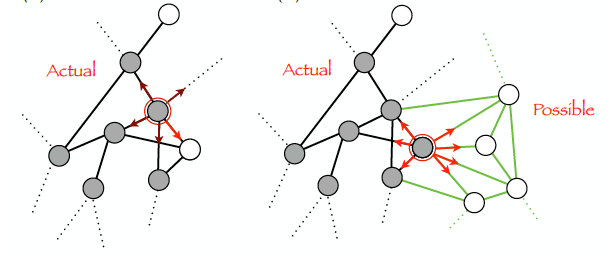
The adjacent possible:  A second aspect this week that implies robustness, resilience and preparedness is that of ‘the adjacent possible’ (original theory developed by Stuart Kauffman).  Steven Johnson, in the WSJ,  describes it well: ‘The adjacent possible is a kind of shadow future, hovering on the edges of the present state of things, a map of all the ways in which the present can reinvent itself.’  In my interpretation this considers where an organisation’s next space could be that will keep it adapting.

I’m seeing a lot of examples of this right now. One is Silent Pool Distillers a small gin distilling company who, using similar ingredients to gin, are now producing hand sanitizers.  Head Distiller, Tom Hutchings, said ‘we saw that there was a lack of hand sanitiser, so we decided to put our equipment, alcohol and botanicals to good use by creating a couple of hundred bottles for locals.  But we’ve now got an additional 5,000 bottles in production. ’ The company is hoping to increase production to supply hospitals, care homes and medical centres. Silent Pool is one of many organisations I’ve read are moving into the adjacent possible – but, how many others could have had they been exploring the possibilities and developing skills and capabilities for the unknown?

To recap:  Aiming to future proof is folly.  Developing preparedness for an unknown future is sensible.  You can do this through a variety of means including: developing leaders comfortable with complexity and radical uncertainty, considering the adjacent possible, undertaking planned abandonment activity, participating in critical thinking in various future focused activities (for examples of some of these look at the IRISS Future Risk and Opportunity Toolkit)

What’s your view on the future proofing?  Can we proof ourself against the future? Is building robustness, resilience and preparedness just a different form of future proofing?  Let me know.

Image: The adjacent possible

Covid-19: An organisation design perspective

This is not exactly the transcript of the webinar I am facilitating on 9 April, Covid-19:  An organisation design perspective,  but it is the sketchy outline of the discussion we’ll be having if things go according to plan i.e. technology holding up, people registering,  I log on at the right time, I don’t press ‘end webinar’ in the middle by accident, etc.

Real time webinars are a bit scary.  Mine is using the Webinar Ninja platform and, fortunately, they have a very comprehensive ‘complete guide on how to plan, create, and run a successful webinar’.    Its author says: ‘Let me be absolutely clear. (Their emphasis). This is a total game plan. It’s not a simple blog post, listicle, or collection of tips. This guide includes all the essential information you need to plan and execute your webinar from start to finish.’   Ok – I hope I’ve taken the point and assimilated the guidance, here’s how I’ve worked with it.

I turn to the section on presentation slides and learn that,  ‘Your presentation slides are not your workshop script. These are visual aids that supplement and guide what you’re teaching. If everything you say and do is on the slides, then why can’t your attendees just read the slides on their own? There has to be more to your workshop than that.’   Right, good.  I’d already planned that attendees will participate via the chat box, Slido, or similar.

The guidance then says ‘Begin with a title’.  I’ve got that.  It’s the title of this blog, The instruction is ‘Create a title that sounds irresistible, and create a webinar that fulfills its promise.’  Well, I didn’t think of the title, it was given to me as a suggestion by the organisers.  I’m not sure it is ‘irresistible’, (how do you measure that?), but it must be down to me to create the webinar that fulfils its promise.

The next requirement is to ‘have a learning outcome’.  Good point.  I created the presentation and then read the guidance.  I found I’d not got learning outcomes stated – but now I have:

By the end of this webinar, we will have

  • Recapped on what organisation design is
  • Looked at what we are noticing as Covid-19 impacts organisation design
  • Considered some critical questions we need to immediately ask about the design of our organisation
  • Started to discuss some actions we can take now to design our organisations for the ‘new normal’

Then comes the ‘About’ slide, I’m warned, ‘This is where many hosts run into trouble. It can be very tempting to blather on about oneself, listing your accomplishments and “sharing your journey.” Keep this part short and sweet’.  I’ve bucked the instructions by putting ‘About me’ before the learning outcome, but I have kept it short, in fact the older I get the more I trim down my bio.

The next slide is supposed to be a ‘before and after’ slide: ‘It’s important to show your attendees what life looks like with and without your solution implemented. This indirectly shows how important the workshop is, and how much their life will improve because of it.’   Oh dear, I decided to leave this slide out.  I don’t have either a solution to covid-19 or a solution to how to design organisations in the light/wake of it.  I also can’t guarantee that attendees’ life will improve because of the workshop – that seems like a bridge too far at this point.

I can’t even guarantee they will be listening to the webinar, even if they are logged on and attending. Someone sent me a delightful zoom meeting attention span pie chart (Actual meeting time attention 2%, removing of kids from bedroom 10%, etc), which seems pretty accurate in my two weeks or so of Zooming.

‘Then comes the meat of the presentation’ I’m told to ‘Break down your instruction into 5 steps/ tips/ strategies that move your audience toward the learning outcome. For each step/tip/strategy, provide 3 sub-steps, details, or important clarifications’.  OK – I’m fine on this one.  My years of teaching and instructional design seem to have made me unconsciously competent at this. But wait, I have only 3 steps (although each set has 3-sub steps).  Will this work or shall I somehow introduce two more steps?

I’m using the ‘What, So What, Now What’ model.   In my zeal to attribute it to someone, I got side-tracked by trying to find out who to attribute it to.  The choices I’ve found so far are, separately: Driscoll, Rolfe, McCandless, Borton.  The best discussion of the origins of this model, that I came across is in Chapter 2, Practising Clinical Supervision: A Reflective Approach for Healthcare Professionals, 2006, ed John Driscoll,  Elsevier (I read the chapter by ‘looking inside’,  But he doesn’t mention Keith McCandless, who has a workshop outline using it.)  Anyway, I’m not really sure how much it needs attribution.  Does it take academic brainpower, research and theoretical underpinnings to think up ‘What, So What, Now What’?  They’re pretty simple words in common usage.

Well the meat of my presentation, begins with the ‘What’ – ‘The forced move to remote working as a response to COVID19 is arguably one of the biggest organization design shocks to have hit with such rapidity and scale in our lifetimes’, says the ODC and is followed by my discussing the impact of the ‘What’:

We are considering, often for the very first time, why we have worked the way we do.  We are being forced to confront the delta between our assumptions, our beliefs, and our reality.  We are starting to ask:  Why does this process or policy exist? Is what we say what we do? Have we considered this before? The shock is provoking a conversation. That conversation is provoking change. We will not go back to ‘normal’.  (This section is adapted from Aaron Dignan’s blog on the operating system canvas).

I then move onto the ‘So What’ three critical questions that covid-19 is forcing us to ask:  What organisational values, strategies, decisions have been made or changed so far through this experience? What are the critical organisational design factors that are currently maintaining a level of business continuity?  What of our before covid-19 organisation design may continue to serve us and what may we want to discard/change/do differently?

And finally onto ‘Now What’ with five actions taken from the excellent Covid-19 Briefing Materials, McKinsey.  Oh – I just realised that it should only be 3 actions if I am following the 5 x 3 approach.  No – it’s ok. I’ve already slipped that leash.

Almost home and dry then?  I have a recap slide.  But I don’t have the suggested ‘my offer’ slide – I’ll think on that one, and perhaps slip it in when I’ve decided what to offer.  I have got the Q & A slide and (not suggested in the guidance),  and a further resources slide.

If this sounds like an irresistible webinar and you want to register for it you can do that here, and if you can’t attend, it is being recorded so if you register, you can listen to it after the event.

How do you think covid-19 is impacting/will impact organisation design?  Let me know.