Uncertainty and leadership alignment

I’m re-reading the Susan Jeffers book Embracing Uncertainty to get a top-up dose of how to do it.   It’s a struggle right now, and this was highlighted for me as I read in the Economist on 2 May that smokers seem less likely than non-smokers to fall ill with Covid-19 and then I read in the New Scientist 23 May  smokers are actually at a higher risk of dying from Covid-19.   Which should I go with?  One/other, wait …  As I’m not a smoker it probably doesn’t matter either way(s) but the point is what we read one day/week is different the next day/week.

Uncertainty is the theme of the times and there are some who are better at living with it than others. ‘Scientists are accustomed to talking about ranges and living with uncertainty. The public might find that harder. As the first meeting of Sir David’s online committee got going, commenters were enthusiastic about “this effort to disseminate the science, rather than the spin”. But, once it became clear that the panellists had differing views and were not about to offer up a ready-packaged solution, the tone changed. “Please Mr Modeller!” went one comment. “Just answer the questions.”’ Economist:  Of white coats and grey suits

Those of us who are not scientists are often both uncomfortable with uncertainty and ill equipped to manage this, as behavioural scientists observe.   (If you want to know more on this, listen to a great podcast,  Behavioural Science in the Context of Great Uncertainty,  one in LSE’s public event series – COVID-19: The Policy Response.

And the Covid-19 pandemic is an unprecedented event in modern history, bringing with it a crisis of uncertainty. And yet, as Rebecca Knight author of a recent HBR article says, this crisis of uncertainty is ‘not necessarily unique. Similar to other crises, such as 9/11 and the global financial downturn, workers feel scared and worried.’  She quotes Paul Argenti, Professor of Corporate Communication as saying, ‘Uncertainty triggers fear. People are freaking out and wondering, ‘What does this mean for my company, my job, and my future?’”

Knight’s asserts that, ‘Your role [as leader] is to project confidence and strength.  Even though the situation is fast-moving and you don’t have perfect information, you need to be honest about what you know … task one is transparency …  explain to your team, here’s what we do know, here’s what we don’t know, and this is what we are doing to close that gap.’

And there’s the rub.  It maybe relatively easy for one leader (or manager) to be transparent and honest, but it is several degrees harder when a leadership team is involved.    I’ve been in many recent meetings and discussions where people are anxious about the lack of leadership team member alignment.  They’re seeing leaders who are not ‘joined-up’, not speaking with ‘one voice’, not behaving and acting as a united team, and not being able/willing to be transparent and honest about what they do and don’t know.

This despite the obviously  heightened craving for leadership team/executive team member alignment, which is, says Jack McGuiness, ‘when all members of the team work in sync to accomplish a common purpose.’ He explains further, ‘More specifically, an aligned leadership team debates well, proactively supports each other, is laser focused on what is most important, and is committed to learning and improving.’

Supporting the case for leadership team alignment, authors Paul J. H. Schoemaker, Steve Krupp and  Samantha Howland discuss a leader’s ability to align in their article in the Harvard Business Review, it is one of the  ‘six skills that, when mastered and used in concert, allow leaders to think strategically and navigate the unknown effectively’.  The six are:  the abilities to anticipate, challenge, interpret, decide, align, and learn.

On ‘align’ they say strategic leaders must be ‘adept at finding common ground and achieving buy-in among stakeholders who have disparate views and agendas. This requires active outreach. Success depends on proactive communication, trust building, and frequent engagement.’

Knowing what ‘success depends on’ and then developing them and deploying them means overcoming 5 attributes that, in my observation, hinder a leadership team member’s ability to align with other team members.

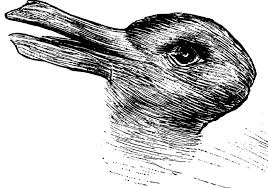
  • Looking fixedly through their own metaphor – unable to acknowledge there may be others (see the duck/rabbit image above).
  • Binary thinking.  On this see an article on the ‘brutal dilemma’ of lives versus livelihoods
  • Putting their own, or their business unit/organisation’s interests above the common good. (See this old but still relevant article Power an Politics in Organizational Life).
  • Not listening attentively and not questioning assumptions and not thinking ‘I may be wrong here’ (see the tool I mentioned last week on critical thinking)
  • Bringing one or more behavioural biases to bear.  On this one Tom Davenport wrote an excellent article, saying ‘Decision-making becomes most important in times of crisis, and this certainly is one of those times. But it also becomes more challenging, too, during periods of stress and most difficult when future outcomes are uncertain — which describes the current period as well. One reason is because cognitive decision biases are likely to appear in highly changeable, high-stress environments, influencing decisions in damaging ways.’ He then discusses 9 biases which he thinks are coming into play now.

However, because of the profound levels of uncertainty, even those with high level alignment skills  will find it challenging right now.  Which leaves me wondering whether the plea for ‘leadership alignment’ that I’m now hearing in various circles is remotely possible.  Is the only thing that a leadership team could be aligned on, a statement –  one on the lines of ‘We don’t know. Things are uncertain.’?

For many leaders saying ‘we don’t know’ feels risky.  And taking that risk is, in my experience, a necessary step.  Leaders are people too, like their workforce members, leaders are feeling the uncertainty.  Alongside this they can also feel and project the confidence and strength advocated by Knight.  Leaders (and workforce members) are not powerless in uncertainty.

Neither are organisation design and development practitioners.  We could, right now, be:

  • Creating the conditions for dissent/reflection, meaningful discussions and collaborative sensemaking, perhaps using techniques like Polarity Mapping that someone last week alerted me to, or the tool Adaptive Action that I mentioned, also last week.
  • Encouraging leadership team members to look at and overcome, individually and collectively, the attributes that are hindering alignment
  • Supporting them in developing the confidence to say ‘we don’t know and this is what we’re doing to work through things’.

How important do you think leadership team alignment is in these uncertain times?  What are you doing to encourage it if you think it is important?  Let me know.

Image: The duck-rabbit drawing was first used by American psychologist Joseph Jastrow in 1899 to make the point that perception is not only what one sees but also a mental activity
Covid-19, organisation design for next steps: toolkit

Someone emailed me saying he was helping an Exec team ‘bring coherence to their crisis response and recovery planning, using the opportunity to accelerate some of their future organisation design.’

This coincided with a discussion I was having, with some others, around the idea of simple, relevant toolkit that we could have available within a couple of days to help leaders do just that (‘bring coherence … design’ ).

I set to work using some of the tools and ideas we’d discussed.  Here’s the basic outline that I’ve sent to my colleagues to consider – my comments to them in italics:

Covid-19 design for next steps:  toolkit

Intro: (on the lines that I think we are all now becoming utterly familiar with) There is no going ‘back’ to as we were, the future is completely unknown and uncertain.  At this stage everyone – including leaders – must recognise, accept and be clear that in choosing current and future organisation designs there is no right answer that will ‘solve’ the problems or give us the opportunities this crisis presents.  (This is quite a step for people who want ‘the answer’ or certainty).  We simply have to to work for the good of all, learn as we go, be open to others views and experiences, and be comfortable in not having the answers.

Anyone working on designing their current and future organisation design, needs to be:

  1. Using collaborative strategies with multi-disciplinary teams
  2. Practicing holistic and systems thinking rather than linear or mono-dimensional thinking
  3. Redefining ‘success’ as no longer doing things in the right order, but rather doing enough of the right things at the same time.
  4. Identifying the many possible entry points for interventions, launching multiple parallel interventions and learning in ‘real time’ to ensure the appropriate sequence and mix of activities.
  5. Accepting that outcomes are not right or wrong. They are simply better/worse or good enough/not good enough. (The determination of outcome quality is not objective.)  (I’ve adapted this from some work I did on wicked problems).

To help you in your designing here are some immediately usable tools and resources.

There are six themes, each with two tools.

Each theme has a short description and each tool is presented in the same way:  Why this tool? How to use it (instructions).  What to do with the output. Links to relevant information/resources.  (For now, I’ve just sent you the theme descriptor, together with the tool names.  Once you’ve ok-ed the basic idea I’ll work up:  why this tool, the instructions, what to do with the output, relevant info sources. NOTE:  I have some of the tools – the non-hyperlinked ones, others will be developed from the hyperlinked info.)

Themes and tools

Operating context:   During uncertain times, it can feel like everything is uncertain or unstable.  These two tools will help you assess the context –organisational, societal, financial, etc. that are taking place due to Covid-19 and answer the questions What future outcomes do you have a fairly clear view of?  What outcomes are you not certain of at this time?  Where uncertainty lies, what do you know about the possible future outcomes?

Operating models (business, target):  It’s easy to rush into action trying to get things ‘back to normal’ or to the ‘new normal’.  Spending time to consider what’s been learned so far in response to Covid-19 – what’s worked well what hasn’t, what you’d like to keep that you’ve newly put into operation and also to reflect on your pre-Covid operating strengths and weaknesses.  Going ‘back’ no longer seems like a good option. (See, for example Move Fast and Try Not to Break Things.)   Consider carefully what your new operating model should be.

Value Chain mapping:  Principle 3 in the article 10 Principles of Organisation Design (Well worth reading. Will go in additional resources)  is ‘Fix the Structure Last not First’.  This is an instruction ignored by many as they head to re-jig the organisation chart.  A better approach is to map your value chain i.e. the set of activities that an organization carries out to create value for its customers.  The Covid 19 situation has probably seriously impacted it.  Use this map to examine all of your organisation’s key activities, and see how they’re connected. The way in which value chain activities are performed and the way the organisation is structured to perform the activities determines costs and affects outcomes.

Covid-19 redesigns offer an opportunity/challenge to rethink your value chain and structure to deliver it effectively and efficiently.  a good description of value chain analysis is here.

Restructures:  types of structures.  Determining your structure (aka organisation chart) means thinking about your value chain, business processes, culture you want to foster, etc.  Different structures ‘do’ different things e.g. encourage or discourage collaboration, enable quick or slow decision making, build silos or recognize interdependencies, etc.  Redrawing your organisation chart on the back of an envelope or after a brief discussion in a leadership team is neither a responsible approach to organisation design, nor is it likely to achieve the intended outcomes.

  • Tool 7: Structure comparisons
  • Tool 8: Questions to ask about structures (Both these tools are in my book. There’s a whole chapter in it on structures.)

Assessing your organisation design:  If you have arrived at a proposed design, or designs, then before rushing into it take the time to conduct a thorough impact analysis of the design(s) on the existing organisation to confirm whether your design solution(s) can be implemented effectively.   The impact analysis is not just a tick box exercise, it involves critical thinking on the proposals.

Leading organisation design:  It’s important leader of organisation design have honed skills in scepticism and critical thinking.   The infodemic on Covid-19 and its implications on our organisations and their operating context is hitting us hard and there’s no shortage of consultants offering advice.

This crisis has been/is being so profound that it has created, and is still creating, the necessity to think differently.  Leaders absolutely have to seize that opportunity.   There are two main mindsets we can navigate this crisis with: growth and fixed. Having a growth mindset is now an essential.

What’s your view on this quick toolkit for now.  Is it useful, relevant?  What tools are in your current Covid-19 organisation design toolkit?  Let me know.

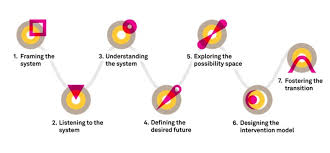
Image: Systemic Design Toolkit

Organisation design for remote working

The Organisation Design Community recently launched a podcast series, Making Remote Work. So far they’ve recorded around 12 episodes and have invited one guest per episode.  I got an email from them earlier last week saying, ‘Now we are thinking of creating a panel as well (it is more engaging and conversations tend to flow better) and would love to have you as part of it if you would like to.’

The email continued, ‘Until now, on the podcast we’ve had only 2 [organisation design] practitioners, the others have all been academics. We have touched on various subjects – leadership, teamwork, coordination, cooperation, history of remote, negotiations, values, transparency. We have not yet touched on Organization Design for Remote Work. Would this be something you would like to talk about?’

Having replied with something on the lines of ‘Thanks for the invitation, yes, that would be great’, I’ve spent the last couple of days wondering about the phrase ‘remote work’.

It’s easy to think it’s about the common response to the current coronavirus pandemic.  Companies are asking employees to work from home, rather than going to an office or workplace.  As Dave Cook says in his article,’ Many of us have had little choice but to resort to remote working in the midst of the coronavirus pandemic. It is just days since Google, Apple  and Twitter were making headlines by ordering their employees to work from home, but you could now say the same about lots of companies.’

Clearly, there is that forced aspect of remote work – additionally, there are other ways of considering the phrase ‘remote work’.  For example, it could refer to:

  • Work that is done in a specific physical workspace location but which is digitally delivered in real time e.g. telesurgery  or robotic surgery  or drone warfare.
  • Work done physically on a work site but where the workers are remote from their homes and families e.g. astronauts, or construction workers.
  • Work that is done in ‘virtual organisations’, designed to have no, or minimal, physical space but where the workers are doing a variety of jobs, physically remote from other workers, but linked through technologies.   These virtual organisation employees may or may not work from ‘home’, e.g. Uber drivers work from their cars,  while workers at social media management company Buffer, ‘a fully distributed team of 85 people living and working in 15 countries around the world, may work from home, coffee shop, …’
  • Working conditions and/or culture, on or off a physical site that promote a sense of feeling remote e.g. distance from frontline to leader, or lifestyle of garment maker to customer of garment.    This is sometimes reflected in the language of ‘HQ doesn’t understand what’s going on’ or ‘ivory tower executives’ or in pay scales – a recent UK example is the £54m bonus payment. (Ocado delivery drivers can expect to earn £21k per year, taking each one of them 2,570 years to earn the equivalent of £54m).

These are each very different types of ‘remote work’ but across them are some common themes where we could/should be designing.  The themes are:

Perceived, and felt, fairness – which could include the explicit design of pay systems, and the implicit value placed on workers by their organisations and societies.  It’s fairly obvious that in the current situation, typically the higher paid knowledge workers are working ‘remotely’, often from home and the lower paid frontline workers are keeping society’s oils wheeled in the day to day – caring for the sick, making food deliveries, serving in essential retail outlets.  An opportunity to address, is the divide between knowledge (remote) and front-line workers reinforced by pay differentials and perceived value to society.

Cultures of community and belonging – an HBR study conducted in 2017 of 1,100 employees found that remote workers feel shunned and left out whether that is the same now that more people are working remotely I don’t know, but given the explosion of articles on managing remote teams I suspect so.

Interpersonal interaction design – this may be a new area in organisation design  but I have seen many articles on issues of building trust and relationships  in an only on-line world – for example, this National Geographic one ‘Zoom fatigue is taxing the brain. Here’s why that happens.’ If more of us are going to be working online away from the day to day/face to face contact with colleagues then we need to think carefully about ways to replicate the value of this.

Designing for innovation and creativity – Look at the many articles on MIT’s building 20 for example  https://www.archdaily.com/353496/can-architecture-make-us-more-creative or why living in a city makes you more innovative and you’ll see that putting people randomly together fosters innovation and creativity.  An organisation design challenge for now is how to develop equivalent types of physical space that encourage this, whilst maintaining some of the norms of distancing we may be required to adopt. See the British Council for Offices briefing note on Covid-19 and a similar guidance note from the  British Retail Consortium.

System and process design – in a 25 April article The Economist notes that ‘The pandemic is liberating firms to experiment with radical new ideas.  Some of these will persist after the crisis passes.’   I’m seeing the systems and process redesigns they discuss happening in organisations I am working with.  I think these new designs will, as The Economist suggests, persist. They include:

Organisations being ‘forced to raise their corporate metabolism and overcome analysis paralysis’, this requires redesign of decision-making processes, delegation and authority levels, as well as changes to funding streams and budgetary controls.  They illustrate with the example of Sysco ‘a big American food-distribution firm [that] built and entirely new supply chain and billing system to server grocery stores in less than a week.’

Emboldening managers to change risk management systems in order to try out, at speed, risky new ideas ‘on larger groups of customers.’   Many organisations are swiftly designing and introducing rapid prototyping/testing systems for example Nike’s ‘deft digital pivot’ to online shared workouts or HP’s ‘acceleration of 3D as a service’.

Experimenting with new distribution channels– ‘Google has expanded the use of its Wing drones to deliver medicines and other necessities in rural Virginia’,  while Uber has rapidly expanded its Uber Eats delivery business.

Redesigning supply chains– COVID-19 has exposed the vulnerabilities of complex global supply chains built on lean manufacturing principles.

Command and control processes changing in ways as yet unclear – some aspects becoming much more authoritarian others becoming more open and transparent for example, investing in open-source software or engaging customers in open-innovation efforts.

How are you thinking about ‘remote’ and do you think the pandemic will change organisation designs and the way we design organisations?  Let me know.

Image:  Virtual team building activities

Normal or not?

‘Now this is not the end. It is not even the beginning of the end. But it is, perhaps, the end of the beginning.’  This Winston Churchill quote is just right for now.   We are not at the beginning of the end of the Covid-19 crisis.  It is going to be with us, perhaps for our lifetimes or longer, as other infectious illnesses are.

Virologist, Guido Vanham, in a World Economic Forum interview said,  ‘It [Covid-19] will probably never end, in the sense that this virus is clearly here to stay unless we eradicate it. And the only way to eradicate such a virus would be with a very effective vaccine that is delivered to every human being. We have done that with smallpox, but that’s the only example – and that has taken many years.’

So, I’m surprised by the number of meetings I’ve been in over the last couple of weeks in which people are talking about ‘going back to normal’, or ‘the next normal’ or ‘the new normal’, in ways suggesting that they are planning to ‘tweak’ their world view and their organisations a bit,  and in doing this things will be much the same as they were during 2019 or even up to early 2020.

This is a mistake.  We have had a wrenching global shock both individually and collectively.    Organisations are reeling from it, very few will be able to go back, or forward, to any form of ‘normal’ that looks anything like the pre Covid-19 crisis.

We know, and are experiencing, the  covid-19 pandemic, which, as the Economist Intelligence Unit (EIU) reports, ‘has led to society-wide lockdowns across the world, bringing all but commerce and services deemed most essential to a sudden halt, large portions of countries sheltering at home and unemployment spiking.’    As a result of the Covid-19 measures, the IMF, in its latest World Economic Outlook, forecasts the worst economic downturn since the Great Depression.

To examine this forecast, in April this year, the EIU, launched the Global Business Barometer, which will be updated monthly. The launch survey was ‘Based on an initial online survey of 2,758 executives from 118 countries, fielded from March 26th to April 6th’.  Respondents were asked ‘questions ranging from their outlook on the global economy and investment plans to operational and risk management strategies.’ The findings make grim reading.

The EIU states, ‘the world is not going to suddenly spring back and continue as though nothing has happened. Forty percent of executives we surveyed answered it would take “less than a year” from the outbreak for their business to recover. That is cheering and we hope they are proven prescient. But 46% of those surveyed believe it will take between 1-2 years and 10% believe it will take 3-5 years. The former seems realistic, the latter disastrous.’

The EIU comments, ‘Few if any industries will be spared from the impact of covid-19 and the various policy responses to it. Some will be much harder hit than others. Tourism and travel is an obvious example, as is the consumer goods sector (outside of food and other essentials). With many factories shuttered across the globe, supply-chain disruptions and demand cratering, manufacturing is also forecast to experience significant pain in the short to medium-term.’

Leandro Herrero, in his inimitable way is clear ‘We need to feed-forward. Not feed-back. We don’t need a thermostat. We need a compass. Move North or East or West or South, but never back to normal. Because normal is not waiting for us.  …  The so called ‘new normal’ (this thing is sticky) is for creators, makers, builders. Not for decorators of the same old room. Not going back to the pot of paint to finish the ceiling, that was left behind.’

His is a call to move on from our paradigm of ‘normal’ that is not waiting for us.  Others suggest similarly.  For example, the UK Guardian notes,

‘The global impact of the coronavirus pandemic poses a fundamental question: is this one of those historic moments when the world changes permanently, when the balance of political and economic power shifts decisively, and when, for most people, in most countries, life is never quite the same again?

Put more simply, is this the end of the world as we know it? And, equally, could the crisis mark a new beginning?

Genuinely pivotal global moments, watersheds or turning points (pick your own terminology) are actually quite rare. Yet if the premise is correct – that there can be no return to the pre-Covid-19 era – then it poses many unsettling questions about the nature of the change, and whether it will be for better or worse.’

What I’m not seeing much of in my day-to-day work is organisational leaders consciously and reflectively discussing and debating these larger questions.  What I’m seeing is a bias to action to get things ‘back on track’, in much the same way as they were pre-Covid-19.

The numerous ‘R’ words from management consultants are not helpful in encouraging time for thought.  For the most part, they are based on a ‘normal’ management 3 – 5 step frameworks.  For example, McKinsey’s advice to leaders in early April was to think and act across 5 horizons: resolve, resilience, return reimagination and reform.

Now (May) they propose: recovering revenue, rebuilding operations, rethinking the organization, and accelerating the adoption of digital solutions.  (OK – no final ‘R’ word).

Bain – also in April – has Protect, Recover and Retool.  While Accenture’s advice for the Covid-19 crisis (that could have been given at any point in the last decade) is to ‘establish long-term strategies for greater resilience. Apply lessons learned … to create a systems and talent roadmap that better prepares your company for future disruptions.

  • Define long-term transformation strategies that prioritize and address antiquated applications, architectures and infrastructure, highly manual processes and underfunded cyber resilience.
  • Self-fund your transformation through small incremental programs that drive efficiency and free up capital.
  • Leverage ecosystem partners to shift to an asset-light model and mitigate vulnerable dependencies, choosing partners resilient to global risks.’

If we are reaching a turning point in containing the Covid-19 pandemic then it is time to recognise that this is as Churchill said, ‘perhaps the end of the beginning’ but the beginning of something that doesn’t relate to any prior ‘normal’.

Geoff Mulgan put the opportunity well in his piece How not to waste a crisis. He says:  ‘The next few months will bring intensive learning on how to manage the crisis, as well exit strategies. But we also need to start planning for the peace. What new methods can be adapted from the crisis? … What new ways of thinking has it thrown up?…  we should never waste a crisis. An incredible amount of thought, creativity and commitment is going into the responses around us right now. But how can we harness some of that for longer term [positive] impact?’

Similarly, economist Milton Friedman noted:

“Only a crisis – actual or perceived – produces real change. When that crisis occurs, the actions that are taken depend on the ideas that are lying around. That, I believe, is our basic function: to develop alternatives to existing policies, to keep them alive and available until the politically impossible becomes the politically inevitable.”

Do you think this is the end of the beginning and should we avoid any thinking about ‘normal’ as we have known it?   What ideas have you got lying around that will produce real change?  Let me know.

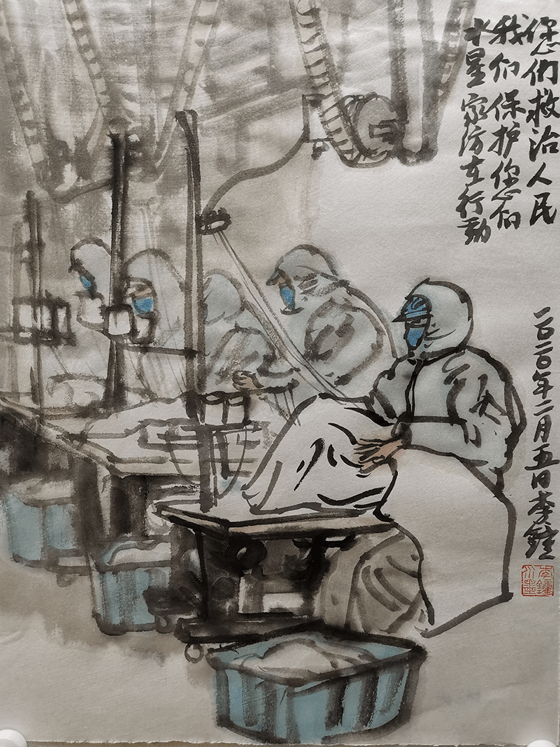
Image: Li Zhong: Mercury Company in Full Production, April 2020