Why organisation design matters

Design matters

This is the last of my blogs relating to the forthcoming third edition of my book “Guide to Organisation Design,”.  This morning, 31 May, I sent the entire book off to the publisher.  It will be published on March 3 2022.  I’ve still a bit to do – reading the proofs, choosing the cover design, thinking of a sub-title, but none of this right now:  it’s handed over!  This week’s blog is the foreword.  Each of my review/advice/suggestions group talking about ‘Why organisation design matters’.

Foreword

Each of the five organisation designers who worked with me to shepherd this book from start to completion, believe, as I do, that organisation design matters. 

Why they believe this, they explain in the paragraphs below. 

Jim Shillady: Occasionally organisations succeed by chance.  But, in general, success comes from thinking explicitly about what to do, why, and how – and then doing it.  Organisation design’s value has been in orchestrating that thinking process.  Yet until recently it has mainly had to tackle complicated rather than complex problems – essentially those requiring novel technical solutions rather than true innovation.

Now organisation design is evolving to take on complexity – challenges that are new in themselves, that are of great significance to people and the planet, and that emerge and interact in surprising, often alarming, ways.  In its contemporary form, organisation design matters more than ever; it answers tougher questions, involves participants more frankly and demands more of them, and values action over order. Arguably, no other discipline has such power to help people and their leaders confront new realities and create enterprises fit for a turbulent world.  

Rani Salman: The bridge connecting strategy to execution comes in the form of organisation design.  Misaligned operating models and poorly designed organisations are notorious for strategic failure.  Organisation culture can shatter the most ambitious and accurately developed strategies.  Making sound design decision can shape a supportive culture and mitigate the risk of strategy failure.

These decisions are not always easy to make, especially in a landscape where organisations have become more interconnected and complex.  Compounding the complexity is a never-ending array of dynamic choices that bring with them tensions, difficulty, and consequences both intended and unintended.  However, with a focused approach and a unique mixture of science and art, the design process can be challenging yet rewarding and culminate in organisations capable of high performance.

Most importantly, organisation design matters because it runs deep and touches the human experience and psyche, impacting people in profound ways that often transcend their organisational experiences.

Fiona McLean:   Organisation design matters because it urges us to put our human selves at the centre of our efforts. It offers us the possibility to think of organisations in different ways where we can see an organisation as a body of bodies, where our governance and processes are less bound by hierarchy, more inclusive, more transparent, where no voice is unheard.  Where decision making and information flows smoothly from strategy to design and back around in a dynamic feedback loop of human interaction moving strategy into action.  Where social interaction and conversation is valued as much as formal planning and where the essence of those social interactions act like a strong pair of lungs transferring life giving oxygen into the system for vitality, in order to create the conditions for continuous design.

Giles Slinger:  Organisation Design matters because it shapes people’s experience of work and whether an organisation can deliver to its customers.  In a perfect world, organisations would sense the need for change and would adapt continuously from one stage to the next. But our reality is never perfect. Organisations face a never-ending challenge of balancing continuity (supply) and change (demand). Continuity can be efficient, and human brains love routines, so organisations would by default supply ‘the same as before.’ At the same time, people value change – they value things that are new and better, so organisations must adapt to this demand. Happily, humans also have a restless curiosity, such a capacity to wonder and invent that supply can effectively be unlimited in meeting new demands. The challenge is moving organisations of such wonderful humans from one stage to another fairly, efficiently and quickly. Organisation design helps gather the evidence, helps develop the options, helps find the agreement and helps deliver the transition, on to the next stage.

Milan Guenther: Companies, institutions and other organisations run those endeavours that enable human action at scale. They bring together teams and their ambitions, resources and ways to use them, products and people’s needs: to be successful as an enterprise, they have to be designed to build relationships and enable dynamics that constitute successful outcomes. 

Responding to big challenges requires organisations designed to be fit for purpose, to perform and deliver. This applies to a disruptive start-up just as much as to a large corporation, or a public health effort such as a vaccine rollout.

So how do you design successful organisations? You can design business models, information systems and operational processes, product and service portfolios, or team responsibilities and collaboration. Going beyond optimising these individual elements, purposeful organisation design will help you understand how they can be organised coherently as a system, and how to reshape their interplay to bring about a desired future. Designing organisations well matters.

Why do you think organisation design matters?  Let me know.

Organisation design book: the prelims

foreword.preface.intro

Continuing the alternate week pattern of posting extracts from the forthcoming third edition of my book “Guide to Organisation Design,” this week’s extract is the start of the prelims, together with some musing on them.

To my joy and some surprise, it looks as if I’m going to get the third edition of the book into the publisher by the contracted submission date – 31 May 2021, which is due to be published March 2022.

The nine chapters are written and this week I’ve been reviewing them, tidying them up, and looking out for obviously dotty or incorrect writing. Fortunately, someone else is going to do the detailed editing: checking the spacing after a full stop, making the headings and sub-headings consistent, confirming that the words in bold (that are explained in the glossary) are actually in the glossary, ensuring references are correctly cited and not a mish-mash of different citation styles, etc.

Now the time has come to write some of what the publisher calls the ‘Prelims’, including acknowledgements, foreword, preface and introduction.  The second edition only has acknowledgements and preface – but this time there’s definitely going to be a foreword, and I’m wondering whether there needs to be an introduction too.

In search of guidance on whether I needed an introduction I found some firm words: ‘the foreword, a preface, and an introduction are three separate and very important elements that appear in the front pages of books, and they each have their own specific functions. The roles of these pieces are often confused.’  

  • A foreword is written by someone other than the author and tells the readers why they should read the book.
  • A preface is written by the author and tells readers how and why the book came into being.
  • An introduction introduces readers to the main topics of the manuscript and prepares readers for what they can expect.

Last week, I invited the review/improvement group, who are supporting me with the book,  to write a para each for the foreword. All five have gamely agreed and we discussed what they would/could say in our bi-weekly meeting.  This ranged from developing an org design Manifesto, to views on what we would like organisations to be and not be e.g. to be open, fair, just, and onwards into what organisations we wouldn’t want to design for and the value of developing design criteria.  We seemed on the verge of heading towards the Mark Twain quote ‘I didn’t have time to write a short letter, so I wrote a long one instead’ and reined ourselves back in.

The upshot of this is that all five will each write around 150 words stating ‘why organisation design matters’ (and, by implication why you should read the book). 

This leaves me with the preface and the decision on whether or not to write an introduction. One of the two may be nixed by the editor who is getting antsy about the book’s word count. However, I’ll give the preface a go and see if I can slip the introduction into it – ignoring the firm words about their different and specific functions.   Here’s my first shot at the preface. 

Preface  

I promised my family that I would not write another book. They want to see more of me than my back facing the computer.  They had already supported me through my PhD and several books.  When invited to do so, in mid-2019, I refused to write a third edition of this book. Then I changed my mind. 

The trigger for this was the start of the coronavirus pandemic – around February 2020 – which rapidly ramped up into lockdowns, remote working, and an extended and shared vocabulary that was evolving at hyper-speed and quickly becoming a core part of the language.

 Oxford Languages was unable to suggest a single word of the year for 2020, instead issuing a report ‘2020:  words of an unprecedented year’. The words were not just those spawned by the coronavirus pandemic but those new to technology and remote working, the environment, social movements and social media and, politics and economics.

What, became obvious and clear to me was that this unprecedented year was going to have a profound impact on organisations and the way we thought about them, worked in them, and designed them. I thought it would be fascinating to revise the second edition in the light of what I was experiencing, observing and getting to grips with.  

This has proved to be the case. We are thinking differently about organisations and the way we work in them and it has been a fascinating journey of reflection, discussion, learning, challenge, signal detection, pattern recognition and meaning-making. 

This third edition is has some very different content from the second edition, including a new chapter on continuous design. Almost new chapters are those on leaders and design, and designing culture. And there are major revisions of all the other chapters. Throughout, the examples and cases are new and the impact of the pandemic is threaded through.

However, writing this third edition is not simply a swift reaction to an unprecedented year. It draws on both my three-plus decades in the field of organisation design and the things I’ve been talking about and urging for over the past 7 years. 

The coronavirus pandemic has served to throw into sharp relief my strongly held beliefs that organisations that are continuously designed to be human centred, good places to work, well-led by ethical and curious leaders who are purpose and outcomes driven, will be better able to weather the changing contexts than organisations that focus on hierarchies, structure, procedures, targets and objectives.

The coming years will see the ripple effects of the pandemic, and I am reminded now of fiction writer, Kim Stanley Robinson’s quote, ‘We have come a long way. We have a long way to go. In between we are somewhere.’  We are at the somewhere between traditional, hierarchical command and control organisations and organisational forms that we have not yet seen come into the mainstream. 

If organisations are designed to become flatter, foster respect and autonomy, promote equal opportunity, equal treatment and equal outcomes and if, at the same time, organisational leaders and other stakeholders design with the recognition of our interdependence, fragility and vulnerability, and of the impact of our current lifestyles on our environment then the learning from the pandemic will show it is being applied.  

In writing this third edition I am hoping that leaders and managers, in their capacity of organisation designers (which they are whether they recognise it or not) will find value in learning more about their role in designing organisations and putting that learning into practice. This book gives them the information, methods, examples, case studies and tools that will help them do so.  

Image: https://www.thebookrefinery.com/planning/foreword-preface-and-introduction-what-they-are-and-where-they-are-put-in-your-book/

Organisation design book: progress review 2

progress review

Regular progress reviews are something I advocate in organisation design work.  Applying this advocacy to myself, this week’s blog is the second progress report on the writing of the third edition of Guide to Organisation Design. I wrote the first progress report 9 weeks ago.  As last time, I’ve used a simple template ABCD that I use on projects – usually as weekly report. But today’s is a longer time frame, covering the 10 weeks from then.

Achieved

All 9 chapters are completed in the first go-round and have been submitted to the publisher’s content editor for comments.  She’s sent back 8/9 and I’ve spent the last 2 weeks re-writing chapters 1-8 to reflect her comments and the comments of my splendid review/improvement team. 

Several of her comments are about the jargon of it all.  It’s a salutary process as I try think of a way of explaining ‘leverage points’, and ‘content moderator’, and ‘open-source code’ and ‘jump the s curve’, and many others, in simpler terms.  Originally, I thought a glossary might be redundant.  Now it seems essential.  A couple of people reviewing the whole book are going to highlight the words and phrases they think should be in the glossary, and I’m doing the same.

This language hurdle does raise the question, ‘Do organisation design practitioners confuse potential clients with difficult language?’  

We’ve achieved a blog contribution from each of the 5 review/improvement group members. (Thank you for this).   The way it’s worked is that I post a chapter extract one week and the following week one of the group writes a blog on the topic.  Seeing the different takes, writing styles, and then reader comments on their blogs is lovely (and I enjoy taking a blog-break!)

It’s felt a bit like a book club – we all read the book/chapter and then discuss it and then someone writes about it.

It’s another all-group achievement that the bi-weekly meetings have continued past the point of the final chapter being written.   It’s turned into a form of action learning group.

Another achievement is that the book is not a ‘how to’ guide.  It probes and challenges thinking about organisation design and its inherent tensions, complexities and possibilities.  Nevertheless, it has practical tools, ideas to try out and examples of where things have and haven’t worked.  (The content editor rejects the word ‘things’ which has also caused me some searches of synonyms and several moments of displacement activity while I ponder an alternative).

Benefits

What benefits have been realised over the last 10 weeks?  (Ed: please explain what you mean by realised.)   Well, I guess there have been benefits – is it ok to say that one of the benefits of having written the full 9 chapters is that I can see the book publication in sight and thus some time released for me to do other things than, as my dearly beloved says, ‘hunch over the computer’. 

Also, I have got a treasure trove of new resources – articles, references, contacts, insights, and fresh thinking as I’ve worked with people on the book.   Many of them are now nestled in the rewritten first draft, which I think is much improved over the first draft.  (I’m awaiting editor’s comments on this last point).   

And I’ve developed my knowledge and thinking on systems and complexity.  I came across a very good, free. Open University, downloadable course that is a good intro for people who want to dip their toes in the systems water.  And on complexity – just to show you the complexity of it – the wonderful complexity sciences map by Brian Castellani.  Looking at that, I did pause to wonder if I needed to challenge my thinking that the complexity sciences are dominated by white western men.   (I think not!)

One of the group, Jim Shillady, did a quick analysis of the LinkedIn ‘likes’ on the blogs so far.  He’s observed that the audience have been most/more interested in the pieces on ‘What is OD?’, on structure, on alignment, and on systems.  He says, ‘It feels as though the focus of their concern (or puzzlement) is still on how to deal with complexity, dimensions, interconnections and the like. They seem to want to comprehend frameworks before they can think about behaviour and important, but fuzzy, notions such as values’.   The book is organised in that order so hopefully will benefit the readers.

Concerns

It isn’t exactly a concern, but the scope of the book came under discussion,  triggered by a conversation I had with a couple of Equality, Diversity, Inclusion (EDI) researchers who were asking is it possible to design EDI into organisations.

I touch on EDI in the book but doesn’t explore it in any depth.    (My view is that the three things –  E,  D,  I –  are not amenable to being lumped together and need very different design approaches). I wondered if I had sufficiently acknowledged it, as it is a topic on almost everyone’s agenda right now. 

Which led to another discussion on fads – is EDI a current fad? Is hybrid working?  What is the role of organisation design in responding to ‘hot topics’ like these?  One of my books had a chapter on trends and fads, and I’ve written several blogs on them. Given the book has to be current for a few years the concern is to make it so and not fall for what might be a bandwagon.  

Sidenote on hybrid working:  I am joining a panel discussion on this on 27 May, 09:15 if you would like to register.

Do next week

The list is long for doing by 31 May.  There are the detail things – not my forte.    The glossary will take time.  I also have the detail of checking every reference and citing it correctly.  Then there’s the permissions I have to get for various graphics and images – this can be a difficult, long-drawn out process, and I hope I haven’t left it too late – some organisations want to charge for giving permission.  I have to get all the figures and tables out of the draft and into separate files, correctly numbered and referenced. 

Then there are the publicity things –  I must invite some people to provide back cover endorsements for the book.  And think about how to launch the book. (First step find out publication date).

Finally, there’s what are called the ‘prelims’ to write – acknowledgements, foreword, preface, and so on. And I mustn’t forget I still have to do the next go-round of chapter 9.

Closer to the time there’ll be the book sub-title and jacket to consider – then I’ll really feel the end of the process is in sight.   I wonder if I’ll stick to the ‘never again’ statement I made so firmly after the second edition?

Image: https://knowyourteam.com/blog/2019/02/15/should-you-use-an-employee-performance-improvement-plan-pip/

Who leads on culture? Four stories

Week 18.culture

Last week I posted an extract taken from Chapter 9, Culture,  from the forthcoming third edition of my book “Guide to Organisation Design,”.  The group I am working with discussed the chapter, raising the question – who leads on culture? Rani Salman, one of the group, has picked up on this in his guest blog below.  Many thanks to Rani.

The Battle of Santiago

The year was 1962, the “beautiful game’s” peak moment had arrived centre stage, as football’s highly anticipated World Cup was being hosted in one of the most southern points on earth- Chile.  

One of the favourites to win it all was Brazil, led by Edson Arantes do Nascimento, better known as Pelé; a maestro on the pitch, and who many argue is the greatest player to ever play the game.  The Brazilians collectively knew that having a cohesive and high performing culture, especially, in such a tense environment was paramount to the success of the team. The prevailing view was that Pelé’s brilliance and star power on the pitch underscored by the 77 goals he scored, was the driving force of leadership on the team that truly shaped Brazil’s winning culture.

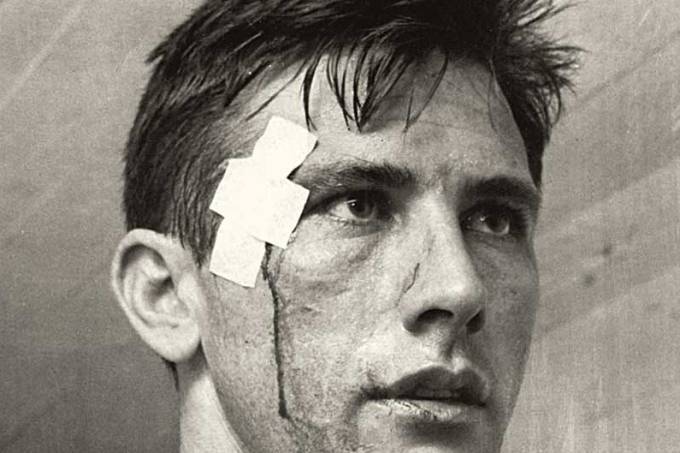
However, surprisingly, Pelé was never made captain of the team nor did he ever lobby for it.  The team’s captain was little known Hilderaldo Bellini, a gritty and humble central defender who, during a nine-year stint, never scored one single goal.  While Pelé attended to the pressures of the spotlight and was the face of Brazilian football, Bellini took care of the daily, hourly grunt work of unifying the team and building their winning culture. He cleaned up their mistakes with his fearless defence, often leaving the pitch bruised and bloodied, and calmly urged them forward when their confidence sagged (Bellini).  His job wasn’t to dazzle on the field but to labour in the shadows of the stars, to carry water for the team, to lead from the back.  

Brazil eventually won the 1962 World Cup in spectacular fashion, and in an iconic moment, Bellini raised the trophy emphatically above his head, an extravagant gesture for the time (Trophy Lifting).  Maybe the unassuming defender was finally soaking in the glory of his role; the unsung hero, a backstage leader, a cultural firebrand, who many of his peers dubbed as the real foundation of the team’s winning football culture.      

The Lonely Wizard of Menlo Park

Thomas Edison is one of the greatest innovators of our time.  He was often referred to as the lonely “Wizard of Menlo Park” tinkering alone arduously in his lab into the late night, cranking out invention after invention with his tireless brilliant mind.  He produced 1,093 patents and a trove of creations that helped shape modern history, such as the light bulb, phonograph, and motion picture camera.

He is also credited for cultivating one of the most powerful and iconic innovation cultures at the world renowned “Invention Factory” located in Menlo Park, New Jersey (Menlo Park).  A location, which many claimed fathered the birth of modern-day start-up culture and powered the rise of innovation.  His famous line of “I haven’t failed, I just found 10,000 ways that won’t work,” encapsulates the mindset and behaviours that formed such a unique culture, where inventions like the talking doll, electrical pen, cement, and vote recorder took off.  

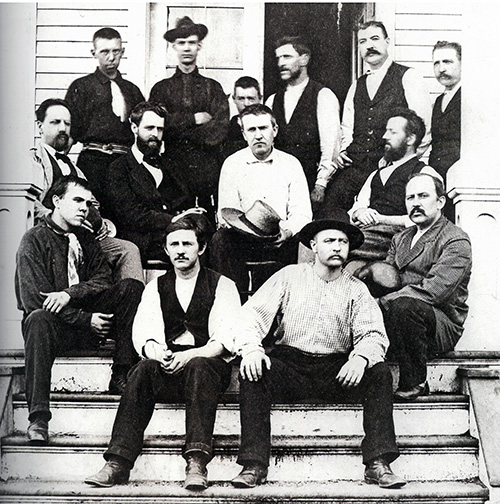
However, the essence of innovation culture at the Factory was not all down to Edison. It really stemmed from a small group of skilled technicians and craftsmen dubbed the “Muckers.”  These gifted young men travelled across the US and Europe, to join forces with Edison (The Muckers).  They were responsible for testing, experimenting, and iterating many of the ideas and are often considered the real magic, fabric and lifeblood of innovation at Menlo Park.  If “genius is 1 percent inspiration and 99 percent perspiration,” as Edison famously says, then the Muckers should be credited for the 99%.

Sledgehammering Your Way to Cultural Change?

Formal leaders’ role modelling of targeted behaviours and their symbolic acts are a crucial ingredient to any cultural change effort.  The sight of Zhang Rumin, CEO of Haier, brutally smashing 76 fridges with a sledgehammer, brought employees to tears.  But, the message was loud and clear, the need to have all employees driving production of high quality products in a high quality cuture.  The act of sledgehammer symbolism initiated Haier’s quality culture, elevating it to a 16-billion-dollar business (Haier Article).  The sledgehammer is now on display in the permanent collection of the Chinese National Museum in Beijing.     

A FedEx story

FedEx, the logistics company known for its on-time delivery and which had a slogan of “The World On Time,” uses powerful stories and imagery to drive behavioural change, some of which has become company folklore.     

As company legend has it, early in the 1970’s one of the company’s drivers was out late one snowy night in the hinterlands of the Midwest to check a drop-off box for any packages. Only, when he got to the box, the lock was frozen solid and the key broke off in the lock. After trying in vain to reach the packages inside, the driver finally made the decision to drive to a nearby auto garage where he borrowed a blowtorch, which he then used to cut the legs off the box. The driver then put the box into his truck and delivered it to the airport where a maintenance team was able to drill it open, remove the packages inside and get them on the plane to their final destination “On Time.” 

You can’t find many things more powerful to communicating and shaping FedEx’s culture than this timeless and engrained story.

Navigating through cultural change

Cultural change, evolves through multiple routes:  symbols, leadership role modelling, systems, processes, structure, and others (Cultural Web).  Ultimately, if you want to change an organisation’s culture use a mix of interventions, choosing those that you think will have the most impact for your organization and its current context, while focusing on a critical few behaviours at a time.

If you can make real behavioural change happen then you are on the way to cultural change.  Yes, there are many other elements that constitute/influence culture (both internal and external) and those include values, mindsets, beliefs, attitudes, perceptions, etc. But at the end of the day, behaviours are observable, and typically managing and acting on something that can be seen and measured is a better way to make an impact.

Symbolic actions serve to set the stage for what is required, but they are insufficient.  People are more likely to change behaviours, in an organization, by seeing others, and by copying behaviours of their colleagues and peers, especially those they have strong relationships with or admire. 

This is where the role of influencers and informal leaders (such as the Muckers and Bellini’s of this world) come into play- informal leaders’ cross organizational boundaries and come with some form of power – social, information, personal. Identifying and working with the informal leaders enables a more scalable and viral spread of the behaviours targeted.

In fact, cultural influencers can have close to 60-70% more reach than formal leaders have in an organization with frontline staff (Influencers and Culture).  These individuals can often be the real cultural leaders of any organization, thus identifying, leveraging, and engaging informal leaders and influencers to propel change (although not always at the top of the agenda in a cultural change effort), can often prove to have the most impact. 

Image: https://counterpointsarts.org.uk/about/core-beliefs/

Designing organisational culture

Continuing the alternate week pattern of posting chapter extracts from the forthcoming third edition of my book “Guide to Organisation Design,” this week’s extract is an edited section taken from Chapter 9, Designing Culture.  Next week will be a discussion related to this chapter.

Designing organisational culture is difficult as it is in constant movement by virtue of random human interactions.  These interactions are embedded simultaneously in, not one but three key, cultural contexts, each with their own artifacts, espoused values and tacit assumptions related to:

  • A national culture
  • An occupational culture e.g. accountancy or software development which can be internal/external or both
  • A social culture e.g. a shared interest group or a friends’ network which can be internal/external or both

The way in which these interactions occur, and the extent to which they can and cannot be shaped are significant factors in an organisation’s culture.  

National culture

Partick Collison, co-founder, Stripe, mentions three aspects of his Irish background and Irish culture that shape his thinking on Stripe and its culture:

  • Ireland is very outward looking
  • Ireland has had very high rates of immigration
  • Irish culture places a lot of importance on just a kind of warmth

In Collison’s statements the three levels of culture, described by Edgar Schein, are evident – here showing at a national level.  The artifacts i.e. systems and processes that allow for high rates of immigration.  The espoused values that globalisation and open borders are good. And the tacit assumptions around warmth, interpersonal dynamics and helping people feel at ease.

Many other aspects of national culture shape organisational culture – language is one.  2020 – the year of Covid-19 brought an influx of new words indicating dramatic cultural shifts. Oxford Languages, customarily produces a ‘word of the year’, but for 2020 was unable to do that, instead producing a report with tens of new words.

These national societal changes reflected in language use were matched in organisation design work by the need, for example, at the artifact level to develop remote working policies and protocols, and learn how to manage fluctuating workforce numbers as employees had to self-isolate or caught Covid-19.  At the espoused values level many employers developed wide ranging health and well-being programmes to help staff manage their lives.  And at the tacit assumptions level workforce members unconscious attitudes to contagion had to be factored into workplace design and working practices as people returned to face-to-face working.

National politics is another external cultural factor that impacts the culture of organisations.  For example, in 2021 China’s tech firms reportedly started testing software that allows them to continue to track iPhone users in spite of Apple’s iOS 14 privacy update which forbade apps from gathering user data unless they had been granted explicit consent to be tracked.   In this example the artifacts of tracking and tracking ‘ownership’ are evident, as are the espoused values on whether or not tracking should be allowed – in this instance a national government at odds with a tech company, and the multiple and varied tacit assumptions around tracking are all in play.  

Looking at cultural factors in the external context that help shape an organisation’s culture highlight the difficulties of making good on a statement ‘we must change our organisation’s culture’.   Organisation culture change (redesign) is always subject to uncontrollable factors in its external context.

Occupational culture

Within most organisations there are groups of people from similar disciplines. Often, they identify as belonging to a ‘job family’ i.e. a grouping of jobs related by common role content, that requires similar knowledge, skills and abilities.  Typically, the job family will have a fairly clear career path and pay structure, that differs from that of another job family. 

One example of occupational cultures comes from a report Culture First: how marketing effectiveness works in practice[1] that talks about the corrosive silos between marketing, financial and commercial colleagues, giving several reasons for this, including use of marketing terminology that is not easily understood by other disciplines and competing interests and objectives between disciplines, for example on decisions related to marketing investment.  The artifacts exist in the language of marketing and the systems and processes of it, the espoused values of all three disciplines discussed included good customer service, and the tacit assumptions revolved around what good customer service meant in practice, how good investment decisions are made, where good investment lies, and how language use served to stoke difficulties.   

Social culture

The informal networks of connections among employees create culture.  Over time it becomes a complex system of shared beliefs and behaviours, continually evolving to reflect the organization’s shared experience.  These connections cut across national and occupational networks, extending into shared interests or simply friendships. 

As an example, many organisations have running groups. These organisational interest groups not only meet face to face, in the running example, for training and group runs, but also meet on Slack or Teams, Whats App or similar channels, using the organisational and social media technologies to help build the network and the community camaraderie.

Additionally, many of the runners competing under their organisation’s banner are also runners in their local communities – belonging to clubs and groups there, thus extending the community of interest outside the organisation. 

Specific shared interest groups are not the only form of creating organisational culture creation, there are people who simply become friends through chance encounters at work. In whatever way the interactions form and evolve the informal networks created from these interactions have a profound, but often overlooked, influence on organisational culture.  Again, these networks extend out of the organisation and into the external world and from the external world into the organisation.

The pandemic impacted roles that were previously workplace based but then moved to remote working.  Employees in this situation found they had to rapidly adapt to the new mode.  Without the ability to interface, network, schmooze and even chat idly about the weather, many started to feel adrift during this period of indefinite remote working, especially at larger companies with more diffuse networks or if they were new joiners to the organisation.

With the knowledge that remote working was feasible for many and did not negatively impact productivity, came suggestions that a hybrid working patterns would become common, with employees working from home a percentage of their time and in a workplace a percentage of their time.   Related to hybrid working patterns came challenges to traditional 09:00 – 17:00 set hours contracts – the prevailing view being that contracts should focus on agreed outcomes the role and not on hours worked.

Covid-19 adaptations impacted not only office-based roles, but also proximity-based roles, for example in roles with on-site customer interaction e.g. retail stores, banks, and post offices, medical care, personal care, leisure, travel, and hospitality/food service.  Many of these roles are being transformed by automating aspects of them, in order to reduce proximity and workplace density. 

Changes to working practices, on the pandemic induced scale, affect social interactions and informal networks at the artifact, espoused values, and tacit assumptions levels. 

Covid-19 impacted many of the artifacts of social interaction as face to face, sometimes random, and sometimes planned real time social interactions transformed to virtual and often asynchronous forums for meeting.  This had both positive and negative effects. 

Positively, people were able to extend their networks, develop new friendships and participate in communities on-line.  Negatively, where meet-ups were face to face they were constrained by social distancing and face mask wearing, the latter causing particular difficulties in picking up the social cues of facial expressions, lip reading, and hearing speech clearly.  

These shifts in the artifacts of social context have organisational design and culture consequences.


[1] https://www.cimaglobal.com/Documents/Research%20and%20Insight/Culture-First-Final.pdf

Image: Source unknown.