Organization design: a toolkit of toolkits

Need a tool?  Look in the toolkit?  But which toolkit and which tool?  I’m often scrambling around looking for exactly the right tool for the piece of work that I’m engaged in.  I’ve got a very extensive toolkit myself garnered over the years.   At some point I’m going to categorise and order them so I don’t have such difficulty locating them when I’m looking.  I know I have them somewhere.  I’d like a virtual pegboard with the painted-on outline of the tool, so I can easily spot which ones are missing from their peg.

I also have a number of off-the-shelf toolkits: do-it-yourself starter kits as it were.  Here are ten of them with brief notes. Each one is free and downloadable.   I’m not specifically recommending one over the other.  Like any off-the -shelf pack they all have some useful bits and some that you may not use but come as part of the kit.   (See also my blog ‘Skateboards and Speedbumps’)

1              Virtual crash course in design thinking. This is a Stanford D-school, 90 minute  online version with video, handouts, and facilitation tips.  It goes step by step through the process of facilitating a design challenge.  I first used it with a group of 30 to redesign our organisational room booking system.  People loved the interactivity and the fact that they were able to collectively redesign the system from a user perspective in ways that we can take forward.

2              Brains, Behaviour, and Design toolkit   Someone told me about this toolkit around 5 years ago and I’ve used elements of it in many workshops. It’s billed as ‘five tools to help designers apply findings from the field of behavioral economics to their practice in order to provide a head start on framing research as well as developing new strategies for solving user problems.’ The tool I use most frequently – and have used it this week – is the one on Losses and Gains.  It’s really helpful in situations where people’s only focus is on their loss of something in a situation – for example, their own desk if we’re moving to hot-desking.  Having a discussion on what they might gain gives another perspective.

3              The Iriss toolkit has been designed to support people to consider community and societal issues particularly in health and social care.  But don’t be put off if you’re not in that sector.  It’s got a wide range of tools that are easily adaptable to other contexts.  The D-Cards (Difficulties, decisions, deliberations) tool comprises nine ‘think’ cards for planning and preparing for difficult discussions, and 13 ‘activity’ cards which present methods that can be done in a group. ‘The cards explain what the process is, it’s purpose, how to engage in this process and what we thought did and did not work when engaging in this process.’

4              IDEO Human Centered Design Toolkit You can download a free pdf of the design kit by signing up.  I downloaded mine several years ago (mine is second edition) and haven’t checked if the one currently available for download is the same as that or not.  However, mine is in three chunky sections:  hear, deliver, create, each with instructions, methods and case studies.  I’ve found the the P.O.I.N.T. technique useful.  In this you translate problems and needs identified in storytelling (one of the methods) into insights (also a method) and Themes. P = Problems, O = Obstacles, I = Insights, N = Needs,T = Themes

5              NHS Developing Together OD Toolkit – in this toolkit OD means organisational development.  It’s extensive, well-written and practical, without neglecting the theory.   It takes as a start-point that OD is “an interdisciplinary and primarily behavioural science approach that draws from fields such as organisation behaviour, management, business, psychology, sociology, anthropology, economics, education, counselling and public administration”.   This makes it a complement to the organisation design approach.  It’s well worth browsing though and I like all the additional references that it lists.

6              Frog Design Collective Action Toolkit.  This is lovely toolkit – well designed and presented.  It ‘uses an action map with activities arranged into six areas. All you need is motivation and enthusiasm to get started.’  Each of the six action areas has a number of immediately practical tools.  One group I worked with had great fun with the ‘Knowledge Hunt’ tool which asked them to ‘Find out what your team already knows about your group’s challenge— and what else you’d like to learn.’  It led to lively discussion, a lot of learning and several avenues to explore further.

7             DPSA Guide and Toolkit on Organization Design.  This is one from the Government of South Africa and is good for people looking for an organisation design phased methodology focused on structures.  It’s very detailed with 290 pages each phase described by process, tools and execution.  It’s got 76 excellent tools categorised by design phase, plus some helpful ‘Decision Points’  e.g. Decision point 1 ‘Is it a structural problem?’.

8            State Government Victoria, Organisational Design: an ideas source book.  This is another government’s guide to Org Design.  It takes a different tack from South Africa’s in that it is not as prescriptive and instructional, rather, saying ‘the publication has been developed to provide information, insights and advice that may be useful for organisational leaders working in any public organisation and thinking about adopting or abandoning any type of design’.  It’s an ‘ideas sourcebook’.  Striking (and welcome) is the statement ‘The fact is that there is an increasing number of organisational forms that cannot be simply illustrated by an organisational chart.’

9           Mind Lab Methods Cards This is a set of cards presenting Mind Lab’s ‘most used methods for policy and iterative design processes’.   The one on cultural probes is useful for gaining insight into ‘aspects of peoples’ daily lives, attitudes and values that do not emerge from traditional interviews’.  This is helpful in organisation design work when we are trying to work out the ‘say-do’ disconnects that pepper organisational life and that are part of the current design whether acknowledged or not.

10         Design Thinking Bootleg this, like the Virtual Crash Course mentioned above, is also from the Stanford D-school. It is ‘more of a cook book than a text book, and more of a constant work-in-progress than a polished and permanent piece.’ That said it is a good resource for some tools not commonly used, but that I’ve found are helpful, in organisation design work, like ‘Powers of Ten’ and ‘Why, How Laddering’.

11       Others I use which are also free and downloadable: HRBP Organization Design Toolkit ,  Good work ToolkitKelly Sears Organization Design Toolkit

What toolkits are in your toolkit?  Let me know.


Since writing the above I have found ‘The Nesta DIY Toolkit [that] has been especially designed for development practitioners to invent, adopt or adapt ideas that can deliver better results.’  And theSystems Thinking Toolkit‘ from FSG.


Image: Estate sale tools

Where could sci-fi take us?

‘The best approaches in complex situations are, well, complex. They entail the use of many different techniques, some of which we are not very good at, and some of which are quite sophisticated, novel, or nuanced.’  For those of us who think organizations are complex it holds that to attempt to design or redesign one will require the use of ‘many different techniques’.

Dave Pollard,   whose quotes these are, says, ‘what I have learned so far is that an effective approach to a complex predicament should have these [sixteen] attributes’.  He lists them:  methodical, purposeful, visionary, preventive, defensive, attentive, experiential, improvisational, collaborative, holistic, appreciative, open, bottom-up, trusting, humble and redundant, and then explains each of them.

Organization design work often involves ‘complex predicaments’.  Just skimming press reports on GE’s struggles to re-design , or the efforts by Amazon, Berkshire Hathaway and JPMorgan to improve US health care shows the nature of the challenges and opportunities facing organizations now.

However, much organization design work in established organizations, such as the four mentioned in the previous para, does not recognise complexity, and it is reactive:  a response to current or good-guess future changes in the operating context.  It is often a defensive move – to protect market share, for example – or an offensive move to disarm a competitor.  This design work does not have as the first aim changing the environmental context –  rather the design work is initiated because the context is forcing changes on the organization.

It’s possible that the conventional organsation design approaches will work in these situations:  they tend to be hinged on well-worn models – McKinsey 7 S, Galbraith’s Star, Weisbord’s six box model, or similar – and follow a sequential ‘phased’ approach that takes the organization from current state to the desired new state (with a greater or lesser degree of success).  There are many summaries and toolkits associated with this generally programmatic approach.

But compare the established organizations approach to redesign with the start-ups.  Their aim often is to change the existing operating context.  Think about those early leaders in the sharing economy like  Air B n B which changed the way we think about holiday accommodation.  At their outset they rarely go through a programmatic design process.  Their design emerges, much more in line with Pollard’s sixteen attributes, until they reach a certain size and then they may look to ‘design’ their organization or aspects of it.   Often, they turn to using a traditional approach – although it may be laced with agile or ‘design thinking’.

Suppose organization designers took a less mechanistic view of what organizations – established or start up –  ‘are’.  Suppose we stopped using the language of alignment, levers, chains of command, etc and instead believed that ‘Organizations, like complex systems in nature, are dynamic non-linear systems and the outcomes of their actions are unpredictable’ and further, believed that in these systems ‘each actor is ignorant of the behaviour of the system as a whole and responds only to the information that is available locally’.  Or used Dave Pollard’s sixteen attributes for ongoing design work.  Where would these leave the model/phase or other conventional how to approaches to design?

This question becomes material if we want to move from reactive design work to proactive design work that jumps us from path dependence into the unknown.  By proactive I mean working with questions like:

  • What is an organization? (Is it definable as an entity – where are its boundaries, interdependencies …)
  • How do we manage/design the simultaneously complex, chaotic, complicated and simple aspects of our ‘organization’
  • What in our organization is complex, what complicated, what chaotic, what simple? And why do we need to differentiate?
  • How can we conceive and work with the multiple possible futures for it/us?
  • How can we recognise when our responses to problems are locking us into patterns we find hard to escape from?
  • How do we mitigate path dependence?
  • How can we work creatively with the unknown, the partially known, and the uncertain?
  • Can we design a better future? If so, how?

NOTE:  I’ve adapted these questions from the International Futures Forum – Ready for Anything book and from the Dave Pollard piece mentioned above.

The idea of proactivity means being curious, critical and creative as we consider the future.  It means giving up the ideas of thinking we have control in order to develop skills in working courageously with multiple possibilities and not knowing and not controlling.

I’ve been wondering how to apply this notion of proactive design which was sparked by my reading a science fiction book  Aurora by Kim Stanley Robinson  that I’ve written about before.  It seems to me that sci fi writers create a world of possibilities that could help us in our design work.  I started to noodle on this and came across a paper by academic Bernard Burnes and others.  The ‘paper explores how science fiction and fantasy (SFF) can be used to prepare for and shape organizational analysis. Exploring the consequences of scientific innovation is a key purpose of SFF. The speculative nature of the genre makes it a fertile metaphorical ground for testing new management concepts.’ It’s an appealing approach if we are aiming for organization longevity.

Is anyone using sci-fi or other approaches to throw off programmatic reactive design work and pick up emergent proactive design work?  Let me know.

Image: Best Sci Fi books


Organisation design masterclasses

One of the frequently asked questions I get is about organisation design training.  Where to get it, what it’s about, is it accredited and various similar things.  I’ve written about it before,  but it seems timely to add a bit more to the topic, especially as I’ve been asked to facilitate a series of organisation design masterclasses.

I paused for a moment as I typed the word ‘masterclasses’ wondering if it is a gender-neutral word or is there some equivalent that is more politically correct if it is not gender neutral?

The pause extended somewhat as read a few things on the topic of gendered language – some of it completely incomprehensible e.g. this extract from Feminist Visual Culture:  ‘It is about the language of public critique, where there is a Deleuzian libidinal economy at work which values the process of reaching different plateau in design, in contrast to the prevailing emphasis on the orgasmic end-product, or what Akis Didaskalou has called the ejaculatory mode of the design masterclass.’

I’m fairly certain that the design masterclasses I facilitate will not be in the ‘ejaculatory mode’ but …

Moving on.  We’re planning a series of seven two-hour sessions (I’m now avoiding the word ‘masterclass’ just in case) that build on the foundation of a two-day overview of organisation design of the sort many providers run.  (See the CIPD one here).   Each session is designed to take a closer look at a specific aspect design work, building more knowledge on an area that is usually only touched on in a foundational course.  Here are the topics.

1: Skills development for organisation designers

Organisation design is about understanding how people, processes, work, and culture interact within and across organisational boundaries.  Much of this interaction is mediated though technologies including social media, automated processes, and robotics.  This session looks at three skills and knowledge areas – design thinking, data analysis and interpretation, behavioural science  – that organisation designers should develop to help them design with these complex interactions in mind.  (We’ve assumed some systems theory knowledge).

2: Designing across organisational boundaries

As organisations becoming interdependent – through supply chains, contractual agreements, technology platforms – it becomes harder and harder to know where the boundaries of an organisation are.   Design work must, as Rob Cross notes, ‘be virtually continuous and requires the ongoing creation of direction, alignment, and commitment within and across organisational boundaries.’  This session explores organisational boundaries:  the technology of organisational network mapping, using data to see patterns of interactions, and identifying the business processes that cross organisational boundaries.  Being able to ‘see’ workflows in operation leads to better design and design outcomes.

3: Networks and why we need to think about them

Organisations comprise numbers of different networks of people both formal and informal.  These networks are not visible in a standard organisation chart but their health or ill-health are critical to organisational operation.  This session discusses the social networks found in organisations and proposes that organisation designers need insights into network theory as applied to social systems in order to understand and improve the organisation’s design.   Participants will learn how to apply these insights into their work.

4:  Self-managing teams their design and organisational value

Changes in social structures, access to information, technologies, and other factors are challenging traditional organisational hierarchies, based on hierarchical leader power and authority.  Self-managing teams are increasingly being seen in organisation.   This session examines what they are, how they work and the reasons for introducing (or not) self managing teams into an organisation design or redesign.

 5: Designing and redesigning culture

It is hard to know whether culture can be changed by conscious design, or whether it can only be nudged, or shaped by design work.  This session looks at the question ‘Can culture be designed?’ And, if so, what aspects of it to focus on.  Should it be the behavioural aspects – language, norms, values, and practices more commonly associated with organisation development, or should it be the business processes, systems, policies, and rules, related to the formal organisational architecture, or should it be both?   Participants will look at the various ‘levels’ of culture: organisation, business unit, and day-to- day and consider six conditions that foster the likelihood of designed culture change succeeding:

 6:  Developing credibility

External organisation design consultants are commissioned to work on design projects largely because organisational leaders feel they do not have the internal capability to deliver the work.  Thus external consultants come to an organisation already credible and perceived to have expertise.  However, internal organisation design consultants, often have to earn credibility, in order to be commissioned either to do the work, or work as equal partners with external consultants.  This session offers some techniques and insights to help develop credibility.

7: Organisation design toolkit

Any craft requires the tools of the trade, and organisation design is no different.  There are a bewildering number of models, approaches, inventories, diagnostics, ‘canvases’ and assessments.  Additionally, these are available for myriad different ‘audiences’ – leaders, executive teams, board members, managers, supervisors, front-line staff, and others.  The difficulty for a practitioner is knowing what tool to choose for the purpose in hand, and then how to apply it in order to get a successful outcome.  In this session there will be opportunity to review a number of tools, skim some useful resources, and learn how to build a personal toolkit.

What masterclasses would you offer organization designers?  Let me know.

Image: Masterclass icon

We have come a long way. We have a long way to go. In between we are somewhere

Sometimes I read in newspapers people talking about their week.  Monday – this, Tuesday – that.  Here’s one of the week in the life of a travel blogger.  And sometimes I read about the Quantified Self movement where people measure and track every aspect of their daily life.  So, this week I thought I’d try a bit of sort of thing – triggered, in part by the question I’m attempting to answer each day (new year’s resolution!) ‘What did I learn today?’   Here’s some extracts from a working week, 15- 19 January, 2018, in the life of an organization designer.

Monday

Home from work, I finished the book 2312 by Kim Stanley Robinson. It’s packed with insights on how organizations, communities, and societies form, interact, die. That led me to thinking about sci-fi as a lead into org design, and I came across the article Using science fiction and fantasy to shape organizational futures which I now have and will be reading at some point this week.  I also have a list of all the music referenced in the book (a lot), and have started to play down it – I’m new to music in almost every form so that’s a learning.  As is the vast number of references he makes to philosophers, scientists, anthropologists and others – I found myself constantly reaching out to look things up.

This looking up included finding out about Reinhold Messner, a person I’ll mention in a talk I’m giving on bravery, and to whom Robinson attributed the quote ‘We have come a long way.  We have a long way to go.  In between we are somewhere.’ Which seems to me to be apt for anyone in organization design work.  I may adopt it as my motto.

Tuesday

We started to discuss developing a change sensitivity/heat map for the organization I am working with.  It would be on the lines of one generated by Just Giving.  We think it would be useful as there is a lot of change going on:  planned large scale change projects, smaller planned change projects, business area change – re-design, new process flow, etc., general day to day change as staff leave, join, take vacations, and so on.

Our plan is to develop an updateable visualization drawing on a range of data that could alert us to potential hotspots.  Currently we’re thinking of staff turnover, productivity drops/gains, sickness rate, project schedules, local change, additional activity that goes on e.g. mandatory training, and so on that will tell us where the volume of change may be causing stress and/or risks to business continuity. With this information we could take action.  For example, we could make changes to programme implementation scheduling, or reduce the change load.  We’re in early thinking on this.

Wednesday

We continued design work on the HR function.  There are numbers of interesting reports on new design for HR.  The one I found this week is HR with purpose: Future models of HR. ‘The report is based on research carried out by Professor Chris Brewster, Mark Swain and Dr Liz Houldsworth of Henley Business School, in collaboration with a number of other leading figures in the HR world.’  It’s interesting on the role of HR BP’s (see my last week’s blog) and offers lots to work on if you’re rethinking the HR function (and/or whether to have one).

Thursday

I headed into a discussion on change immunity.  Is there such a thing?  I’m a bit sceptical as people are changing all the time – think new tech kit, for example –  but maybe not in the ways that ‘the organization’ would like.   However, I dug out my Kegan and Lahey book Immunity to Change: How to Overcome It and Unlock the Potential in Yourself and Your Organization, one of their articles, The Real Reason People Won’t Change and some handouts I have on the topic based on their book How the Way We Talk Can Change the Way We Work: Seven Languages for Transformation. 

 Friday

This was a day of bouncing around ideas on digital transformation. It’s fascinating from a design perspective and challenges much of the traditional thinking on what an organization ‘is’ and how it operates.  It’s a whole territory for which I think we are ill-equipped in all sorts of skills, behaviours, systems, processes, policies and ethical codes.  We are not learning quickly enough to keep pace with the technology possibilities.  Read an interview with Jaron Lanier for some insights on this.   Or (back to Monday) read some of Kim Stanley Robinson’s sci-fi books and learn what we may need to learn.

Do you think science fiction can inform organization design?  Let me know.

Image: Infinity rooms

HR Business Partners or not

Which job roles will change/be created/cease to exist in 2018?  There are lots of predictions on this.  See, for example, MIT’s thoughts on five roles that will see increasing numbers of people required to fill them.   Or the BBC’s  ‘will your job be automated?’ predictor – where you enter your job title and it gives the automation likelihood.  The page is dated 2015 so I suspect the likelihood of some of the jobs listed being automated is increasing.  A more recent (March 2017) paper from PWC reports ‘Specifically, based on our own preferred, methodology, we found that around 30% of jobs in the UK are at potential high risk of automation and around 38% in the US.’   Generally, there’s as much dissension as agreement on what jobs will be automated.   Where researchers do seem to have agreement is that the work  ‘that taps into our social drives’ will not be automated. Andrew McAfee, one of MIT’s academics and IT expert, says:  I just don’t see anyone, even really great innovators, coming up with technologies that could just substitute for the people who are currently doing those very, very social jobs.

A job that I’ve been looking at over the last several weeks is the HR Business Partner role.  It doesn’t seem to be on any automation list, so it may be a social job, but, depending on whose view you are reading, it is predicted to:

Grow stronger,  but only if the role is ‘strategic’ HR partner which is currently ‘at best unquantified, at worst ill-defined and poorly understood.’

Grow weaker, as the roles ‘evolve from the initial concept of HRBPs to a new generation of HR roles that will help the function formerly known as Human Resources better contribute to the deployment of the business strategy, bring more value to the organisation, and take advantage of the possibilities offered by technological innovation.’

Change, because ‘business partners have become so embedded in the business and so distanced from central HR that they’ve taken the business’s typically much more short-term-orientated demands to heart to the extent of ignoring or overriding the overall business need for strategic change.’

Die, because ‘HR doesn’t seem to think of itself as an integral component of the business. HR people are not even trained anymore to understand the mechanics of business at work.’

This is all very confusing – particularly if you are an HR Business Partner, someone who thinks they’d like to be an HR Business Partner, an HR Leader re-designing their operating model, an employee wondering what products and services to expect from HR, a CEO deciding whether or not to ‘give HR a seat at the table’ (8 million google responses on the inquiry ‘HR seat at the table’), a consultant advising on the yes/no/maybe of HR BPs in an HR operating model.

Or perhaps it is not so much confusing as complex.  Because there isn’t a right answer.  And this is the one thing that the various writers and researcher on this topic agree on.  They all are of the view, exemplified in this comment from the CIPD that ‘there is not one model for delivering HR that is suited to all organisations.  How an organisation should structure is HR functions depends on its organisational strategy, wider organisational structure and the requirements of its customers and the organisation it is supporting.’

In considering the merits, or not, of an HR BP role, each HR leader with his/her colleagues has to work out first what’s best, or at least ‘good enough’ operating model for the combination of factors in their particular circumstances, and then whether or not HR Business Partners feature in the delivery of the operating model.

One place to start determining the right HR model for your organisation is to read through the differing perspectives presented in the UK’s CIPD paper Changing Operating Models. It’s 3 years old (February 2015) but a lot of it is still relevant and points to still to be explored aspects of HR including models for networked organisations.  And it contains a piece from Dave Ulrich, attributed with introducing the HR BP model.

Another place to start is the IES White Paper, (2015) HR Business Partners: Yes Please or No Thanks. In this one there is the common-sense suggestion that to get to the ‘right answer’ on both HR operating model design and HR BPs ‘What we probably need instead is better internal dialogue between stakeholders on what the optimum balance might be between HR’s role and line managers’ responsibilities. HR for its part needs to consider its structure in the light of this debate’.

Specifically, on HR Business Partners the IES notes that: ‘whilst organisations have to decide whether business partners are worth the investment, they also have to settle on their conception of the role and make sure it fits business needs, manager requirements and their own staff capability. If this critical thinking is not done there is the probability of continuing customer and colleague frustration and frequent questioning of the value of the role.’

What’s your view on the HR BP role?  Let me know.

Image: What do applicants say about your firm?

Gratitude: a missing business capability?

It’s just over seven years since I last wrote about gratitude (November 2010). In response to those two blogs someone recommended me Angeles Arrien’s book Living in Gratitude, which I then went out and bought.

It’s a book of ‘gratitude practice’, ‘designed to carry you through a full calendar year, month by month.  Each month presents a theme and then offers reflections and practices to ‘foster increased understanding of how the chapter’s concepts are at work in your life and to inspire you to cultivate gratitude through action.’

During 2011 I worked through the book, and this year I’ve decided to do so again.  Why? Because I’m intrigued by the ongoing research that suggests that ‘gratitude and other positive emotions [bring] benefits ranging from personal and social development, to individual health and well-being, and community strength and harmony’ (Barbara Fredrickson).

Positive psychology researchers like Martin Seligman, Robert Emmons , Barbara Fredrickson and their colleagues in related behavioural and neuro sciences have broadened our knowledge of the value that feeling and expressing gratitude brings.

See, for example, Neural Correlates of Gratitude (2015) that sought to test the hypothesis ‘that that gratitude ratings would correlate with activity in brain regions associated with moral cognition, value judgment and theory of mind. And notes that their findings ‘may provide important insight into the means by which gratitude is associated with improved health outcomes (Huffman et al., 2014), benefits to relationships (Algoe et al., 2008) and subjective well-being (Emmons, 2008).’ – all useful attributes in a workplace.’

Or another piece, Why a Grateful Brain is a Giving One on the neural connections between gratitude and giving – which suggests that ‘gratitude seems to prepare the brain for generosity.’

What effect has the research and the publicity around the benefits of gratitude had in the workplace? It seems, at best, minimal. ‘Research has also found that people are less likely to feel or express gratitude at work than anyplace else: On a given day, only 10 percent of people say “thank you” to colleagues—and 60 percent of people report that they never or very rarely express gratitude at work.’

A 2017 Academy of Management Review article, (published online 2016) The Grateful Workplace: A Multilevel Model of Gratitude in Organizations the authors concluded, their well-researched paper,  saying:

Most people believe that gratitude is a desirable positive emotion (Gallup, 1999).  Nonetheless, there is a fundamental lack of attention to what gratitude “looks like” in organizations and to the organizational practices that enable employees to experience gratitude on a daily basis. As noted by McCraty and Childre (2004), “In the absence of conscious efforts to engage, build, and sustain positive perceptions and emotions, we all too automatically fall prey to feelings such as irritation, anxiety, worry, frustration, judgmentalness, self-doubt, and blame” (242). By making gratitude a fundamental part of the employee experience, leaders and managers can leverage the benefits of gratitude for employees and the organization as a whole.

This type of finding led to the Open Ideo/Greater Good Science Center to launch a challenge with a $40k prize for ideas on ‘How might we inspire experiences and expressions of gratitude in the workplace?’ (Their prototyping kit for this is useful irrespective of the challenge)

A challenge is one approach to encouraging gratitude in the workplace.  Another is to think of it as a business/organizational capability.  In my 2010 blogs on gratitude, I noted that ‘Although there’s a certain amount on ‘happiness’ in organizations. There’s very little that I’ve found so far on the topic of gratitude as an organizational capability.’  Having spent the last week working on a ‘map’ of business capabilities – a topic I’ve also written a blog about –  it’s striking that there are none expressing capabilities outside the realm of a business process.  For example, the ‘map’ that I’m looking at, under the broad business capability ‘People Management’, lists workforce planning, people & talent management, internal communications, and some others.  But doesn’t ‘people management’ need some capability around empathy, compassion, or gratitude?

The many definitions of business capability allow for capabilities that are more people and less process oriented.  Take this definition, which says:

A business capability (or simply capability) describes a unique, collective ability that can be applied to achieve a specific outcome. A capability model describes the complete set of capabilities an organization requires to execute its business model or fulfill its mission. An easy way to grasp the concept is to think about capabilities as organizational level skills imbedded in people, process, and/or technology.

A ‘complete set’ of capabilities could (should?) include some mention of the less documentable capability that is inherent in people.

Gratitude is one to consider, but not the only one.  Norm Smallwood and Dave Ulrich in their article Capitalizing on Capabilities discuss the key intangible assets:

‘organizational capabilities … You can’t see or touch them, yet they can make all the difference in the world when it comes to market value. … They represent the ways that people and resources are brought together to accomplish work. They form the identity and personality of the organization by defining what it is good at doing and, in the end, what it is.’

They say there is no magic list of these capabilities: their 11 include collaboration, learning, efficiency, and learning.

What’s your view on gratitude as a business capability?  Let me know.

(The Greater Good Science Center, UC Berkeley, has an interesting ‘Grateful Organizations Quiz’) 

Image: An outlook of gratitude may lead to better health

All knowledge is provisional

‘All knowledge is provisional’.  I read the sentence last week and instantly wrote it in my notebook, and have been pondering it since.  It rings true and I feel a certain face-value in it.  Or maybe it is apposite for me at this point as I learn that everything I knew about baby rearing is being up-ended by everything my daughter knows about it.

I read the sentence in Henry Marsh’s auto-biographical book Admissions. Curious about the sentence, I looked it up and found it a topic of philosophical debate.  Many philosophers, including Popper, Dewey, Rorty, picking up on it.  … Another field for me to explore!  But, meanwhile, I’ll take the phrase as it is.

Marsh is a neuro surgeon and in the book, he looks back on his almost 40-year career in the field.   He reflects on his continuous learning, what he’s taught to others,  how the field has changed during his time in it, and why he is of the view that all knowledge is provisional.

Obviously in neuro-surgery there have been massive technical advances, and to continue to be expert has meant he has had to keep on learning.  And also teaching.  Part of Marsh’s role of consultant neuro-surgeon is to teach trainees in the field how to do it.  He tells several stories of his careful and thoughtful teaching methods – and the successes and failures of them.

This led me to return to a question I’d read earlier in the week in Work magazine (for a  reason, unknown to me, not readily available to read on-line).   The question asked in one of the articles was, ‘How can we help leaders to be better teachers?’  It’s a good question.  I don’t know how many leaders are good teachers.  But from my observation, not very many and maybe it’s for the reason the article suggests:  leaders want to control what people learn rather than giving people the freedom to learn for themselves.

But maybe it’s because they don’t see their knowledge as provisional.  Maybe leaders can only be great teachers if they are also great learners, who, as the Work piece says,  ‘approach work with humility and the desire to learn’.

It’s not just hierarchical leaders who need to be great learners in order to be great teachers – and with this, better leaders.  Thought/expertise leaders need also to work to the principle that all knowledge is provisional and put their learning energies into expanding their field – not sticking with what they ‘know’.  That’s where Marsh is interesting.  He is a leader of neuro-surgical teams, he is an expert in his field, and he believes all knowledge is provisional.  In his book he demonstrates that he is a learner as much as a teacher.   (See 9 reasons why great teachers make great leaders).

Turning to organization design – what in that field is provisional knowledge and where will (or should) organization designers be putting their learning energies during 2018?  Here are three suggestions:

  1. Picking up and testing Rob Cross, Chris Ernst and Bill Pasmore’s ideas put forward in their article A bridge too far? How boundary spanning networks drive organizational change and effectiveness, in which they put the point of view that,  ‘Twenty-first century challenges can’t be solved with 20th century change methods. Unfortunately, many leaders are still relying on top-down approaches in the face of current crises. Problems are complex, interconnected, and not easily managed by people separated by levels and silos. Promising advances are taking place in accelerating change by activating hidden social networks in organizations, systems, and cultures and enhancing their boundary spanning capabilities. Leaders who activate these networks greatly expand their organization’s capacity to manage change, since change efforts do not rely on vertical channels alone to adapt to emergent issues.’
  2. Working through, and applying, the concepts of ‘self-managing’ teams that aim to flatten hierarchies and give local autonomy, as described in Lee and Edmundson’s article Self-Managing Organizations: Exploring the Limits of Less-Hierarchical Organizing.  They conclude their article:  ‘A growing number of organizations are seeking ways to organize less hierarchically in the hopes of becoming more innovative, nimble, and enriching places to work. A select few are not content to simply experiment within the contours of the managerial hierarchy, but aim instead to radically depart from it. The time is ripe for renewed and focused research and theory to better understand and guide these efforts. Despite the varied streams of organizational research that relate to the theme of less-hierarchical organizing – from both macro and micro perspectives – none adequately captures the distinction between radical and incremental approaches. We hope that by more clearly delineating a specific and extreme class of efforts to organize less hierarchically, we can encourage and guide future research on this important phenomenon.’
  3. Assessing the theories underpinning systems thinking and design thinking and seeing whether, beyond the hype, there are practical, valuable, and durable applications of a conceptual framework that unites the two as proposed in the article Systems & Design Thinking: A Conceptual Framework for Their Integration.  Their conclusion?  ‘In today’s business world Design Thinking and Systems Thinking are being considered disjointedly. Specifically, the role of ‘design’ in either approach is not transparent.  For all of us the challenge remains how the ‘design thinking’ community can learn from the ‘systems thinking’ community and vice versa.  We believe that systems thinking should be intentionally integrated with design thinking to enhance the chances of creating the right designs.’

What organization design knowledge do you think is provisional?  Where should organization designers be putting their learning energies to expand the field and teach others about it?  Let me know.

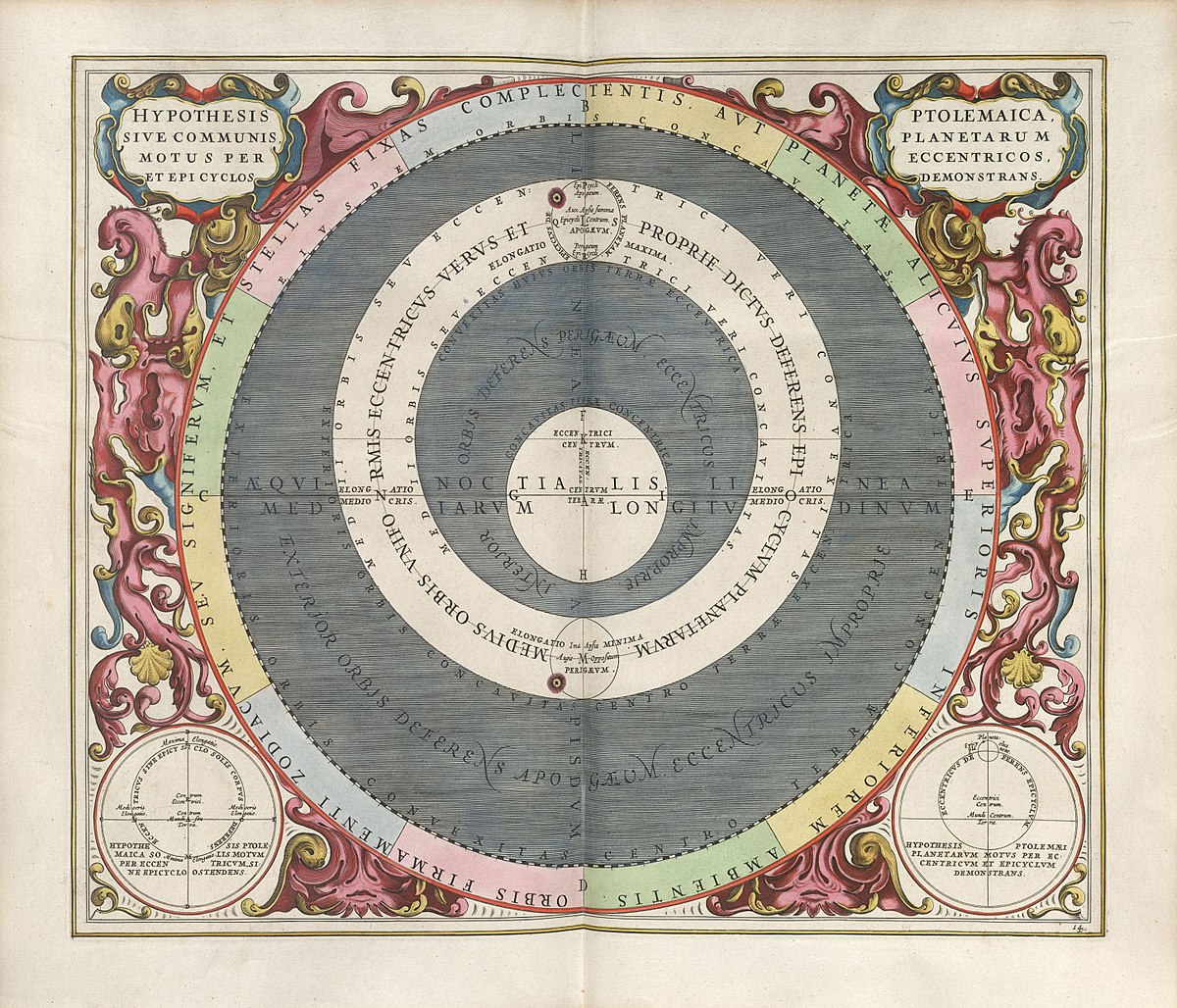
Image: Hypothesis

Designing brave

A book my daughter gave me that I’ve started to read time and again to my mother is Goodnight Stories for Rebel Girls. It came out earlier this year and it’s brilliant. The mini-bios, a hundred of them with lovely illustrations, are all of brave women.  Each one, in her own way, defying convention, stereotyping, social expectations, and her own boundaries to demonstrate where bravery, combined with learning, and persistence can take you.

The two (women) book authors themselves show those qualities.  They ‘were told they’d never get the book off the ground, but managed to launch one of the most successful literary crowdfunding appeals ever.’

The fun thing is that the carers in my mother’s care home (90% of them women) enjoy the stories too.  Yet, when we talk about the stories they laugh, disbelievingly, when I suggest they too are brave.  But I think they have brave stories to tell – most of them are from other countries leaving behind families and cultural ties – to work for low pay, cheerfully, lovingly and hard in an underfunded care home with very difficult people to care for.

Are they right to laugh when I say they are brave?  Is bravery, like beauty, in the eye of the beholder:  a subjective attribute?   In calling the rebel girls or the carers ‘brave’ am I making the wrong call?  I’m asking myself this because, in a couple of months, I’m facilitating a conference session ‘Exploring workplace bravery’.  This means I have to design and develop something thought-provoking, engaging, and creative.

This means exploring my own views in order to present an opinion for people to challenge, critique, and work with.  My exploration has taken me, among other places,  to definitions – of boldness, bravery, courage, to asking a philosopher and an ethicist, to a Brene Brown book , and Robert Biswas-Diener’s book on courage .

Then from the exploration comes wrestling my point of view.  I’ve got a lot more terrain to go, but now I have some work-in-progress pointers to work up, each offering good discussion possibilities:

  • Although it’s interesting to learn that courage and bravery are rooted in different languages – courage in Old French, and bravery, not Old French but no real agreement on where. For my purpose, I don’t think it’s worth quibbling on the difference.  Many writers   use the two words synonymously – although others see big differences between them.
  • There isn’t much written on brave organizations. There’s a lot more on brave individuals who may or may not act with social and community support.  But I wonder if there are brave organizations: perhaps some of the activist or humanist organizations speaking out in their differing ways and countries against various contraventions of the Declaration of Human Rights might be brave organizations:  Doctors without Borders comes to mind as one or Human Rights Watch.  But maybe they simply employ some brave people and are not collectively organizationally brave?
  • Some roles and professions require obvious and continuous either physical or mental bravery: fire-fighters, lifeboat crew, tiger tamers risk their lives.  Doctors, judges, care workers, make life and death decisions risking the lives of others.  You can look at a list of jobs that will give you the typical adrenaline rush that accompanies bravery here.
  • Bravery in the roles just mentioned implies both being willing to take risks and/or doing so within a humanitarian moral framework that the risk taker is seeking to uphold. I mentioned the Declaration of Human Rights, but there are many similar moral codes for example six medical virtues (one of which is courage), or The Ethos of the Royal Marines.
  • There’s a lot about brave leadership – but much of this seems to be looking at the senior levels of organizational hierarchies. Look, for example, at the Kellogg School of Management Brave Leader Series. Or the speech ‘Leadership and Bravery’ given by Dame Louise Casey at the UK’s Local Government Association conference 2016.  She ends it saying ‘You are the civic leaders that can help deliver what the country now needs. None of what lies ahead is or indeed need be beyond us. But it will require us to be leaders and to be brave.’ There are many lists of the characteristics of brave leaders. One I like tells us that a brave leader embraces change, stands up for what is right – no matter the cost,  backs herself and her team, even when the going gets tough, takes  calculated risks, tries new things, and charts new territory.
  • Bravery is not just for leaders or heroes, though. ‘It’s also needed for everyday life, for those times when we stretch to express a strength and a courage we didn’t know we had. It’s a resource we draw on whenever we stand up to deal with a crisis, take action to better our lives or to stand up for our opinions and for others.’  And in this aspect organizational protocols and policies too often fail, or choose not, to support people doing just that.  You can see that in some of the experiences and analysis of the #MeToo community.

Where I’ve got to now, is that bravery is expected in some designated occupations, that brave leaders have certain characteristics – of the type shown by the rebel girls I opened with – that bravery is not only for designated occupations, leaders and heroes, but for ordinary people in day-to-day work, and there are many more stories of individual bravery than organizational bravery.

This leads me to ask whether we could design a brave organization and if so, would we want to?  What’s your view?  Let me know.

Image: Be Brave, Create, Repeat

Curation of learning

Along with ‘pivotal’, the word ‘curation’ seems to be in vogue.  And it was ‘curation’ that I got curious about this week.  What exactly is ‘the curation of learning’ – a phrase I read in a role description for an L & D expert?  I visualized some type of art gallery or a museum of carefully arranged pieces of learning – a Janet and John book, a recording of a teacher dictating biology notes, an abacus, an extract from an on-line course, and so on.  The curator would invite people to come and look at these or interact with some of them if they offered that possibility.  Does a Museum of Learning exist somewhere?  (Yes – The Museum of Teaching and Learning).

This took me to a mental wander around a gallery in such a museum – what was I learning from it?  I learned that the artefacts are instructional tools or mediums.  They are not ‘learning’.   Learning is an outcome.  It is the development of an individual’s capacity or the development of a collective capacity if we believe in ‘learning organizations’.

Remember Chris Argyris’ work on single and double loop learning?  That came up this week too.  I was reading a piece that argued that the way we have developed leaders is entirely wrong for now.  The author, Nick Petrie, said that ‘the incremental improvements that we were making in [development] programs were what Chris Argyris would call “single loop” learning (adjustments to the existing techniques), rather than “double loop” learning (changes to the assumptions and thinking upon which the programs were built).’

This point of view was reinforced by an article by Linda Gratton, who says management is getting much more complex and includes and that we need very different management development.  Managers must learn, ‘managing virtually rather than face to face; managing when the group is diverse rather than homogenous; and managing when the crucial knowledge flows are across groups rather than within.’ Capabilities she says are required for this are how to build rapid trust, coach, empathize, and inspire.  She also sees managers learning new practices – team formation, objective setting, and conflict resolution.’

Other articles I read make similar points.  Summarised, they agree we need ‘new pedagogical models and approaches’ in order to develop new capabilities as a response to digitalization – ‘defined as the diffusion and assimilation of digital technologies into all aspects of daily life – [that] is transforming industries in general and learning and development in particular.’

What this new pedagogical model looks like is less clear but seems to involve a shift from instructional design (per the exhibits in my museum of learning and single loop learning) to ‘learning experience design’ which to me implies double loop learning.  In learning experience design ‘professional development goes from being an aggregation of distinct activities, to becoming a continuous journey guided by data-driven insights.’  This seems plausible but what does it mean in practice?  And does it help with my trying to work out what the ‘curation of learning’ is?

Digitalization gives a different perspective on the word ‘curation’.  And here is where ‘learning curation’ becomes meaningful.)  And, as I quickly found out it’s big business and there’s masses of activity around digital curation of learning.

In fact, I can’t think how I missed it, but on the other hand, given the various definitions of it, I can now label myself a curator of organization design learning.  Given that ‘the three key things a good curator does: filter content, add value and provide a place to access her collections’.

For a good introduction to content curation look at Robin Good’s page.

What digital curation does is a create a personalised selection of learning stuff.  It’s chosen by you, or a learning ‘provider’ if you’re trying to teach people something, or I guess by AI that chooses for you by examining your digital trail.   (See Harold Jarche’s blog on this).

Are we near the point now that If we want to go really digital on this we could have our digital assistants help us.  How would it be if they were the curators of our learning (at least in the digital media) – providing us with real time data on what we are paying attention to and re-directing or reinforcing us to help us learn in a double loop way.

However you get your feed how will you know that it right for you and meets the need?

One way is to develop our thinking skills and on this, I recommend Stephen Brookfield’s work.  He describes four critical thinking processes, all of which could lead to learning, or identifying what we need to learn from any situation we are in, and also judging the quality and value of anything we are ‘fed’.

  • Contextual awareness and deciding what to observe and consider. This includes an awareness of what’s happening in the context of the situation, including values, cultural issues, and environmental influences.
  • Exploring and imagining alternatives. This involves thinking about and imagining other ways of looking at the situation, not just the first thing that comes to your mind. It involves exploring as many alternatives as you can think of for the given situation.
  • Assumption recognition and analysis. This involves analysing assumptions you are making about the situation as well as examining the beliefs that underlie your choices.
  • Reflective scepticism/deciding what to do. This critical thinking approach involves questioning, analysing, and reflecting on the rational for decisions.

(See also, Robert Kegan’s 5 orders of adult development).

What’s your view of curation of learning, digital or otherwise?  Let me know.

Job descriptions: dead or alive?

In Dubai this past week someone asked me what the value is in job descriptions (JDs).  (I was facilitating an org design programme, not taking a vacation).  They pointed out that a job description doesn’t indicate how a person does the job, or what he/she does once in the job.   I was on the edge of saying that they are of no value.  Which, like some others, I mostly believe.

For example, I enjoyed reading Leandro Herrero’s idea that ‘The job description is dead. It is replaced by a Lego box, no instructional manual and a map.’  In an earlier post he made the point that ‘The job description, and the label associated with it, are very often a mental prison.’

Chris Rodgers offers an escape from the JD mental prison by suggesting that instead of JDs we have Contribution Statements .  He tells us that:  ‘This sets out to answer the question: What specific contribution is the role intended to make which, if performed excellently, can make a significant difference to organizational performance and/or capability?’   It therefore begins by stating the role’s purpose – to make clear why it exists at all – and then sets out the performance aims for which the role-holder is accountable.

This focus on outputs (contribution and results) rather than inputs (resource usage and activities carried out) is an invitation to escape from the ‘activity trap’ of rigid job descriptions and procedural straight-jackets that too often limit performance – and ambition.

Another writer – agreeing that job descriptions are dead suggests that we begin by asking Why does this job exist? And then via discussion uncover ‘the three to five key accountabilities about how this job should be done’.

A further writer believes that ‘using impact descriptions versus job descriptions makes a significant positive difference.  Impact descriptions help both your team and your candidates to understand that every role exists to impact the organization in some specific way. Our roles make a difference, move the needle, and change the game.’

There are several others in these veins – Google ‘is the job description dead’ for more.  And, of course, I thought they were right.

But then I wondered:

a) how far my response was culturally conditioned.  How do other cultures respond to job descriptions?

b) As I enjoy  Herrero’s posts, and others, slating JDs am I succumbing to the psychological trait of confirmation bias. (See also here).  Preferring to read others confirming what I believe.

Maybe.  To test this, I took another tack and googled ‘Are job descriptions alive?’  Google’s algorithms instantly gave me links to jobs at Alive, a non-profit aimed at ‘lighting up later life’.  It looks like a great organization it points out that ‘There are now over 400,000 older people living in residential care in the UK. Alive is the UK’s leading charity enriching the lives of older people in care and training their carers.’

I instantly got worried, thinking that Google knows more about me than I imagined – I’ll have to protect my data better.  (My mother is 101, in residential care).

On a temporary diversion from job descriptions I looked at the blog on session replay scripts, published by Freedom to Tinker.  I am right to be worried.  Their researchers say, ‘You may know that most websites have third-party analytics scripts that record which pages you visit and the searches you make.  But lately, more and more sites use “session replay” scripts. These scripts record your keystrokes, mouse movements, and scrolling behavior, along with the entire contents of the pages you visit, and send them to third-party servers.’

Back to job descriptions.  UK employers aren’t legally obliged to create a job description for a role.  I don’t know if there is a legal obligation in other countries?   Whether they are of value or not , in the main, I found that HR sites are in favour of producing job descriptions and give advice on how to write one.  The UK’s CIPD, for example, quotes research that finds that ‘Poorly defined job descriptions drive staff turnover’.

The US HR body SHRM is firm ‘A job description is a useful, plain-language tool that describes the tasks, duties, functions and responsibilities of a position. It outlines the details of who performs a specific type of work, how that work is to be completed, and the frequency and the purpose of the work as it relates to the organization’s mission and goals.’

But organizations in favour of job descriptions also point to the requirement to keep them current, and offer advice on how to update them.  See for example, How To Revive And Renew Your Job Descriptions  and ‘At year’s end, don’t forget to update your job descriptions’

So maybe I am biased, and job descriptions are sensible and suitable.  However, I’m still not convinced of their  value to individuals, although I can see they may have organizational value.  And, even on this count, they have pros and cons as Susan Heathfield’s blog suggests in 5 Positives and 5 Negatives about Job Descriptions.

What’s your view of job descriptions? Let me know.

Image: Science job descriptions