The future of organisation design

March of Intellect”, by William Heath, 1828 depicts future ideas for transport that would not be so unimaginable today

Last week this email arrived: “I hope this note finds you well. We are in the final weeks of the organisation design program for cohort 2. Your slot, part of session 10, is ‘the future of Organisation Design’. You can have up to 45 minutes right after the opening. Will you want to include some slides? … “.

Although I’m told that the session outline is ‘straightforward’ – mine is the slot after the session on reflections on session 9 – the topic itself is not straightforward. I ask myself, ‘What is the future of organisation design?’

Sometimes, in training courses, I’ve shown one of the several ‘from-to’ graphics showing the future of organisations. Look, for example, at Tanmay Vora’s sketchnote that goes ‘from purpose to profit’, from ‘hierarchies to networks’,  etc. or the Booz & Co from analogue to digital culture which has, among other dimensions, from process and task orientation to result orientation.

 It’s easy to get seduced by these ‘from-to’ graphics: they look good, and appear convincing.   But are they the future of organisation design? I no longer think so. They imply a smooth movement, from left to right, in a stable context.   We are not in a stable context. 

 In my forthcoming book I say: ‘The late South African economist Ludwig Lachmann once wrote: “The future is unknowable, though not unimaginable”.  … Because we can imagine different futures, we can act to create the better version. We have the creative ability to draft scenarios and possible outcomes, so we can prepare for what is more likely to be. And [we can] attempt to bring it about.

 There is a design tension inherent in designing for what is in front of us in the immediate future and what we imagine in the further out future. …  Leaders and designers must recognise and manage that tension, perhaps taking guidance from the authors of the book The Design Way, who say “Design is the ability to imagine that-which-does-not-yet-exist, to make it appear in concrete form as a new, purposeful addition to the real world”.

We can do this by acknowledging that the immediate future is not entirely unpredictable. Specific future events and trends may be unpredictable, but it is possible to envisage the implications of possibilities as sets of potential actions that the organisation may have to be ready for, and designed to take. ‘ 

Taking that perspective means detecting signals in the current, unstable context that we could take forward as possibilities into the future, searching for patterns the signals generate, and making collective meaning from the signals and patterns. (See article ‘On the role of collective sensing and evolution in group formation’). These activities give rise to scenarios that it is possible to imagine and, take some steps to prepare for.

Three newish signals that I noted this week that caused me to think about the possible future of organisation design are: 

 Metaverses: These are a shared online space that incorporate 3D graphics, either on a screen or in virtual reality. They came up in the New Scientist article that piqued my interest, not least because it mentioned Second Life , launched in 2003, which I used about 3 years later when I was doing some work with the American Red Cross.   At that point I had high hopes that Second Life would become integral to organisation design, but it didn’t happen. Now I see Roblox  co-founder, David Baszucki, saying  “Just as the mail, the telegraph, the telephone, text and video are utilities for collaborative work, we believe Roblox and the metaverse will join these as essential tools for business communication.” Maybe he’s right?  

 Metaverses give rise to a possible scenario of big tech companies holding in their thrall all their users, having access to their users’ data, and being able to control their users in various ways – extending this one can imagine big tech will someday supersede governments, and change the idea of national borders. People will be nationals of a metaverse. (See the novel,  He, She, and It by Marge Piercy for a variant of this idea).   How would organisations be designed in this scenario?

Individuals as networks:  I then read a fascinating piece on individual selves as networks. It says, ‘[Individual] selves are not only ‘networked’, that is, in social networks, but are themselves networks. By embracing the complexity and fluidity of selves, we come to a better understanding of who we are and how to live well with ourselves and with one another’. It’s left me wondering if and how this could influence organisation design.  I’m thinking it  may give a different take on the phrase ‘bring your whole self to work’, and also challenge current approaches to health and wellbeing that organisations are increasingly preoccupied with. 

 A scenario that could come from this is one of very different career paths, skills assessments, and employment expectations as our networked self focuses on different or new aspects of itself.

 Gillian Tett’s book: Anthro-visionprovides a compelling case for using anthropological approaches to business life (and by extension, organisation design). You can listen to an excellent video of her talking about this and I came away thinking that her view gave impetus to ‘human centred’ organisation design in an actionable way. Thanks to the EODF newsletter for the link. 

The interview brought to my mind the various Covid-19 legacies around building design/ventilation, biophilia, etc.  The pandemic has brought to the forefront the relationship between physical space design and human performance. Typically, organisation designers and facilities managers/workplace designers are siloed. A scenario that could play out is one where organisation design and workplace design are integrated, perhaps using tools like digital twinning to model human and workplace design options.   This could give organisations a very different design from currently envisaged ones – much as 3D printing has enable innovative building design

Three more ubiquitous signals came up again this week – ones that are now becoming patterns.

Geo political landscape shifts. Think how many organisations have had a recent high-profile brush with governments in a way that has forced re-design of aspects of the business. Amazon, Alibaba, Uber, Google, Facebook are some that spring immediately to mind.  Think too of other effects of geo-political shifts, for example, on supply chains (e.g. semiconductors). These will have profound effects on the design of organisations. Will multinationals exist in the future? 

Cyber security/threats – recent ransomware attacks have had a crippling effect on some organisations, for example ‘In the recent Colonial Pipeline and JBS attacks, cybercriminals disrupted gasoline and meat supplies, causing an artificial run on both commodities.’ Given the acceleration in such attacks what are the organisation design implications?   

Climate-tech This article notes that ‘many corporate giants are going beyond hollow commitments of greenery and “net zero” carbon pledges by investing directly in climate tech’, again these actions will change the design of organisations.

 Answering the question ‘what is the future of organisation design?’ is best answered by saying there are multiple possible futures. A further question to ask is ‘how do you design organisations to prepare for an unknown but not unimaginable future’. Is your organisation doing this? Let me know.

Reviews and reflections

Often, triggered by my blog or other channel, people send me articles or reports or similar that they think will be of interest to me.     Although it can take me a while to get round to reading whatever they’ve sent, I usually find that the document does hold something that is of interest and I’m grateful to have been sent it. 

This week I’ve managed to read five things I’ve been sent, and I’ll briefly explain why I was interested. (Note the stuff I’m focusing on here is not related to specific pieces of work I am doing like Terms of Reference, or project plans. What I’m talking about here is info that is sent my way as part of my general interest in organisation design).

But first, a slight – but relevant – digression. I get the FS newsletter, and this week’s linked to an excellent article about attentive reading, making the point that, ‘Consuming information is not the same as acquiring knowledge. No idea could be further from the truth.’ The article made me stop and think whether I was just consuming information from the 5 documents, or actually acquiring knowledge.   

Thus,  I re-read the documents asking myself, ‘What reflections or questions come out of my reading of this?’ Below some thoughts on the five pieces. (NOTE: I am not endorsing any organisation or its products/services). 

 The Future of HR – seen through two different lenses:  (From Kennedy Fitch). I was sent this because I was one of the people interviewed as part of the research. The goal was to discover if the near future (up to 2025) of HR and the world of work look the same for two distinct groups of people – HR practitioners and ‘thinkers’ about the world of work who are also known for their views on the HR function.  

It’s a well-structured report, clearly laying out the thinker and practitioner stance on each topic area covered.  It discusses first where the agreement between the two groups lay, and second where the differences lay. For example, on the topic of trends, both groups agreed that three major trends will impact the world of work: accelerated digitalisation, personalisation and flexibility.   However, the two groups offered further, and different trends beyond these three. The practitioner group talking about speed of business, diversity and teamwork, while the thinkers talked about expectations of private sector companies, role shifts/empowerment, and management and organisation development across geographies.

 As I was reading it, some questions came to mind:  the report focuses on private sector organisations, would its findings hold true for public sector and third sector ones? 

 I wondered how HR functions would actually make the shift suggested in the report – how is the education and training of HR practitioners adapting? Is it in tune with these findings? 

Four times the word ‘brave’ is used as in ‘the HR function needs to be brave’.   What does it take to be brave? Are HR practitioners capable of this? What would be in it for them if they were?  Does the report miss an opportunity to explore this offering real practical examples and suggestions on what it takes to become a brave HR function?

 Point of View Paper The Slingshot Effectand research report Fit For Change. Both pieces tackle ‘trying to get momentum for transformation out of the ongoing meta-crises.’   (From Prophet)

The two reports cover similar ground on what it takes to make transformative change, using their Human Centred Transformation Model™. They use the analogy of the human individual, talking about organisational DNA, mind, body and soul. The Fit for Change report offers some suggestions for making the transformational change and there’s a ‘new model for change fitness’ that would make an interesting workshop discussion, that talks about obstacles, milestones, journeys, flows, and plays. The Slingshot report offers four pathways to create organisational resilience. Again, this would make the basis of a structured workshop discussion, particularly if it focused on what would taking each of the four pathways mean in practice (and are we already on one of the paths).  

 However, having said this, what I’m left with after reading these two reports is some unease with the implied promise that there are easy answers – ‘follow this path and you’ll get there.’ Is this true?  To my mind, we are all currently, in a massive learning experiment. We don’t know yet what the impact of the last year is or will be, we are feeling our way. 

Remember the lines from the poem by Antonio Machado, ‘Traveler, there is no path, The path is made by walking. By walking the path is made’ ?  I wonder if there are ways of giving ourselves and each other confidence that ‘feeling our way’ is the only way and we must do this collaboratively, collectively and reflectively?  This question left me to ponder another question: how do we give ourselves and each other confidence to work in a situation where there is no prior path (and no right answer)?

 The ebook  fromOrgvue produced in support of their Hybrid Working Future campaign – ‘The hybrid working blueprint offers ‘5 steps to make hybrid working work for your business strategy’. I’ve written before on hybrid working so won’t repeat here. What the orgvue report offers, beyond the 5 steps, is a SaaS platform/solution on which you can make people related ‘data-driven decisions on how to continuously adapt and do better in the future’. In some organisations I’ve worked in, orgvue has been in use so I have some familiarity with it   

 The questions that I’m mulling having read their report are around the data that is captured – how is it interpreted and by whom?  The point made by statistician, Nate Silver sprang to mind, ‘The numbers have no way of speaking for themselves. We speak for them. We imbue them with meaning.’[1] The report notes that ‘In this blueprint, we’ve outlined the main steps today’s organizations need to take to fully capture the opportunities hybrid working offers’. If we imbue the data with meaning and we are only looking for opportunities, then how will we see the possible down-sides, risks and consequences (positive and negative)  of it?’  

Maven7-OrgMapper offers Organizational Network Analysis (ONA). They  sent me a ‘primer’ on ONA and the features of Org Mapper. Incidentally, their  email gave me a new word ‘videomonials’ which was fun.   The primer is a useful intro to the topic – ‘It enables leaders to look beyond the traditional hierarchies of their organization and drive enhanced collaboration through in-depth analysis of the organization’s formal and informal networks.’

 Much work is going on around ONA, see for example, Rob Cross’s extensive work on it.  My view is that ONA will be of growing benefit in organisation design work, but along with the strengths of looking at organisation through networks of influence, it also has caveats around data interpretation, see a 2010 research paper on this Analyzing the Flow of Knowledge with Sociometric Badges which though old highlights the concerns which are still pressing. 

What have you reviewed and reflected on this week? Let me know.   

  [1] Silver, N., The Signal and the Noise: The Art and Science of Prediction, Penguin, 2013

Image: Simon Hennessey

Cultural influencers: how to shift and sustain organisational culture

Graffiti – crime or culture?

The research team at non-profit APQC is conducting a study on how organizations shift and sustain organisational culture. As part of their research, they are conducting interviews ‘with a range of individuals who have expertise and experience related to organisational culture.’ They invited me to participate and I talked with Elissa Tucker of APQC, last week. 

She had a set of interview questions to go through with me, as she said, ‘in order to gain your insights on this topic’.   For the most part, I enjoy these types of interviews. Once I came across a phrase ‘When I hear what I say, I’ll know what I think’, which seems to hold true for me.  The act of formulating a point of view in a way that transmits seems to clarify my thoughts.  Here are the questions with aspects of my answers and further resources.   

  1. How do you define organisational culture?   There’s no simple answer to this question.  There are multiple definitions of organisational culture ranging from ‘the way we do things round here’ to elaborate paragraphs that include behaviours, values, assumptions, norms and expectations.   I’m of the view that there is no singular organisational culture. An organisation is similar to a climate zone in that, within a recognisable range/geography, it encompasses multiple weather patterns that vary from location to location and day to day.  Organisations comprise multiple cultures, within recognisable parameters.
  2. Who defines an organisation’s ideal/desired culture?  Sometimes a strong CEO can set the tone of the culture.  Think about the ex CEO of Uber, Travis Kalanick, for example. He resigned, having been held accountable for a culture of harassment.  But even if the CEO does set the tone, that does not mean that everyone subscribes to it.  There are many other influencers that act to define organisational cultures – national cultures, professional cultures and networks of interest cultures are some of them.
  3. Why is culture important? Cultures shape, reflect and represent prevailing expectations, norms and behaviours, and, in turn, are shaped by systems, processes, rules, policies and structures. Their importance lies in the way they enable, or disable a healthy organisational life to play out.
  4. Do you see increasing awareness of the role culture plays? Yes, in relation to discussions going on now about the Covid-19 world.  Particularly in relation to maintaining or developing a sense of affiliation and ‘belonging’ to an organisation when a proportion of the workforce is now working remotely without the day-to-day and face-to-face interactions with colleagues.  There’s also a growing awareness that over-focus on hybrid working could cause cultural fractures in cases where some organisational members can work remotely and others cannot by virtue of the roles they have.  Additionally, I’ve seen a recent rise in the number of references to ‘toxic cultures’. (See my blog on this).
  5. Do you have any advice on making sceptics see the value of investing in culture? Everyone is investing or disinvesting in culture all the time, we are each engaged by, and enmeshed in, our cultures – we can’t escape them.  By deciding to, for example, ‘follow the rules’ you are maintaining your investment in that cultural norm.  Or if you decide to buck the rules you are culturally disinvesting.  Often the investment or disinvestment is not recognised as such, but it is still powerful.  There’ve been some examples of disinvestment in cases involving What’s App usage when cultural values of inclusion and respect have been challenged by exclusive and disrespectful What’s App exchanges. 
  6. What do you see as the key levers that shape organisational culture?  Johnson and Schole’s cultural web is a useful tool to start considering the levers of organisational cultures.  Too often culture is seen simply as beliefs, or behaviours, or values, but these are shaped by control, power, and organisational systems which are themselves part of the culture.  Suppose you consider the culture of responsibly driving a car on a road.  Your driving ‘culture’ is shaped by road signage, enforceable speed restrictions, road layout, etc.  The driving cultures vary by country depending on the systems which shape driver behaviour and also on the way certain driving apps are configured.  Cultures are shaped in many different ways – I hesitate to say there are ‘key levers’ – cultures are continuously emergent, shaping and being shaped by their context.
  7. Which individuals or groups are “key influencers” of organisational culture?  Finding the  key influencers of organisational culture is a task that can be aided by social network analysis.  I4CP recently published a report (unfortunately behind a paywall) on Five Ways Networks Create Culture – it concludes,  ‘Senior leaders who want to enact culture change must be prepared to learn about the many cultural undercurrents in their organisations. They need a clear understanding of their cultural subnetworks, a willingness to identify and engage with informal influencers, a sense of the absorption rate of new priorities and behaviors, an ability to defuse pockets of tension, and a profound awareness of emotional responses.’

Alongside the internal cultural influencers there are external cultural influencers – think of rise of  ‘influencers’ on Instagram, for example, or the role of activist investors.

8. What is the role of organisational subcultures? Do they need to be managed?  I am not sure that cultures and sub-cultures can be managed.  They are not ‘things’ amenable to ‘management’.  They are more like rivers that can be harnessed and shaped but the ramifications and consequences of doing this are unpredictable

9. People often talk about “changing the culture” but don’t know where to start. What would you tell them?  Again,  the Johnson and Scholes web could help.  For example – listen to the stories about the organisation, try telling different stories. Look at the power structures and see if any are restricting cultural movement and so on.  Look at the symbols – change them.  I once worked in an organisation that had in the reception area photos of the 12 (white, male) members of the executive team.  Part of the organisational rhetoric was about everyone being valued.  Believing in the power of symbols, I suggested that if this was the case, we take down the pictures of the 12 executive team members and replace it with a photomontage of the entire workforce.  My suggestion was not accepted, but consider the impact of different visual symbols as reflectors of culture in practice rather than culture in rhetoric. 

10. How do you think the pandemic and social distancing are affecting organisational culture? Both positively and negatively.  I like the way Zoom puts everyone in the same size rectangle and shuffles the order so that hierarchies get blurred. Or you get insights into colleagues lives through their children wandering into screen view.  But there are also new pressures or work-life balance, mental health, and things around a sense of belonging, as I mentioned earlier.

11. What are your biggest lessons learned from your culture work? That it is an endlessly fascinating exploration with no easy answers, only more questions. 

12. Some organisations are adopting roles dedicated to organisational culture – for example a chief culture officer. Do you think having a role or team specifically focused on culture is beneficial for organisations?  It depends on the organisation, what the purpose of the role is, and how the role-holder shapes the role. 

How would you answer these questions?  Let me know.

Image:  graffiti – crime or culture? 

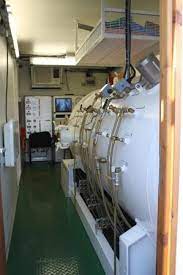
Getting out of the compression chamber

The same day I read an article titled Culture-war terms can compress complex ideas in an unhelpful way, which was sub-titled, ‘In discussions of group differences and grievances, nuance is vital’, I had a discussion with someone with whom I’m starting a piece of work.  The discussion focused on some of the challenges the work may face.  He was particularly concerned about different stakeholders protecting their interests at all costs.

Later that same day I had a discussion with someone else who was curious to know whether I felt collaborative on-line working i.e. via Zoom or similar, provoked polarisation of views, and unexplored misunderstandings amongst people, heightening tensions amongst them.   

Both people wanted to know whether there were organisation design methods and tools that could lead away from polarisation and towards something more productive.

The article mentioned above, opens ‘If you set out to design a drearily predictable identity-politics ding-dong in a laboratory, you could do little better than the one that broke out in Britain on June 22nd.’ And goes on to discuss the phrase ‘white privilege’. 

It continues, ‘In the raging culture wars, “white privilege” is now among the many phrases lobbed like online grenades between opposing camps. Since the combatants cannot agree on what it means, it is not surprising that there is no consensus on whether it exists and what should be done about it. …  The problem with these terms is their compression. They are signposts rather than arguments, only making sense in the context of more elaborate reasoning .’

The word that stood out for me in that extract is ‘compression’.   Technology mediated communication is compressed – by screen size as in Zoom rectangles, by written word length restrictions as in tweets, by substitutions of words for emojis and by compressed time – our instinct is to immediately respond to/comment on something.

Suppose we recognised we are in a compression chamber, one that fosters outrage, indignation, entrenched positions, hasty judgements, and so on:  what steps could we take to get out of it in order to develop reflective, patient, empathetic, generative attitudes and more ‘elaborate reasoning’? 

There are techniques and methods used in organisation design work that could help.  Three of them are:  facilitated face to face interactions where people listen to and work with people with differing views from their own, practice in critical and creative thinking (and related skills), community building activity.  I’ll briefly discuss each of these and offer some resources I’ve found useful.   

Facilitated face to face interactions:  accepting that current constraints mean that face to face meetings may be difficult, it is still worth investing in a large group intervention (LGI).   These can be very powerful unlockers of locked positions and I’ve been involved in many and various versions of them, including Future Search, World Cafe, hackathons, jams, and others.

They are both scary (if you are the facilitator) and huge fun (when they work well).   LGIs share 6 attributes:

  1. They are collaborative, large scale, inquiries – typically involving multiple stakeholders.
  2.  They create alignment around strategic direction and system wide issues. 
  3. They demonstrate the imperative for inclusiveness and widespread participation in the change process. 
  4. They provide a means to put systems thinking into practice and to be part of a larger more holistic strategy for change. 
  5. They are large groups – more than 30 – where it becomes impossible for each group member to maintain eye-to eye contact.  
  6. They are time-bound events.   

You can listen to an excellent interview with Barbara Bunker – one of the leaders in the LGI field here on the theory and practice of them.

There’s also a wonderful write up of a Future Search conference with IKEA –  ‘In this case, the world’s only global furniture retailer, IKEA, created in a single  meeting a new system for product design, manufacture, and distribution, agreeing to decentralize an agglomeration of “silos” that no longer served effectively. This was not simply a meeting to validate what top management already had thought up. People who had never met before created something that had not existed. Some 52 stakeholders examined the existing system, developed a new system, created a strategic plan, and formed task forces led by key executives to implement it. In 18 hours, the plan was made, validated, and signed off by the company president, key people from all affected functions, and several customers.’ 

Giving time and space to practice critical and creative thinking (and related skills).   There are many ways of learning some of these skills, some I’ve found work are:

  • The ability to challenge assumptions is one of the skills of a critical thinker.   I wrote about this a couple of weeks ago.  I am consciously practicing challenging the various assumption my own ‘confederacy of selves’ holds.   (I came across the term ‘confederacy of selves’ in a Knowledge Project clip on decision making with Sendhil Mullainatham  who used it). Recognising and challenging assumptions is hard but useful as of often leads to softening an entrenched position.   
  • Choosing to be a learner not a judger.  Over the weekend, I went to someone’s house and she had on her toilet wall a poster about learner/judger mindsets which was lovely to see – I rushed home to find my book Change Your Questions, Change Your Life, Marilee Adams, which elaborates on this. 
  • Use packs of cards to encourage different thinking.  Some I’ve used are Tension and Practice cards, Oblique Strategies,  Creative Whackpack  and De Bono’s six thinking hats all of which encourage thinking outside your current frame of reference.
  • There are a number of other resources that support critical thinking and the Human Systems Dynamics Institute is a wonderful source of 21 of them.  I’ve found polarity mapping (interdependent pairs), the four truths ‘that help you understand different perspectives that influence individual and group action’, , and conflict circles are three that I use repeatedly in my work. 

Community building activity: There’s a lot to be learned from the non-profit sector in community building on projects and amongst stakeholders.  Take a look, for example, at 8 ways to unlock the power of community (a WEF article).  And Steve Skinner’s article ‘How can we build strong communities?

Other sources of community building come from co-working spaces (e.g. WeWork) which employ community managers whose role is to build a sense of connectedness amongst the different users of the space.  Roles like this act to find common ground, via social activities, info sharing or similar.   

(When I worked at SiloSmashers, one of the community building activities we had was a skills share – individuals would hold a lunchtime session on non-work topic they enjoyed and that they thought others might be interested in – making an authentic curry, or wine tasting, or learning to ride a unicycle – that informal interaction goes a long way towards developing kindly relationships). 

I’ve touched on three methods of leaving a compression chamber – what are the ones you use that work to build connections, empathy, and generative thinking.  Let me know.

Image: https://www.hsa.ie/eng/Your_Industry/Diving/Diving_at_Work/Emergency_Plans/Compression_Chambers/

Organisation Design: Spreading the Word

In June this year, I was contacted on LinkedIn by Ivan Stefanović, one of the Program Directors of the HR Week event, to be held in a virtual environment (sneak peek here) on 22-26 November, 2021. The event is organized in 5 thematic days – Strategic HR, People-Centric HR, Digital HR, HR Development, and C-Level Day. The target audience is HR Practitioners in South Eastern Europe.  Ivan wanted to know if I would speak at the event on an organisation design topic 

Sadly, I haven’t visited or worked in many countries in that geography, but talking with Ivan suggests that the challenges organisation designers and HR practitioners face there are similar to the ones I’ve seen in countries I have worked in, so I agreed to deliver a 15-minute keynote, that ‘would help strengthen the position of HR as a strategic business function’.  

One of the things they offer in return for my participation is to have my books and other materials promoted within the e-library section of the event.  An ideal opportunity to spread the organisation design word amongst HR practitioners, and prompting me to comb through the year July 2020 – July 2021 to re-discover what I’d actually done – apart from comply with various coronavirus-related restrictions.    

I discovered I’ve done quite a lot.  As I did no face to face anything from 1 July 2020 until 1 July 2021 everything was virtual/online and is recorded somewhere.  Although some of it is on closed circulation, others of it can be freely viewed, read, listened to.  This following is a selection of my publicly available material, that I think will help spread the word on organisation design, that I’ll forward to HR week for their e-learning site.  

Making remote work #20 (Re) designing remote work This is one of a series led by the Organisational Design Community and hosted by Iulia Istrate, Skills for Mars.  It is a public service video-podcast in response to the COVID-19 pandemic.  Iulia says, ‘In this episode, we discuss the organisational issues surfaced by the pandemic and then move on to more practical advice on organisational (re)design that supports working remotely in all its forms. My guests are Naomi Stanford, Matthew Skelton, and Milan Guenther.’ 

What happens when Silver Bullets meet theory and practice?.. This was billed as, ‘Join Naomi Stanford & Steve Hearsum as we discuss what happens when a client’s need for an ‘expert’ with ‘answers’ meets reality.’   The questions we considered include: How far is the projection of expertise useful and when does it become an ethical consideration? What can we learn from our experiences as consultants and practitioners about how to work with clients’ expectations, however unrealistic they might be? What happens, as it has with Naomi, when guru status is conferred and how does that amplify the problem? In amongst all the theories, can there ever be one that passes for a Silver Bullet?

There were two webinars, catering for different time-zones.  The recording to the first webinar held on the 9th October 2020 is here and the second one on the 14th October 2020 here.  Because each was a free-flowing conversation, the content is different in the two.

In Conversation with Q5: The Future Workplace is Hybrid – Are You Ready?  A panel discussion considering:

  • The opportunities and risks of ‘hybridity’
  • What hybrid working looks like in different contexts
  • Hybrid working versus flexible working
  • The impact of hybrid working on culture
  • Creating your blueprint for the hybrid workforce

The recording of the webinar is here.  I also wrote a blog on this event, which you can read here.

Organisation Design 101: A Conversation with Naomi Stanford  Mee-Yan Cheung Judge of Quality & Equality asked me to contribute to her ‘Just in Case’ series of videos.   In this one I introduce the concept of Organisation Design by answering five questions: What is organisation design and what is its history? How do practitioners do organisation design? Are there examples of organisations known for good practice in organisation design? How do you become an organisation design practitioner?

Pandemic Response – Impact on Organisation Design: A Conversation with Naomi Stanford   This is the second video I did for the Just in Case series.  In it I unpack how the pandemic has had an impact on organisation design through answering the following questions: What is the impact of the coronavirus pandemic and other context factors on organisation designs? How are some organisations responding? What should organisation design practitioners be helping with now?

Intersection20  Reflections on the pattern of leaving  This was a conference presentation for the Intersection20 conference.  In their book Enterprise Design Patterns, the authors discuss 35 patterns that they’ve noticed in their enterprise design work.  One of these patterns is ‘Leaving’. Their opening statement on ‘Leaving’ is, ‘You have been working as an Enterprise Designer for a while now. After some time, you realise there is a mismatch between you and the environment you work in.’ They suggest leaving the work.

In this session I pick up on ‘Leaving’ and discuss it from several angles, based on my experience as an external consultant, as an internal consultant, as an ethical/values based statement, in terms of career enhancement/limitation of the individual, the courage it takes to leave, and so on.

IPC The Human Capital Hub Q & A with Dr. Naomi Stanford on Culture Transformation   Watch this video to find out more on whether organisation culture can be ‘designed’ or whether it just ‘is’.  During the discussion we touch on types of culture, whether an organisation has one culture or many cultures, and why ‘culture’ is so important to organisation effectiveness.

IPC The Human Capital Hub Organisational Design Q&A with Dr Naomi Stanford Watch this video to get more details on identifying the dysfunctional aspects of workflow, procedures, structures and systems and ways in which these can be realigned to fit the current business realities or goals as well as developing plans to implement design changes.

Three webinars I did for Caliber Consulting.   In order to view the recordings, you will have to click on the link, register and then you will be able to view the recordings (very simple).

AIHR Organisational Development Certificate Programme. This is a training programme which I and Giles Slinger developed. The organisation design unit comprises 4 modules where participants learn how to recognize the triggers for organisation design, through selecting the right model, to applying the Org Design process and overcoming common obstacles.

CXO Magazine Designing organisational agility This was an article I wrote that discusses the ways organisation design can help go beyond the surface-level of this century’s buzziest word (agile) and design a truly agile organisation.  To do this enterprises need to understand the intricacies of agility. And beyond that, examine whether an agile approach is likely to benefit their organisation at all.

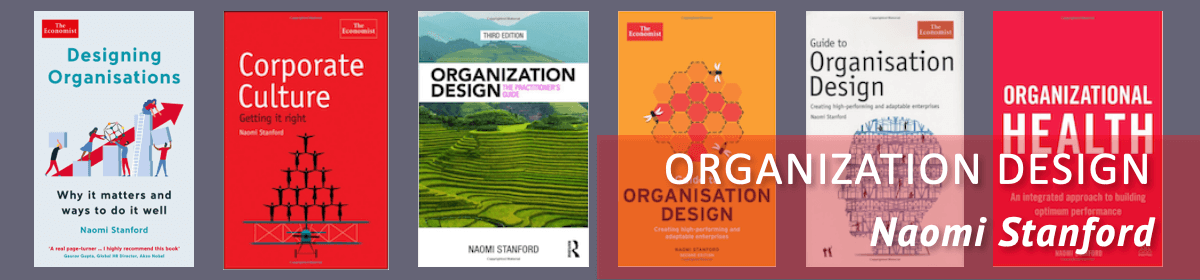
Designing organisations: why it matters and how to do it well, is the title of the book I wrote during the year which will be published in March 2022.

What resources do you use that help spread the organisation design word? Let me know.