Hands across the divide

Weeks ago, Jim sent me three questions that he’s posing to various organization design/development practitioners and some leaders he knows.

  • What is the involvement – ideal and actual – of your most senior leaders in the organisation design work you carry out?
  • What conceptual and practical understanding of organisation should they really have in order to make the right contribution?
  • How would you typify the level and content of the understanding they do have – and how do you try to equip/help them to make the contribution they should?

I haven’t yet got around to answering them, but they suddenly leapt back into mind when I was on a recent call with some members of the Organization Design Community (ODC) where we were discussing three topics.

  • The challenge of the bridge between academics and practitioners
  • The new world of organization design
  • The practical aspects of bridging the gaps between academics and practitioners

I then got a suggestion from someone else that an organization design programme I’m involved with go through the ODC Accreditation process.  Looking at the requirements for this, I learned that:

‘To receive ODC accreditation, a provider’s design course or workshop must meet a set of requirements. These requirements have been jointly developed by leading academics and professionals in the field of organization design. Twenty-two minimum core requirements are contained in three categories:

  • Design Concepts and Principles
  • Design Types
  • Redesign and Change

My first thought was that twenty-two is a lot of ‘minimum core requirements’ but I let that pass as I’m practicing with a meditation tape that tells me ‘it may be a thought, but you don’t have to think it’.

I moved onto other thoughts which I did begin to think – they revolve around Jim’s questions, the ODC conversation, and the accreditation requirements.  What the three have in common are some reflections and questions around the relationship between theoretical concepts and practical application of organization design, and who needs to know what in order to make an effective, informed and value-add contribution to organization design work.

My experience of working with leaders is that, for the most part, they are very impatient with, not to say dismissive of, anything that smacks of theory or academia.  When leaders do organization design work it is still largely based on fiddling around with an organization chart, moving people and reporting lines with little to no reference to design concepts/theories.  (I got a terrific sketch the other day of the ‘make it like this’ variety.  I’m tempted to put it as the image for this blog but won’t).

Happily, I’ve met a few exceptions to this type of leader – usually they’re people who’ve taken courses in organization behaviour or similar, and equally happily I’ve met other leaders who start off with a ‘make it like this’ mindset but are willing to be curious to learn why lines and boxes are not ‘design’ and taking the lines and boxes approach is very unlikely to result in the outcomes they are looking for.

Done thoughtfully, with a knowledge of systems, complexity and behavioural theory, organization design is ‘the ultimate edge … is so critical that it should be on the agenda (along with a professional designer) of every meeting in every single department’ says Tom Peters, (co-author of In Search of Excellence) He goes on to say that ‘Design, like lifestyle, is one of the few differentiating factors, and companies that ignore the power of elegant and functional design will lose.’

Elegant design is not the result of adjusting an organization chart or looking purely in terms of ‘structures’.  It is the result of line-managers and OD consultants – who might be internal or external to the organization:

  • understanding what people on the ODC phone discussion called ‘the framing theories and related skills’ for organization design. (These framing theories and related skills come from academic research).
  • interpreting and converting the framing theories and related skills from a theoretical, research perspective and language to practical and pragmatic design tools and frameworks
  • applying these skilfully and thoughtfully into on the ground organization design work
  • working with academics to refine the theories and develop new theory from careful evaluation of the outcomes of the original thinking.

Making this happen in practice is the challenge.  Here are four ways of joining hands across the divide between academics and business people to the mutual benefit of both.

1.  University research departments partner with an organisation or organisations to conduct research on a specific topic. This could be initiated either way through a ‘call for participation’.  I have done this successfully on three occasions. For example, I commissioned one of the pieces of work described in When the Bases of Social Hierarchy Collide: Power Without Status Drives Interpersonal Conflict 

2.  Someone in each business organization could be the named co-ordinator of relevant research, its dissemination, and its practical application.  I haven’t yet worked in any large organization where there is a comprehensive database of employees taking academic programmes or a method of capturing the dissertations they do and assessing their value in terms of extending or applying their research.  Doing this could result in  cadre high value-add scholar-practitioners developing in the  organization.  See To wear many different hats: how do scholar-practitioners span boundaries between academia and practice?

3. Academics and line managers could work together to discuss how the theoretical research can be converted into practical application and what organizational issues would benefit from research and theory development. This could happen on executive programmes, for example, as one of the activities or learning sessions.  This was a suggestion made on the ODC phone call.

4.  Academics could take their own work and develop it into to a practical tool for application. For example Andrew Sturdy, and Nick Wylie wrote an academic paper Transformers, enforcers, specialists and independents which aimed to ‘identify, describe and evaluate the different ways in which formal collective change agency is structured in specialist units inside 25 diverse organisations.’

The theoretical framing of the paper is based on and developed from Sturdy et al’s earlier research work, see for example Management as Consultancy and Beneath and Beyond Organizational Change Management: Exploring Alternatives

From their paper (Transformers … ) Sturdy and Wylie developed a very short, practical, ‘how to’ guide – Managing Change without the use of external consultants: how to organize consultant managers.  It’s easy to grasp but grounded in theory.  I’m using it as a discussion tool with line managers and executive teams as we consider establishing a change function.

How would you, or are you, bridging the academic/practitioner organization design gap to help ensure elegant organization design?   Let me know.

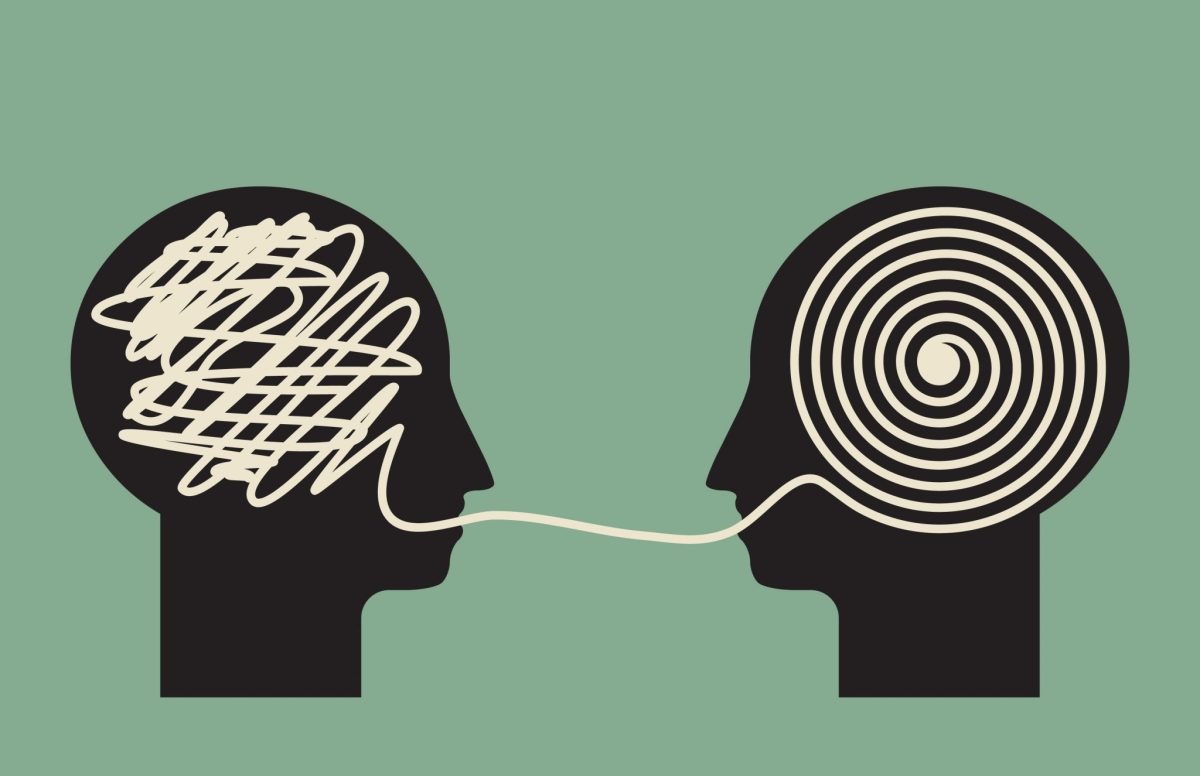
Image  Hands Across the Divid© Copyright zoocreative and licensed for reuse under this Creative Commons Licence
Organization design: the hot topic

I am speaking at a conference in Shanghai and Beijing, in May and have just been developing my presentation ‘Organisation Design: the hot topic’.

The conference is about the research, science and technologies that are changing organisations and the organisers have asked that my piece focus on the new technologies including AI, robotics and data tools and their impact on organization designs.

Most obvious is the view, typified in an article that ‘Every aspect of human life—our food, our work, our intimate interactions, our DNA itself—is, or will soon be, mediated by the technology we embrace. Machines can now recognize speech and written text; images will be next. Algorithms know your face, and the faces of millions of your fellow citizens. They can infer, with increasing accuracy, a person’s income, mental health, gender, creditworthiness, personality, feelings, and more from public data.’  This means what for organisation design?  Three questions stand out:

  • What is the  effect on jobs?
  • How do we protect employee/individual privacy as AI spreads?
  • What is the effect of AI on our competitiveness/competitive position?

It is not good enough to provide the answers to all three as: ‘it depends’ or ‘we don’t know’.  But this is, in fact, the case – look at the optimism v pessimism view of technology in the Zuckerberg (optimist)  v Musk (pessimist) discussion.

As one writer notes, ‘Leading a company in the years ahead is sure to be more challenging than at any time in living memory. AI will require bosses to rethink how they structure departments, whether they should build strategic technologies internally or trust outside firms to deliver them, whether they can attract the technical talent they need, what they owe their employees and how they should balance their strategic interests with workers’ privacy. Just as the internet felled some bosses, those who do not invest in AI early to ensure they will keep their firm’s competitive edge will flounder.’

Putting you on the spot.  What is your view of this description?

‘This is the local office of [US company] Humanyze … Its employees mill around an office full of sunlight and computers, as well as beacons that track their location and interactions. Everyone is wearing an ID badge the size of a credit card and the depth of a book of matches. It contains a microphone that picks up whether they are talking to one another; Bluetooth and infrared sensors to monitor where they are; and an accelerometer to record when they move. … The technology will allow the company to gauge their employees’ productivity and accuracy. JD.com, the Chinese e-commerce firm, is starting to experiment with tracking which teams and managers are the most efficient, and using algorithms to predict attrition among workers.’

Whether you are optimistic or pessimistic you can instantly see that there is an effect on jobs, privacy, and competitive position

Take the jobs angle first.  There are three organisation design aspects of this:

  1. Monitoring how employees are doing their jobs to increase productivity and control performance could mean designing jobs that focus on these two aspects at the expense of innovation, job autonomy, engagement, and social interaction.
  2. Replacing employees with automation that does the job instead of humans could result in fewer jobs being available to working age people, However, as the McKinsey Global Institute finds, ‘the extent to which these technologies displace workers will depend on the pace of their development and adoption, economic growth, and growth in demand for work. Even as it causes declines in some occupations, automation will change many more—60 percent of occupations have at least 30 percent of constituent work activities that could be automated. It will also create new occupations that do not exist today, much as technologies of the past have done.’ Either way – more, fewer, different jobs will result in different organisation designs.  (See also MIT’s Every study we could find on what automation will do to jobs, in one chart)
  3. Helping humans develop the new skills needed to work in a technology mediated society.  Here McKinsey says ‘Our scenarios suggest that by 2030, 75 million to 375 million workers (3 to 14 percent of the global workforce) will need to switch occupational categories. Moreover, all workers will need to adapt, as their occupations evolve alongside increasingly capable machines. Some of that adaptation will require higher educational attainment, or spending more time on activities that require social and emotional skills, creativity, high-level cognitive capabilities and other skills relatively hard to automate’.  Again, it is easy to see the job and organisation design implications of this statement as ‘right people, right place, right time’ take on new dimensions and urgency.  It also raises a question about who finances new skills development.  (See also the March 2018 OECD Report Automation, Skills Use and Training)

Additionally, the short Humanyze scenario above shows that we should all be concerned about indiviual/employee privacy and the ethics of surveillance in the workplace (and elsewhere).   This aspect of organisation design is moving up the agenda.  Many European organisations are redesigning business units and work functions to enable compliance with the GDPR (data privacy) requirements that come into force in May 2018.

On the AI competitiveness question, one writer suggests that ‘in the years ahead AI might contribute to the rise of monopolies in industries outside the tech sector where there used to be dynamic markets, eventually stifling innovation and consumer choice. Big firms that adopt AI early on will get ever bigger, attracting more customers, saving costs and offering lower prices. Such firms may also reinvest any extra profits from this source, ensuring that they stay ahead of rivals. Smaller companies could find themselves left behind.’  For organisation designers this could mean redesigning organisations to stay competitive – perhaps through forming consortiums, co-operatives or alliances that transform insular hierarchies into collaborative networks that collectively compete with any impending monopolies.

How do you think advancing technologies will impact organisation design? What are you doing about it?  Let me know.

Image: The technological citizen

Pointed sticks

A friend of mine is a volunteer at one of the UK’s National Trust houses.  He goes each Wednesday and is one of the ‘outdoor team’.  That team is rather scornful of the ‘indoor team’, who apparently spend their day polishing.  The outdoor team does real things.   Last week he made 27 pointed sticks.

That’s the first time in over two years of his volunteering that I’ve heard of a day making pointed sticks.  I instantly thought of the Monty Python sketch which I thought was about pointed sticks but on re-listening turns out to be more concerned with Self Defence Against Fresh Fruit although pointed sticks get a couple of mentions. Maybe he was making pointed sticks so visitors to the National Trust home could defend themselves against the apples grown in the orchard there.  I got curious about pointed sticks.

This began to feel like a day in my working life.  I’m trying to find out what the problem (or opportunity) is and it’s not that easy.   I almost leapt into assumptions.

Assumption 1: He was making pointed sticks.  This must be for defence or some kind of territorial impulse or wish to achieve advantage over someone else or for a re-enactment battle.   I thought it a bit like the ‘sharp elbows’ that described the Ford culture, among others.  Although, I didn’t go quite as far as thinking that the outdoor team was defending themselves against the indoor team – perhaps armed with spray polish – but it did occur to me.

Assumption 2: The pointed stick activity was a self-contained, bounded activity.  There were no handover points or decisions or delegated authorities from/to other parts of the process.

However, I recognised I might be making assumptions and reverted to questions– open, naturally, in the best consultant mode.  I discovered that the pointed sticks were part of a larger process.   I asked him if he could tell me where his activity was in the process and what happened on each side of his bit.

However, he was only really clear about his own role. Make pointed sticks.   He vaguely knew that other members of the outdoor team were bundling up sticks, while a further team was liaising with the Environment Agency.   But he didn’t know what for.   He had an idea it was about erosion and the river banks.  I noted the lack of clarity and common, shared purpose that is the hallmark of high performance working and left it there for the moment.

He went into a riff on how difficult it was to make pointed sticks without the proper equipment.  This is a story I have heard many times as I investigate work processes – people are trying to do things without the right equipment and/or information.   In his case, he had to improvise, show initiative, and do a workaround.   His first attempt was with a surform (too blunt), second with an axe (not easy to manipulate), third with a handsaw (no benchsaw available).  He stuck with the last telling me the issues with this solution and how a ‘giant pencil sharpener’ would have been the ideal tool for the job.

I enjoyed this story of his finding his own solution.   It told me that his manager recognises the value of empowering people.   She just wanted the job done, she was outcomes focused.  In fact, she rewarded him with the accolade ‘You’re my man’, when he showed her his work.   It also confirmed my view that the person who does the job knows what is needed to do it well.

However, requesting or suggesting that the ‘higher ups’ get a giant pencil sharpener wasn’t an option – volunteers aren’t part of the pay-roll so, like contractors and contingent workers, don’t have an organisational voice although they contribute to the organisation.    He could put his idea into the suggestion scheme, but these schemes don’t have a high success rate.

Unfortunately, the lack of proper equipment meant that he didn’t reach his target of 48 pointed sticks during his shift.  But, again his manager was understanding and said she would give the remainder of the task to the volunteer coming the following day.  (Incidentally,  he didn’t know why the target was 48).

Worth noting was that the manager recognised that not having the right equipment is costly.  It’s regrettable that all too frequently organisational budgeting processes sacrifice up front investing for paying far more than the investment price later.

As my friend pointed out, having a bandsaw (or giant pencil sharpener) would have meant he could have done all 48 pointed sticks in a tenth of the time it took him to craft 27.  It would have freed him up for other, perhaps higher value, work.  Of course, he’d have to have the skills and capabilities for other work.  Automating a worker’s task does not mean that the worker involved can be deployed on something else.

Realising I wouldn’t get the whole story, or even the process flow, with interdependencies, handoffs, and decision points from him and curious about ‘why pointed sticks’ I went off to find out more from the clues that I had.  Sensemaking is a necessary skill for organisation designers to practice.

A short trawl around the internet told me that the people bundling sticks were making ‘fascines’ and the pointed sticks were to anchor the fascines along the river banks to prevent erosion.   The Environment Agency is helping organisations that are having issues with water flow, learn about and implement natural and sustainable water flow control .   My curiosity satisfied I asked him what next week’s task was.  It’s ramps for cygnets.

What are you making sense of this week?  Let me know.

Image: Brushwood fascines

Internal and external OD & D consulting

A friend has just asked me what she can expect moving from being an internal to being an external consultant in the field of organisation development and design (OD & D) and how she should prepare herself for the move.

It’s too easy to look at two-column tables that highlight the differences.  I have one from Gary McLean’s book Organization Development: Principles, Processes, Performance . This tells me, for example that internal consultants ‘know the organisational culture better than an external can ever know it’ while external consultants ‘do not have pre-knowledge of the organisational culture, so do not enter the process with any preconceived notions.’   And, ‘[Internal consultants] have relationships established that can get cooperation more quickly’, while external consultants are ‘Often given more respect by insiders because they are not known except by reputation’.  You can see another table adapted from Field Guide to Consulting and Organizational Development here.

At first glance these differentiations look ok but take a more critical look and you’ll see several assumptions around the statements. For example, can we safely assume that external consultants do not come to an organisation with preconceived notions?

Additionally, the lists appear binary – know the culture/don’t know the culture.  In terms of giving support to someone making the transition from internal to external consulting, the statements are not that useful. They are superficial observations not actionable insights that would help my friend get to grips with a different take on what is often perceived to be a similar role.  Consultancy.UK, for example, states, ‘An internal consultant is, at first glance, just like an external consultant: a professional that is hired to solve an organisational problem and implement the solutions in order to improve the performance of an organisation.’

More importantly these types of comparisons don’t address how:

  1. Theories and approaches to OD & D are evolving
  2. Changes are being made to way the OD & D is being ‘done’ in organisations (assuming it is ‘do-able’ see last week’s blog)
  3. The evolution of theories of OD & D and the way it is done has a consequential impact on the role of internal and external OD & D consultants and the relationships and interdependencies they are part of

O & D is about changing aspects or the whole organisation.  As Sturdy and Wylie find ‘change has become normalised or business as usual in many contexts’ and, to paraphrase, that rationalist theories that suggest that ‘change’ is a ‘thing’ amenable to linear, planned and structured approaches, is shifting towards theories that change is complex, ‘fragmented and incoherent’.

This evolution is leading to thinking that OD & D is less of specialist/expert capability and more of a generic leadership/management capability,  or even a whole organisation one which is ‘dispersed and decentred’ in a number of ways including through various individuals, formal teams and informal groups.

If OD & D consultants are to migrate from structured approaches e.g. Appreciative Inquiry’s four step model of discovery, dream, design, destiny/deliver, and if OD & D is becoming accepted as both a management capability and an organisational capability then what does that mean for the expert OD & D consultant?

It means thinking about a different ‘offer’.  This is a challenge to management consultancy in general, as managers become less commanders, and more consultants themselves.  McKinsey, for example, is one consulting company changing its offer.  It ‘is targeting medium-sized companies, which would not have been able to afford its fees, by offering shorter projects with smaller “startup-sized” teams. As it chases growth, the firm is also doing things it used to eschew as being insufficiently glamorous. In 2010 it moved into business restructuring and it has also set up a global strategy “implementation” practice. That is a far cry from the days when its consultants stuck mainly to blue-sky thoughts in their ivory towers.’

This shifting landscape me wondering what I can tell my friend to expect as she moves from internal to external OD & D consulting.   Some thoughts:

  • On the whole context shift that I outlined above she can expect to have to keep a close watch on organisations she is interested in a see how their approach to hiring and using external consultants is changing, although for this she’d have to have access to insider knowledge.
  • She can expect to have to keep her own skills honed as the theories and practices of OD & D change.  I wrote on this topic in 2014 and re-reading the piece I can see an update is necessary as skills required have moved on since then.
  • As OD & D becomes a capability reliant less on individual expertise and more on collective capability she can expect to act more as a coach, mentor and support to managers (assuming her knowledge is current or even in the vanguard of thinking).
  • In terms of her own job satisfaction she can expect to feel a range of emotions that are different from those she might have felt as an internal consultant.  There’s the financial insecurity, the worry about business development, and the isolation if you go-it-alone.  These types of downsides are balanced against the autonomy to accept or reject work, the ability to develop skills and experience by working with a variety of organisations, and the opportunity to meet and build relationships with more people than you typically meet as an internal consultant.

What do you think she can expect as she moves from an internal to an external OD & D consulting role?  Let me know.

Image:  Henry Moore, Upright Internal External Form

Organization design: a toolkit of toolkits

Need a tool?  Look in the toolkit?  But which toolkit and which tool?  I’m often scrambling around looking for exactly the right tool for the piece of work that I’m engaged in.  I’ve got a very extensive toolkit myself garnered over the years.   At some point I’m going to categorise and order them so I don’t have such difficulty locating them when I’m looking.  I know I have them somewhere.  I’d like a virtual pegboard with the painted-on outline of the tool, so I can easily spot which ones are missing from their peg.

I also have a number of off-the-shelf toolkits: do-it-yourself starter kits as it were.  Here are ten of them with brief notes. Each one is free and downloadable.   I’m not specifically recommending one over the other.  Like any off-the -shelf pack they all have some useful bits and some that you may not use but come as part of the kit.   (See also my blog ‘Skateboards and Speedbumps’)

1              Virtual crash course in design thinking. This is a Stanford D-school, 90 minute  online version with video, handouts, and facilitation tips.  It goes step by step through the process of facilitating a design challenge.  I first used it with a group of 30 to redesign our organisational room booking system.  People loved the interactivity and the fact that they were able to collectively redesign the system from a user perspective in ways that we can take forward.

2              Brains, Behaviour, and Design toolkit   Someone told me about this toolkit around 5 years ago and I’ve used elements of it in many workshops. It’s billed as ‘five tools to help designers apply findings from the field of behavioral economics to their practice in order to provide a head start on framing research as well as developing new strategies for solving user problems.’ The tool I use most frequently – and have used it this week – is the one on Losses and Gains.  It’s really helpful in situations where people’s only focus is on their loss of something in a situation – for example, their own desk if we’re moving to hot-desking.  Having a discussion on what they might gain gives another perspective.

3              The Iriss toolkit has been designed to support people to consider community and societal issues particularly in health and social care.  But don’t be put off if you’re not in that sector.  It’s got a wide range of tools that are easily adaptable to other contexts.  The D-Cards (Difficulties, decisions, deliberations) tool comprises nine ‘think’ cards for planning and preparing for difficult discussions, and 13 ‘activity’ cards which present methods that can be done in a group. ‘The cards explain what the process is, it’s purpose, how to engage in this process and what we thought did and did not work when engaging in this process.’

4              IDEO Human Centered Design Toolkit You can download a free pdf of the design kit by signing up.  I downloaded mine several years ago (mine is second edition) and haven’t checked if the one currently available for download is the same as that or not.  However, mine is in three chunky sections:  hear, deliver, create, each with instructions, methods and case studies.  I’ve found the the P.O.I.N.T. technique useful.  In this you translate problems and needs identified in storytelling (one of the methods) into insights (also a method) and Themes. P = Problems, O = Obstacles, I = Insights, N = Needs,T = Themes

5              NHS Developing Together OD Toolkit – in this toolkit OD means organisational development.  It’s extensive, well-written and practical, without neglecting the theory.   It takes as a start-point that OD is “an interdisciplinary and primarily behavioural science approach that draws from fields such as organisation behaviour, management, business, psychology, sociology, anthropology, economics, education, counselling and public administration”.   This makes it a complement to the organisation design approach.  It’s well worth browsing though and I like all the additional references that it lists.

6              Frog Design Collective Action Toolkit.  This is lovely toolkit – well designed and presented.  It ‘uses an action map with activities arranged into six areas. All you need is motivation and enthusiasm to get started.’  Each of the six action areas has a number of immediately practical tools.  One group I worked with had great fun with the ‘Knowledge Hunt’ tool which asked them to ‘Find out what your team already knows about your group’s challenge— and what else you’d like to learn.’  It led to lively discussion, a lot of learning and several avenues to explore further.

7             DPSA Guide and Toolkit on Organization Design.  This is one from the Government of South Africa and is good for people looking for an organisation design phased methodology focused on structures.  It’s very detailed with 290 pages each phase described by process, tools and execution.  It’s got 76 excellent tools categorised by design phase, plus some helpful ‘Decision Points’  e.g. Decision point 1 ‘Is it a structural problem?’.

8            State Government Victoria, Organisational Design: an ideas source book.  This is another government’s guide to Org Design.  It takes a different tack from South Africa’s in that it is not as prescriptive and instructional, rather, saying ‘the publication has been developed to provide information, insights and advice that may be useful for organisational leaders working in any public organisation and thinking about adopting or abandoning any type of design’.  It’s an ‘ideas sourcebook’.  Striking (and welcome) is the statement ‘The fact is that there is an increasing number of organisational forms that cannot be simply illustrated by an organisational chart.’

9           Mind Lab Methods Cards This is a set of cards presenting Mind Lab’s ‘most used methods for policy and iterative design processes’.   The one on cultural probes is useful for gaining insight into ‘aspects of peoples’ daily lives, attitudes and values that do not emerge from traditional interviews’.  This is helpful in organisation design work when we are trying to work out the ‘say-do’ disconnects that pepper organisational life and that are part of the current design whether acknowledged or not.

10         Design Thinking Bootleg this, like the Virtual Crash Course mentioned above, is also from the Stanford D-school. It is ‘more of a cook book than a text book, and more of a constant work-in-progress than a polished and permanent piece.’ That said it is a good resource for some tools not commonly used, but that I’ve found are helpful, in organisation design work, like ‘Powers of Ten’ and ‘Why, How Laddering’.

11       Others I use which are also free and downloadable: HRBP Organization Design Toolkit ,  Good work ToolkitKelly Sears Organization Design Toolkit

What toolkits are in your toolkit?  Let me know.


Since writing the above I have found ‘The Nesta DIY Toolkit [that] has been especially designed for development practitioners to invent, adopt or adapt ideas that can deliver better results.’  And theSystems Thinking Toolkit‘ from FSG.


Image: Estate sale tools

Organisation design masterclasses

One of the frequently asked questions I get is about organisation design training.  Where to get it, what it’s about, is it accredited and various similar things.  I’ve written about it before,  but it seems timely to add a bit more to the topic, especially as I’ve been asked to facilitate a series of organisation design masterclasses.

I paused for a moment as I typed the word ‘masterclasses’ wondering if it is a gender-neutral word or is there some equivalent that is more politically correct if it is not gender neutral?

The pause extended somewhat as read a few things on the topic of gendered language – some of it completely incomprehensible e.g. this extract from Feminist Visual Culture:  ‘It is about the language of public critique, where there is a Deleuzian libidinal economy at work which values the process of reaching different plateau in design, in contrast to the prevailing emphasis on the orgasmic end-product, or what Akis Didaskalou has called the ejaculatory mode of the design masterclass.’

I’m fairly certain that the design masterclasses I facilitate will not be in the ‘ejaculatory mode’ but …

Moving on.  We’re planning a series of seven two-hour sessions (I’m now avoiding the word ‘masterclass’ just in case) that build on the foundation of a two-day overview of organisation design of the sort many providers run.  (See the CIPD one here).   Each session is designed to take a closer look at a specific aspect design work, building more knowledge on an area that is usually only touched on in a foundational course.  Here are the topics.

1: Skills development for organisation designers

Organisation design is about understanding how people, processes, work, and culture interact within and across organisational boundaries.  Much of this interaction is mediated though technologies including social media, automated processes, and robotics.  This session looks at three skills and knowledge areas – design thinking, data analysis and interpretation, behavioural science  – that organisation designers should develop to help them design with these complex interactions in mind.  (We’ve assumed some systems theory knowledge).

2: Designing across organisational boundaries

As organisations becoming interdependent – through supply chains, contractual agreements, technology platforms – it becomes harder and harder to know where the boundaries of an organisation are.   Design work must, as Rob Cross notes, ‘be virtually continuous and requires the ongoing creation of direction, alignment, and commitment within and across organisational boundaries.’  This session explores organisational boundaries:  the technology of organisational network mapping, using data to see patterns of interactions, and identifying the business processes that cross organisational boundaries.  Being able to ‘see’ workflows in operation leads to better design and design outcomes.

3: Networks and why we need to think about them

Organisations comprise numbers of different networks of people both formal and informal.  These networks are not visible in a standard organisation chart but their health or ill-health are critical to organisational operation.  This session discusses the social networks found in organisations and proposes that organisation designers need insights into network theory as applied to social systems in order to understand and improve the organisation’s design.   Participants will learn how to apply these insights into their work.

4:  Self-managing teams their design and organisational value

Changes in social structures, access to information, technologies, and other factors are challenging traditional organisational hierarchies, based on hierarchical leader power and authority.  Self-managing teams are increasingly being seen in organisation.   This session examines what they are, how they work and the reasons for introducing (or not) self managing teams into an organisation design or redesign.

 5: Designing and redesigning culture

It is hard to know whether culture can be changed by conscious design, or whether it can only be nudged, or shaped by design work.  This session looks at the question ‘Can culture be designed?’ And, if so, what aspects of it to focus on.  Should it be the behavioural aspects – language, norms, values, and practices more commonly associated with organisation development, or should it be the business processes, systems, policies, and rules, related to the formal organisational architecture, or should it be both?   Participants will look at the various ‘levels’ of culture: organisation, business unit, and day-to- day and consider six conditions that foster the likelihood of designed culture change succeeding:

 6:  Developing credibility

External organisation design consultants are commissioned to work on design projects largely because organisational leaders feel they do not have the internal capability to deliver the work.  Thus external consultants come to an organisation already credible and perceived to have expertise.  However, internal organisation design consultants, often have to earn credibility, in order to be commissioned either to do the work, or work as equal partners with external consultants.  This session offers some techniques and insights to help develop credibility.

7: Organisation design toolkit

Any craft requires the tools of the trade, and organisation design is no different.  There are a bewildering number of models, approaches, inventories, diagnostics, ‘canvases’ and assessments.  Additionally, these are available for myriad different ‘audiences’ – leaders, executive teams, board members, managers, supervisors, front-line staff, and others.  The difficulty for a practitioner is knowing what tool to choose for the purpose in hand, and then how to apply it in order to get a successful outcome.  In this session there will be opportunity to review a number of tools, skim some useful resources, and learn how to build a personal toolkit.

What masterclasses would you offer organization designers?  Let me know.

Image: Masterclass icon

HR Business Partners or not

Which job roles will change/be created/cease to exist in 2018?  There are lots of predictions on this.  See, for example, MIT’s thoughts on five roles that will see increasing numbers of people required to fill them.   Or the BBC’s  ‘will your job be automated?’ predictor – where you enter your job title and it gives the automation likelihood.  The page is dated 2015 so I suspect the likelihood of some of the jobs listed being automated is increasing.  A more recent (March 2017) paper from PWC reports ‘Specifically, based on our own preferred, methodology, we found that around 30% of jobs in the UK are at potential high risk of automation and around 38% in the US.’   Generally, there’s as much dissension as agreement on what jobs will be automated.   Where researchers do seem to have agreement is that the work  ‘that taps into our social drives’ will not be automated. Andrew McAfee, one of MIT’s academics and IT expert, says:  I just don’t see anyone, even really great innovators, coming up with technologies that could just substitute for the people who are currently doing those very, very social jobs.

A job that I’ve been looking at over the last several weeks is the HR Business Partner role.  It doesn’t seem to be on any automation list, so it may be a social job, but, depending on whose view you are reading, it is predicted to:

Grow stronger,  but only if the role is ‘strategic’ HR partner which is currently ‘at best unquantified, at worst ill-defined and poorly understood.’

Grow weaker, as the roles ‘evolve from the initial concept of HRBPs to a new generation of HR roles that will help the function formerly known as Human Resources better contribute to the deployment of the business strategy, bring more value to the organisation, and take advantage of the possibilities offered by technological innovation.’

Change, because ‘business partners have become so embedded in the business and so distanced from central HR that they’ve taken the business’s typically much more short-term-orientated demands to heart to the extent of ignoring or overriding the overall business need for strategic change.’

Die, because ‘HR doesn’t seem to think of itself as an integral component of the business. HR people are not even trained anymore to understand the mechanics of business at work.’

This is all very confusing – particularly if you are an HR Business Partner, someone who thinks they’d like to be an HR Business Partner, an HR Leader re-designing their operating model, an employee wondering what products and services to expect from HR, a CEO deciding whether or not to ‘give HR a seat at the table’ (8 million google responses on the inquiry ‘HR seat at the table’), a consultant advising on the yes/no/maybe of HR BPs in an HR operating model.

Or perhaps it is not so much confusing as complex.  Because there isn’t a right answer.  And this is the one thing that the various writers and researcher on this topic agree on.  They all are of the view, exemplified in this comment from the CIPD that ‘there is not one model for delivering HR that is suited to all organisations.  How an organisation should structure is HR functions depends on its organisational strategy, wider organisational structure and the requirements of its customers and the organisation it is supporting.’

In considering the merits, or not, of an HR BP role, each HR leader with his/her colleagues has to work out first what’s best, or at least ‘good enough’ operating model for the combination of factors in their particular circumstances, and then whether or not HR Business Partners feature in the delivery of the operating model.

One place to start determining the right HR model for your organisation is to read through the differing perspectives presented in the UK’s CIPD paper Changing Operating Models. It’s 3 years old (February 2015) but a lot of it is still relevant and points to still to be explored aspects of HR including models for networked organisations.  And it contains a piece from Dave Ulrich, attributed with introducing the HR BP model.

Another place to start is the IES White Paper, (2015) HR Business Partners: Yes Please or No Thanks. In this one there is the common-sense suggestion that to get to the ‘right answer’ on both HR operating model design and HR BPs ‘What we probably need instead is better internal dialogue between stakeholders on what the optimum balance might be between HR’s role and line managers’ responsibilities. HR for its part needs to consider its structure in the light of this debate’.

Specifically, on HR Business Partners the IES notes that: ‘whilst organisations have to decide whether business partners are worth the investment, they also have to settle on their conception of the role and make sure it fits business needs, manager requirements and their own staff capability. If this critical thinking is not done there is the probability of continuing customer and colleague frustration and frequent questioning of the value of the role.’

What’s your view on the HR BP role?  Let me know.

Image: What do applicants say about your firm?

Gratitude: a missing business capability?

It’s just over seven years since I last wrote about gratitude (November 2010). In response to those two blogs someone recommended me Angeles Arrien’s book Living in Gratitude, which I then went out and bought.

It’s a book of ‘gratitude practice’, ‘designed to carry you through a full calendar year, month by month.  Each month presents a theme and then offers reflections and practices to ‘foster increased understanding of how the chapter’s concepts are at work in your life and to inspire you to cultivate gratitude through action.’

During 2011 I worked through the book, and this year I’ve decided to do so again.  Why? Because I’m intrigued by the ongoing research that suggests that ‘gratitude and other positive emotions [bring] benefits ranging from personal and social development, to individual health and well-being, and community strength and harmony’ (Barbara Fredrickson).

Positive psychology researchers like Martin Seligman, Robert Emmons , Barbara Fredrickson and their colleagues in related behavioural and neuro sciences have broadened our knowledge of the value that feeling and expressing gratitude brings.

See, for example, Neural Correlates of Gratitude (2015) that sought to test the hypothesis ‘that that gratitude ratings would correlate with activity in brain regions associated with moral cognition, value judgment and theory of mind. And notes that their findings ‘may provide important insight into the means by which gratitude is associated with improved health outcomes (Huffman et al., 2014), benefits to relationships (Algoe et al., 2008) and subjective well-being (Emmons, 2008).’ – all useful attributes in a workplace.’

Or another piece, Why a Grateful Brain is a Giving One on the neural connections between gratitude and giving – which suggests that ‘gratitude seems to prepare the brain for generosity.’

What effect has the research and the publicity around the benefits of gratitude had in the workplace? It seems, at best, minimal. ‘Research has also found that people are less likely to feel or express gratitude at work than anyplace else: On a given day, only 10 percent of people say “thank you” to colleagues—and 60 percent of people report that they never or very rarely express gratitude at work.’

A 2017 Academy of Management Review article, (published online 2016) The Grateful Workplace: A Multilevel Model of Gratitude in Organizations the authors concluded, their well-researched paper,  saying:

Most people believe that gratitude is a desirable positive emotion (Gallup, 1999).  Nonetheless, there is a fundamental lack of attention to what gratitude “looks like” in organizations and to the organizational practices that enable employees to experience gratitude on a daily basis. As noted by McCraty and Childre (2004), “In the absence of conscious efforts to engage, build, and sustain positive perceptions and emotions, we all too automatically fall prey to feelings such as irritation, anxiety, worry, frustration, judgmentalness, self-doubt, and blame” (242). By making gratitude a fundamental part of the employee experience, leaders and managers can leverage the benefits of gratitude for employees and the organization as a whole.

This type of finding led to the Open Ideo/Greater Good Science Center to launch a challenge with a $40k prize for ideas on ‘How might we inspire experiences and expressions of gratitude in the workplace?’ (Their prototyping kit for this is useful irrespective of the challenge)

A challenge is one approach to encouraging gratitude in the workplace.  Another is to think of it as a business/organizational capability.  In my 2010 blogs on gratitude, I noted that ‘Although there’s a certain amount on ‘happiness’ in organizations. There’s very little that I’ve found so far on the topic of gratitude as an organizational capability.’  Having spent the last week working on a ‘map’ of business capabilities – a topic I’ve also written a blog about –  it’s striking that there are none expressing capabilities outside the realm of a business process.  For example, the ‘map’ that I’m looking at, under the broad business capability ‘People Management’, lists workforce planning, people & talent management, internal communications, and some others.  But doesn’t ‘people management’ need some capability around empathy, compassion, or gratitude?

The many definitions of business capability allow for capabilities that are more people and less process oriented.  Take this definition, which says:

A business capability (or simply capability) describes a unique, collective ability that can be applied to achieve a specific outcome. A capability model describes the complete set of capabilities an organization requires to execute its business model or fulfill its mission. An easy way to grasp the concept is to think about capabilities as organizational level skills imbedded in people, process, and/or technology.

A ‘complete set’ of capabilities could (should?) include some mention of the less documentable capability that is inherent in people.

Gratitude is one to consider, but not the only one.  Norm Smallwood and Dave Ulrich in their article Capitalizing on Capabilities discuss the key intangible assets:

‘organizational capabilities … You can’t see or touch them, yet they can make all the difference in the world when it comes to market value. … They represent the ways that people and resources are brought together to accomplish work. They form the identity and personality of the organization by defining what it is good at doing and, in the end, what it is.’

They say there is no magic list of these capabilities: their 11 include collaboration, learning, efficiency, and learning.

What’s your view on gratitude as a business capability?  Let me know.

(The Greater Good Science Center, UC Berkeley, has an interesting ‘Grateful Organizations Quiz’) 

Image: An outlook of gratitude may lead to better health

Designing brave

A book my daughter gave me that I’ve started to read time and again to my mother is Goodnight Stories for Rebel Girls. It came out earlier this year and it’s brilliant. The mini-bios, a hundred of them with lovely illustrations, are all of brave women.  Each one, in her own way, defying convention, stereotyping, social expectations, and her own boundaries to demonstrate where bravery, combined with learning, and persistence can take you.

The two (women) book authors themselves show those qualities.  They ‘were told they’d never get the book off the ground, but managed to launch one of the most successful literary crowdfunding appeals ever.’

The fun thing is that the carers in my mother’s care home (90% of them women) enjoy the stories too.  Yet, when we talk about the stories they laugh, disbelievingly, when I suggest they too are brave.  But I think they have brave stories to tell – most of them are from other countries leaving behind families and cultural ties – to work for low pay, cheerfully, lovingly and hard in an underfunded care home with very difficult people to care for.

Are they right to laugh when I say they are brave?  Is bravery, like beauty, in the eye of the beholder:  a subjective attribute?   In calling the rebel girls or the carers ‘brave’ am I making the wrong call?  I’m asking myself this because, in a couple of months, I’m facilitating a conference session ‘Exploring workplace bravery’.  This means I have to design and develop something thought-provoking, engaging, and creative.

This means exploring my own views in order to present an opinion for people to challenge, critique, and work with.  My exploration has taken me, among other places,  to definitions – of boldness, bravery, courage, to asking a philosopher and an ethicist, to a Brene Brown book , and Robert Biswas-Diener’s book on courage .

Then from the exploration comes wrestling my point of view.  I’ve got a lot more terrain to go, but now I have some work-in-progress pointers to work up, each offering good discussion possibilities:

  • Although it’s interesting to learn that courage and bravery are rooted in different languages – courage in Old French, and bravery, not Old French but no real agreement on where. For my purpose, I don’t think it’s worth quibbling on the difference.  Many writers   use the two words synonymously – although others see big differences between them.
  • There isn’t much written on brave organizations. There’s a lot more on brave individuals who may or may not act with social and community support.  But I wonder if there are brave organizations: perhaps some of the activist or humanist organizations speaking out in their differing ways and countries against various contraventions of the Declaration of Human Rights might be brave organizations:  Doctors without Borders comes to mind as one or Human Rights Watch.  But maybe they simply employ some brave people and are not collectively organizationally brave?
  • Some roles and professions require obvious and continuous either physical or mental bravery: fire-fighters, lifeboat crew, tiger tamers risk their lives.  Doctors, judges, care workers, make life and death decisions risking the lives of others.  You can look at a list of jobs that will give you the typical adrenaline rush that accompanies bravery here.
  • Bravery in the roles just mentioned implies both being willing to take risks and/or doing so within a humanitarian moral framework that the risk taker is seeking to uphold. I mentioned the Declaration of Human Rights, but there are many similar moral codes for example six medical virtues (one of which is courage), or The Ethos of the Royal Marines.
  • There’s a lot about brave leadership – but much of this seems to be looking at the senior levels of organizational hierarchies. Look, for example, at the Kellogg School of Management Brave Leader Series. Or the speech ‘Leadership and Bravery’ given by Dame Louise Casey at the UK’s Local Government Association conference 2016.  She ends it saying ‘You are the civic leaders that can help deliver what the country now needs. None of what lies ahead is or indeed need be beyond us. But it will require us to be leaders and to be brave.’ There are many lists of the characteristics of brave leaders. One I like tells us that a brave leader embraces change, stands up for what is right – no matter the cost,  backs herself and her team, even when the going gets tough, takes  calculated risks, tries new things, and charts new territory.
  • Bravery is not just for leaders or heroes, though. ‘It’s also needed for everyday life, for those times when we stretch to express a strength and a courage we didn’t know we had. It’s a resource we draw on whenever we stand up to deal with a crisis, take action to better our lives or to stand up for our opinions and for others.’  And in this aspect organizational protocols and policies too often fail, or choose not, to support people doing just that.  You can see that in some of the experiences and analysis of the #MeToo community.

Where I’ve got to now, is that bravery is expected in some designated occupations, that brave leaders have certain characteristics – of the type shown by the rebel girls I opened with – that bravery is not only for designated occupations, leaders and heroes, but for ordinary people in day-to-day work, and there are many more stories of individual bravery than organizational bravery.

This leads me to ask whether we could design a brave organization and if so, would we want to?  What’s your view?  Let me know.

Image: Be Brave, Create, Repeat

Job descriptions: dead or alive?

In Dubai this past week someone asked me what the value is in job descriptions (JDs).  (I was facilitating an org design programme, not taking a vacation).  They pointed out that a job description doesn’t indicate how a person does the job, or what he/she does once in the job.   I was on the edge of saying that they are of no value.  Which, like some others, I mostly believe.

For example, I enjoyed reading Leandro Herrero’s idea that ‘The job description is dead. It is replaced by a Lego box, no instructional manual and a map.’  In an earlier post he made the point that ‘The job description, and the label associated with it, are very often a mental prison.’

Chris Rodgers offers an escape from the JD mental prison by suggesting that instead of JDs we have Contribution Statements .  He tells us that:  ‘This sets out to answer the question: What specific contribution is the role intended to make which, if performed excellently, can make a significant difference to organizational performance and/or capability?’   It therefore begins by stating the role’s purpose – to make clear why it exists at all – and then sets out the performance aims for which the role-holder is accountable.

This focus on outputs (contribution and results) rather than inputs (resource usage and activities carried out) is an invitation to escape from the ‘activity trap’ of rigid job descriptions and procedural straight-jackets that too often limit performance – and ambition.

Another writer – agreeing that job descriptions are dead suggests that we begin by asking Why does this job exist? And then via discussion uncover ‘the three to five key accountabilities about how this job should be done’.

A further writer believes that ‘using impact descriptions versus job descriptions makes a significant positive difference.  Impact descriptions help both your team and your candidates to understand that every role exists to impact the organization in some specific way. Our roles make a difference, move the needle, and change the game.’

There are several others in these veins – Google ‘is the job description dead’ for more.  And, of course, I thought they were right.

But then I wondered:

a) how far my response was culturally conditioned.  How do other cultures respond to job descriptions?

b) As I enjoy  Herrero’s posts, and others, slating JDs am I succumbing to the psychological trait of confirmation bias. (See also here).  Preferring to read others confirming what I believe.

Maybe.  To test this, I took another tack and googled ‘Are job descriptions alive?’  Google’s algorithms instantly gave me links to jobs at Alive, a non-profit aimed at ‘lighting up later life’.  It looks like a great organization it points out that ‘There are now over 400,000 older people living in residential care in the UK. Alive is the UK’s leading charity enriching the lives of older people in care and training their carers.’

I instantly got worried, thinking that Google knows more about me than I imagined – I’ll have to protect my data better.  (My mother is 101, in residential care).

On a temporary diversion from job descriptions I looked at the blog on session replay scripts, published by Freedom to Tinker.  I am right to be worried.  Their researchers say, ‘You may know that most websites have third-party analytics scripts that record which pages you visit and the searches you make.  But lately, more and more sites use “session replay” scripts. These scripts record your keystrokes, mouse movements, and scrolling behavior, along with the entire contents of the pages you visit, and send them to third-party servers.’

Back to job descriptions.  UK employers aren’t legally obliged to create a job description for a role.  I don’t know if there is a legal obligation in other countries?   Whether they are of value or not , in the main, I found that HR sites are in favour of producing job descriptions and give advice on how to write one.  The UK’s CIPD, for example, quotes research that finds that ‘Poorly defined job descriptions drive staff turnover’.

The US HR body SHRM is firm ‘A job description is a useful, plain-language tool that describes the tasks, duties, functions and responsibilities of a position. It outlines the details of who performs a specific type of work, how that work is to be completed, and the frequency and the purpose of the work as it relates to the organization’s mission and goals.’

But organizations in favour of job descriptions also point to the requirement to keep them current, and offer advice on how to update them.  See for example, How To Revive And Renew Your Job Descriptions  and ‘At year’s end, don’t forget to update your job descriptions’

So maybe I am biased, and job descriptions are sensible and suitable.  However, I’m still not convinced of their  value to individuals, although I can see they may have organizational value.  And, even on this count, they have pros and cons as Susan Heathfield’s blog suggests in 5 Positives and 5 Negatives about Job Descriptions.

What’s your view of job descriptions? Let me know.

Image: Science job descriptions